What is a neural network? Here is the short answer: a neural network is a computer system that learns patterns from examples, using thousands or millions of tiny connected units called neurons. Nobody programs it with fixed rules. Instead, it studies data, makes guesses, gets corrected, and slowly becomes very good at one job.
That one idea powers a lot of your day. A neural network helps your phone recognize your face, sorts your photos by who is in them, and produces the answers you read from chatbots. In this guide, you will learn how it works step by step, and how it learns, all in plain words.
What Is a Neural Network, in Plain Words?
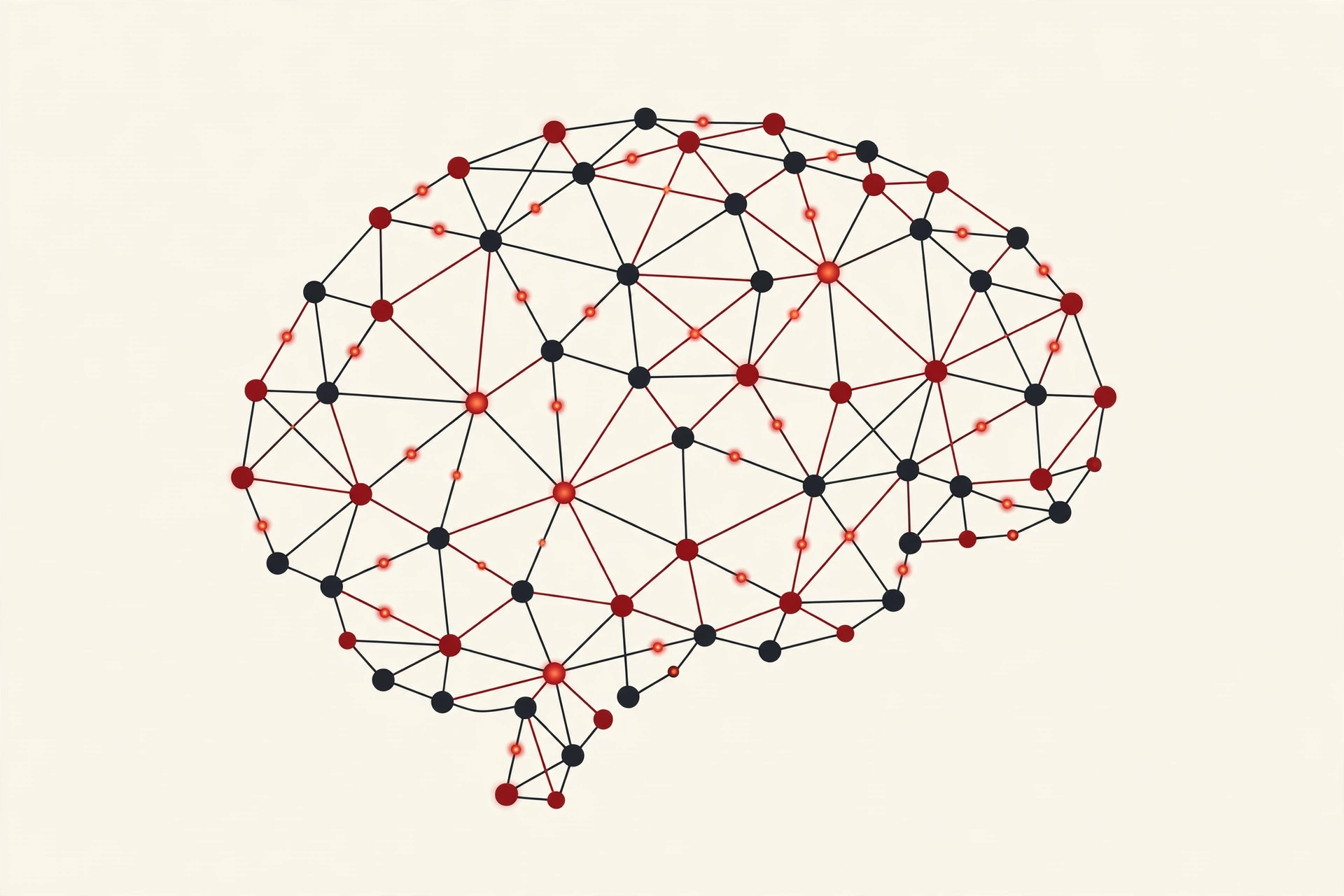
A neural network is loosely based on the human brain. Your brain has about 86 billion neurons, and they pass small signals to each other all day long. An artificial neural network copies that basic plan in software: simple units, connected to each other, passing numbers back and forth. That is why its full name is artificial neural network, often shortened to ANN.
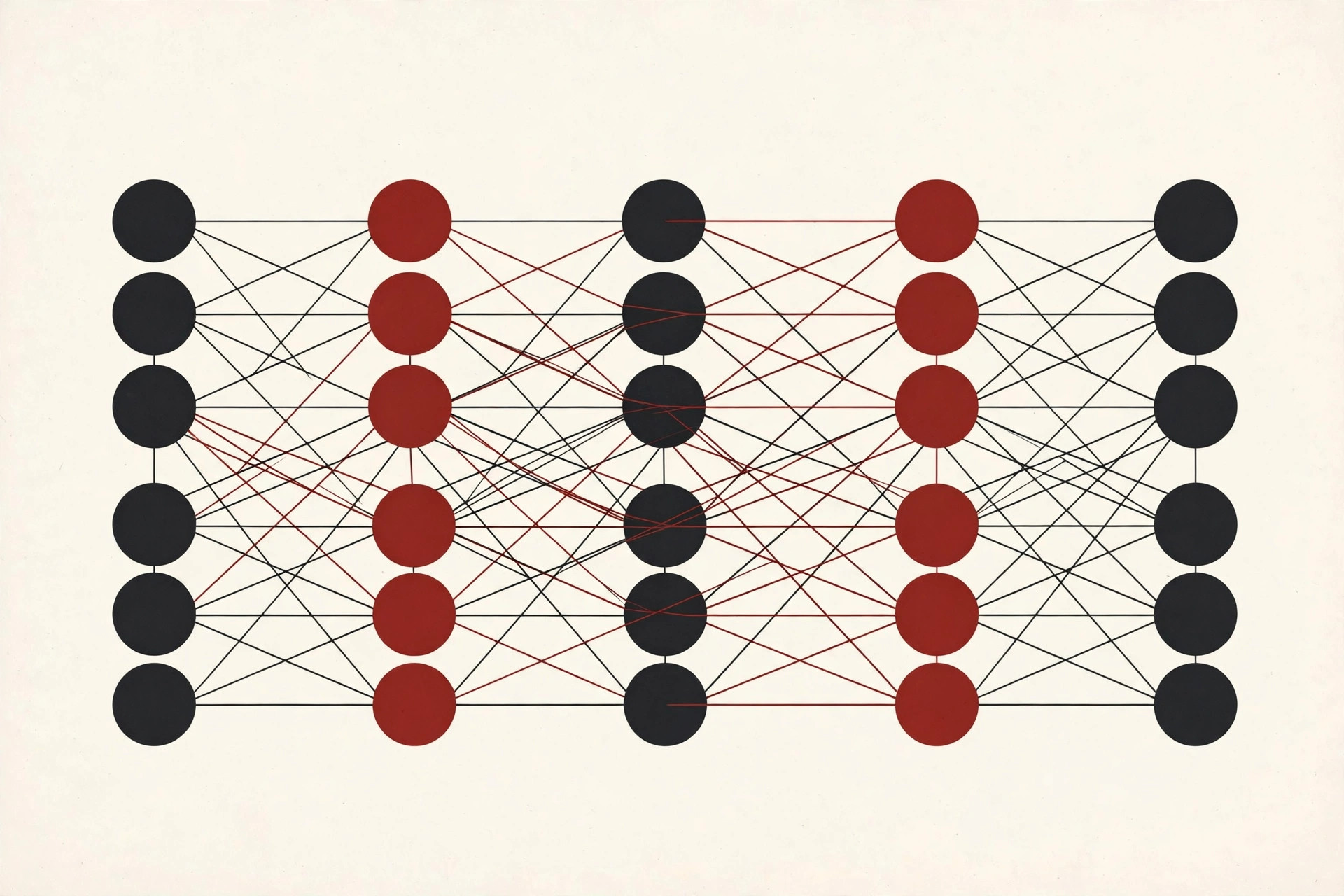
The easiest way to picture one is as a large team of voters. Each neuron is one voter. A voter never decides the final answer alone. It only looks at the signals it receives, forms a small opinion, and passes that opinion to the next group of voters. Layer after layer, the opinions get sharper, until the last group announces the final answer.
Three words explain almost everything about how this team works:
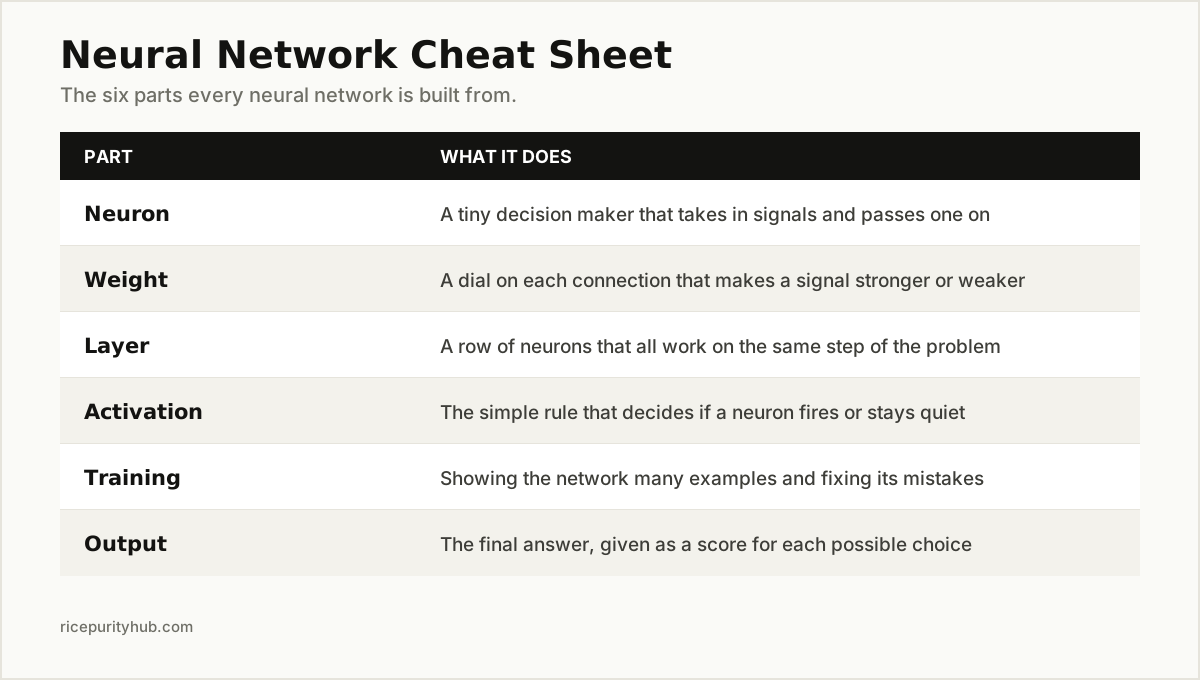
- Neuron: one tiny decision maker. It adds up the signals it gets, and if the total is strong enough, it passes a signal on.
- Weight: a dial on every connection between two neurons. A high weight means “this signal matters a lot.” A low weight means “mostly ignore this one.” Think of weights as valves on water pipes: open a valve and more water flows through, close it and the flow slows to a trickle.
- Layer: one row of neurons. Every neural network has at least three layers: one that takes data in, one or more in the middle that do the thinking, and one that gives the answer.
Neural networks are one family inside the wider world of machine learning algorithms, the methods computers use to learn from data instead of fixed rules. The idea is older than most people think: the first simple artificial neuron was described back in 1943, and the history of artificial neural networks shows how a math sketch grew into the engine of modern AI. IBM’s overview of neural networks is another friendly read once you finish here.
How a Neural Network Works, Step by Step
Let us follow one photo through a network whose job is to tell cats from dogs.
Step 1: The photo goes in as numbers. A computer cannot see a photo the way you do. It sees a grid of numbers, one for the brightness of each tiny dot (pixel) in the picture. Those numbers enter the input layer, one neuron per number.
Step 2: Signals move forward. Each neuron in the next layer adds up the signals it receives. But it does not treat them all equally: it multiplies each signal by its weight, the dial on that connection. Signals on high dials count for a lot. Signals on low dials barely count.
Step 3: Each neuron decides whether to fire. After adding everything up, the neuron follows a simple rule called an activation function. If the total passes a set mark, the neuron fires and passes a strong signal on. If not, it stays quiet or sends only a weak one. This small on-or-off choice is what lets the network learn curved, complicated patterns instead of only straight, simple ones.
Step 4: The network gives an answer. The last layer turns its totals into scores, like “Cat: 92%. Dog: 8%.” The highest score wins.
Step 5: It checks its answer and fixes itself. During training, the network compares its answer with the correct one and adjusts its dials a little. That learning step matters so much that it gets its own section below.
Neural Network Layers, Explained
All of them are built from the same three kinds of layers. Once you see what each one does, the whole system stops looking mysterious.
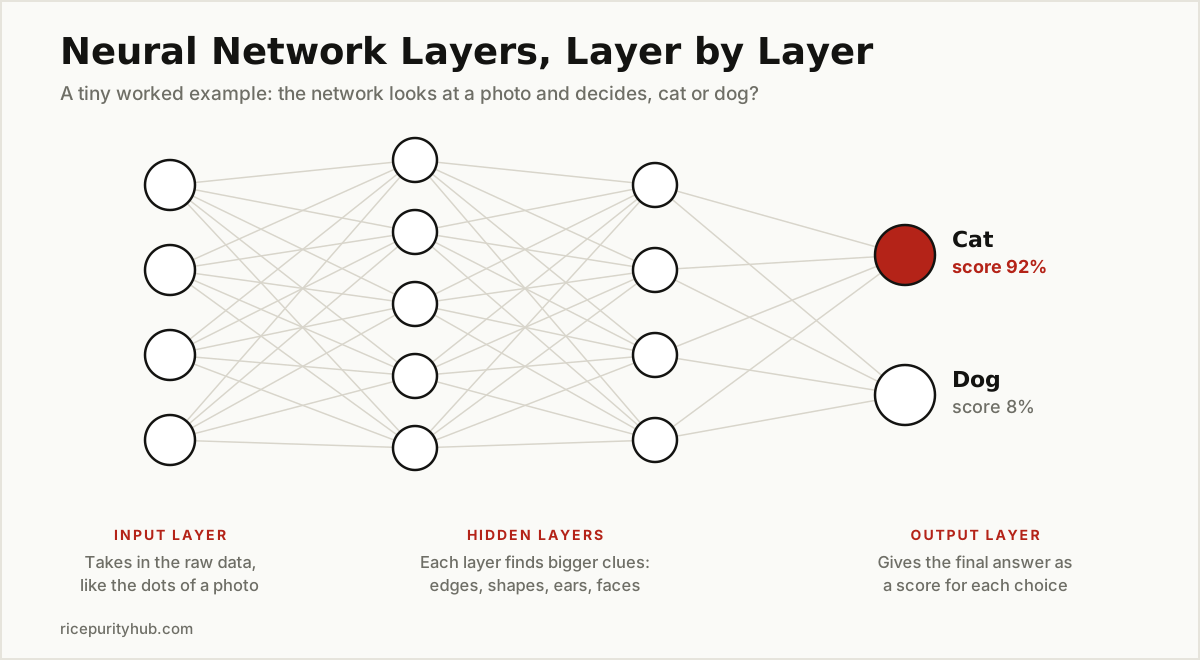
The input layer is the front door. It does no thinking at all. It simply takes the raw data, a photo as numbers, a sentence as numbers, a list of prices as numbers, and hands it inside.
The hidden layers are where the real work happens. They are called hidden because you never give them direct instructions, and their results are not the final answer. The first hidden layer notices tiny, simple clues: edges, corners, a sudden change in color. The next layer combines those clues into shapes: a curve, a circle, an ear. Deeper layers combine shapes into full ideas: a face, a wheel, a word. Each layer builds on the clues of the layer before it.
The output layer gives the answer in the form you need: a score for each choice, a predicted price, or the next word in a sentence.
A small one might have one or two hidden layers. The giant networks behind modern chatbots can have hundreds. When a network has many layers, people call it “deep,” and that is exactly where the term deep learning comes from. You will see how deep learning compares in a moment.
How a Neural Network Learns: Training
Here is the part that surprises most people: nobody sets these dials by hand. At the start, the weights are set almost at random, so a brand new network is terrible at its job. Show it a photo of a cat, and it might confidently answer “dog.”
Training fixes that, one small correction at a time:
- The network studies one example and makes a guess.
- The guess is compared with the right answer, and the size of the error is measured.
- That error is sent backward through the network, layer by layer. Engineers call this step backpropagation. Each dial that helped cause the mistake gets a tiny nudge in the direction that would have made the answer less wrong.
- Repeat, thousands or millions of times, always with fresh examples.
Picture a new cook tasting a soup, adding a pinch of salt, tasting again, and adjusting. No single taste fixes the soup. Thousands of tiny adjustments do. After enough rounds, its guesses stop being random and start being right, even on examples it has never seen before.
This is also why data matters so much. A network trained on clear, varied, correct examples learns well. A network trained on messy or unfair examples learns those flaws too, a limit we will come back to below. If you want to try training yourself, Google’s free Machine Learning Crash Course lets you play with a small one in your browser and watch the dials change as it learns.
The Main Types of Neural Networks
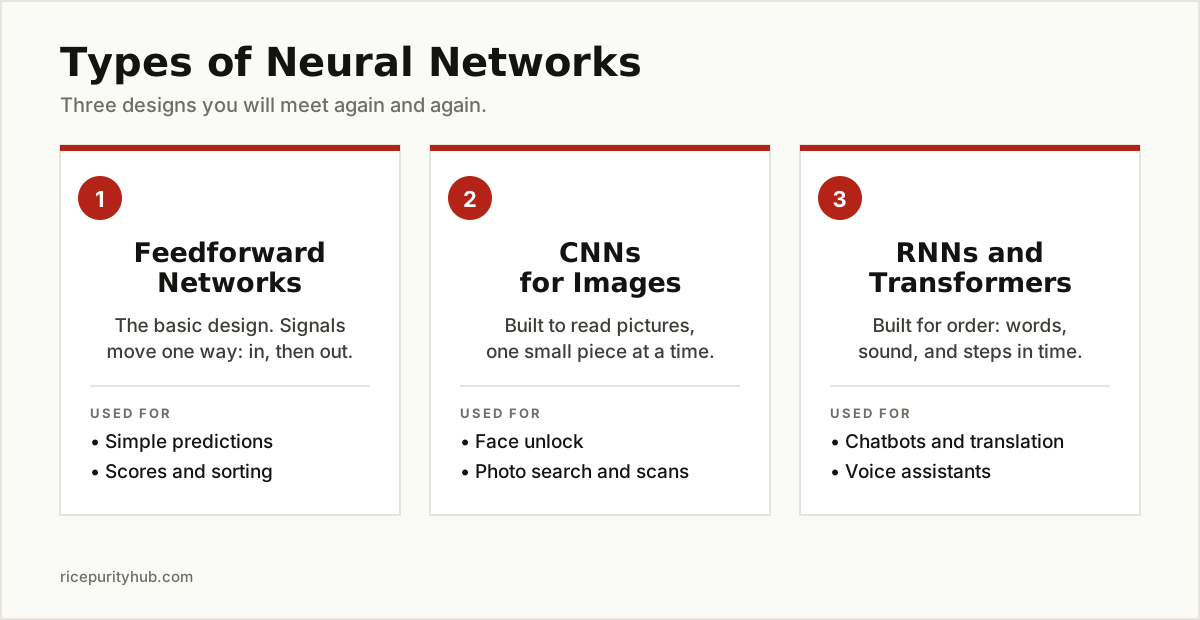
All neural networks share the same basic parts, but engineers arrange them in different shapes for different jobs. These are the three designs you will meet most often.
Feedforward Networks: The Basic Design
This is the simplest type. Signals travel in one direction only: in through the input layer, across the hidden layers, and out through the output. No loops, no memory of the last case. Feedforward networks fit straightforward jobs like predicting a price, scoring a loan application, or sorting items when each case stands on its own.
CNNs: The Image Specialists
A convolutional neural network, CNN for short, is built for pictures. Instead of swallowing a whole photo at once, it scans the photo in small pieces, hunting for clues in each piece: an edge here, a curve there. Layer by layer, it builds those pieces into shapes, then objects, then a full answer. CNNs are the reason your phone can find every photo of your dog in seconds, and they do serious work in computer vision applications such as medical scans and self-driving cars.
RNNs and Transformers: The Sequence Specialists
Some data arrives in order: the words of a sentence, the notes of a song, the price of a stock over time. Recurrent networks (RNNs) were built to read step by step while remembering what came before. Transformers are the newer and stronger design: they look at the whole sequence at once and judge which parts matter most to each other. That idea is the base of modern chatbots and translation tools, and it sits at the heart of natural language processing, the field that teaches computers to work with human language.
Neural Network Cheat Sheet
Before we go further, here is the whole idea on one small card: the parts, in the order you met them.
Where You See Neural Networks Every Day
You do not need to work in tech to use one today. You probably used several before breakfast:

- Face unlock: a CNN compares the pattern of your face with the one it learned, in less than a second.
- Photo apps: networks tag people, pets, and places in your library on their own.
- Voice assistants: sequence networks turn sound into words, then words into answers.
- Recommendations: networks learn your taste from what you watched, bought, or skipped.
- Chatbots and AI writers: very large transformer networks predict text one word at a time, and the result reads like a conversation.
- Spam and fraud filters: networks spot odd patterns in messages and payments that a human would never catch in time.
Neural Network vs Regular Program vs Deep Learning
These three get mixed up all the time, so here is the difference in one small table.
| Question | Regular Program | Neural Network | Deep Learning |
|---|---|---|---|
| Who sets the rules? | A programmer writes them by hand | The network learns them from examples | The network learns them from examples |
| How is it built? | Steps and rules, no layers | Layers of neurons, often a few | Layers of neurons, sometimes hundreds |
| Best at | Clear jobs with fixed rules | Patterns hidden in messy data | Very hard pattern jobs: images, speech, language |
| Everyday example | A calculator app | A spam filter | A chatbot or photo search |
Two points are worth keeping. First, a trained network is what people call a model: you pick a design, train it, and the trained result does the real work. Our guide to machine learning models explains how those models are chosen and judged. Second, deep learning is not a rival of the neural network. It is simply a neural network with many layers, plus the data and computer power needed to train it well.
The Limits of Neural Networks, in Plain Words
Neural networks are powerful, but they are not wise. Knowing their weak spots will keep you from trusting them too much:
- They need a lot of examples. A child can learn the word “cat” from three pictures. A network may need thousands.
- They can be confidently wrong. A network gives a score, not a promise, and a 92% score can still be a mistake.
- They struggle to explain themselves. With millions of dials, even the people who built a network often cannot say exactly why one answer came out. This “black box” problem matters a lot in hospitals and courtrooms.
- They copy the flaws in their data. Train a network on unfair or sloppy examples, and it will learn those habits as if they were rules.
- The big ones are expensive. Training a giant one takes powerful computers, a lot of time, and a lot of electricity.
The Bottom Line
A neural network is a team of tiny decision makers, arranged in layers and connected by dials called weights. Feed it examples, let it guess, correct its mistakes, and nudge the dials, and it learns patterns that no programmer could ever write down by hand.
You now have the full picture: what a neuron, a weight, and a layer are, how training works, how the three big designs differ, and where these networks already work in your daily life. Keep going with the rest of our AI, ML and Data Science guides, where we explain the rest of the field in the same plain words.