Every app you use has a hidden shape. You cannot see it on the screen, but it decides how fast the app feels, how often it breaks, and how painful it is to add the next feature. That hidden shape is the software architecture.
The topic sounds academic, but the core ideas are simple, and they matter to anyone who builds, buys or manages software. This guide explains the main patterns in plain English, shows what each one is good at, and gives you a fair way to choose between them.
What Is Software Architecture?
Software architecture is the high-level plan of a system: the big parts it is made of, how those parts connect, and the rules they follow when they talk to each other.
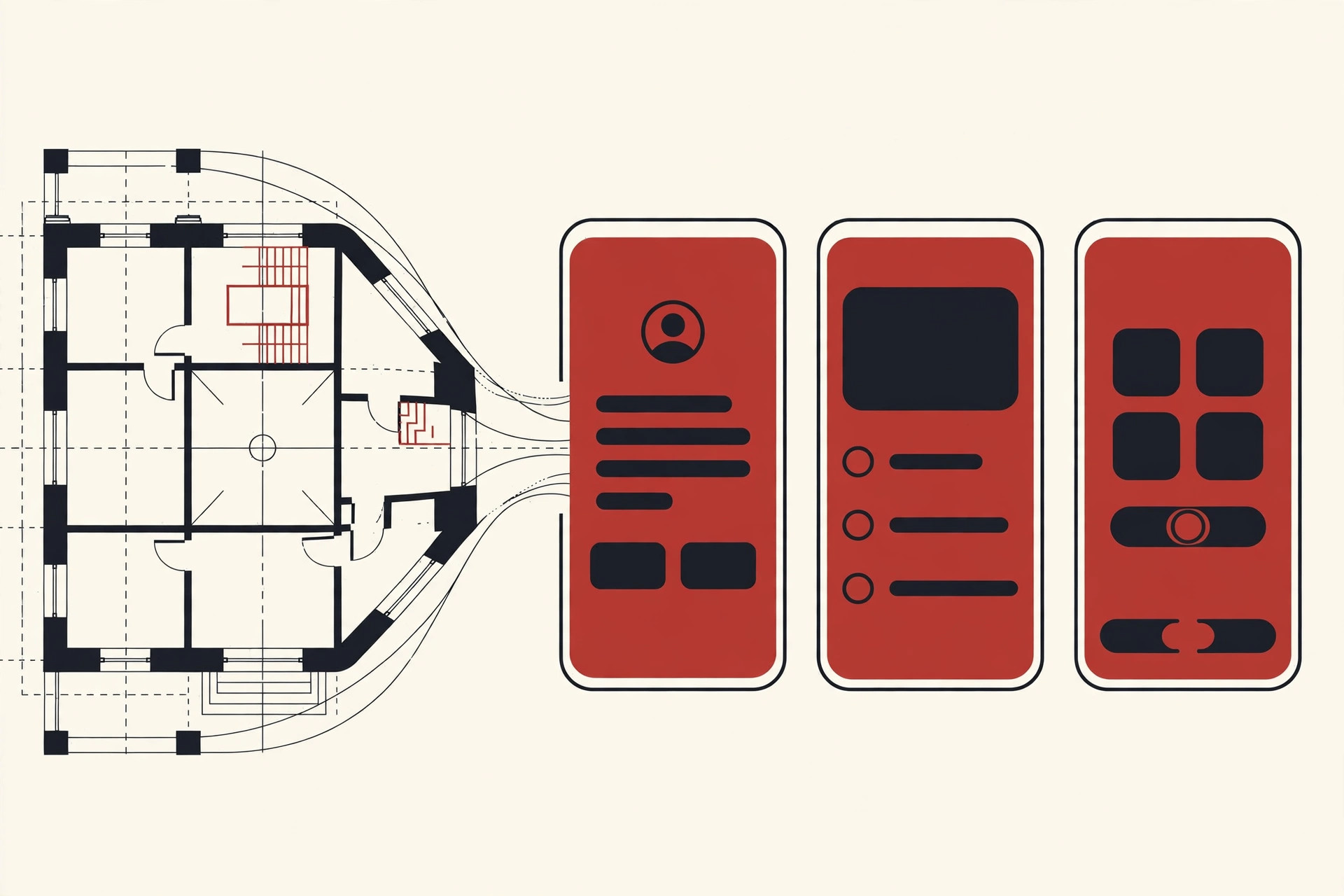
The easiest way to picture it is a building. Before anyone pours concrete, an architect draws a blueprint. The blueprint fixes the load-bearing walls, where the plumbing runs, and how people move between floors. Change your mind later about paint or furniture and it costs little. Change your mind about the foundation and it costs a fortune.
Software works the same way. The architecture fixes the decisions that are hard to reverse: one big application or many small services, one shared database or one per service, parts that call each other directly or parts that react to events. Martin Fowler, one of the most cited voices on this topic, describes architecture as the core elements of a system, the parts that are difficult to change. Everything else is built on top of those choices.
One nearby term is worth clearing up. System architecture is the wider view: it includes the software plus the servers, networks and cloud services it runs on. Software architecture focuses on the program itself. When a system spreads across many machines, it becomes a distributed system, and the architecture has to plan for networks that fail and messages that arrive late. Industry guides such as the Azure Architecture Center collect these shapes into named styles, which is where most of the pattern names in this article come from.
Architecture vs Design vs Code Structure
People mix up three levels of decisions. They sit on top of each other, and the higher levels are much harder to change.
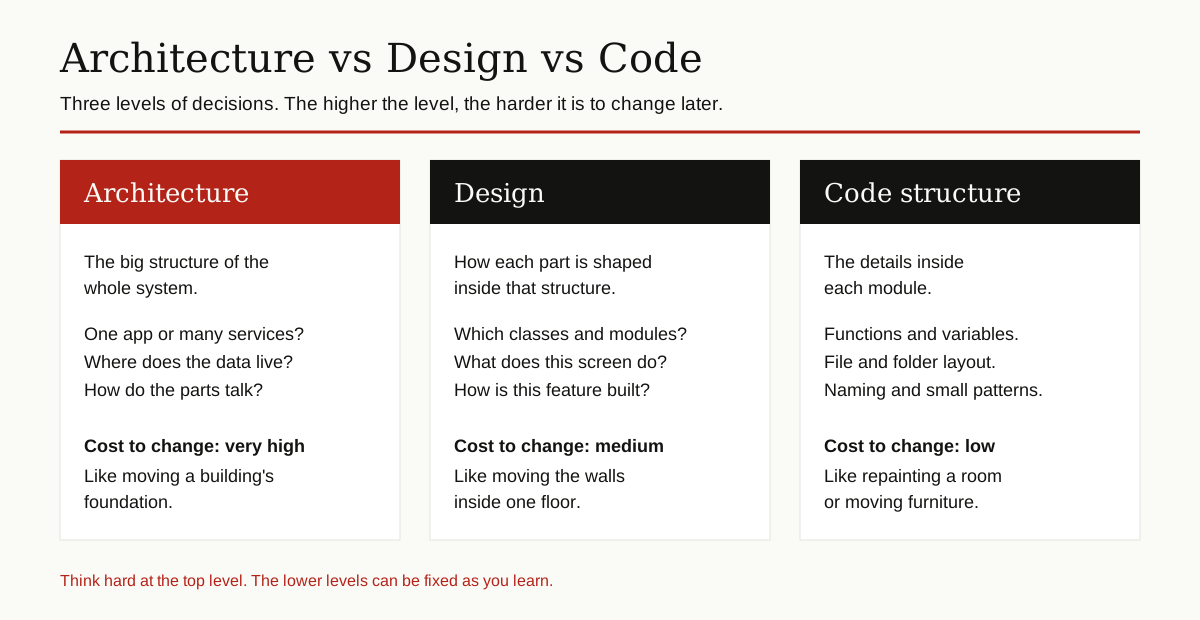
| Level | What it decides | Example | Cost to change |
|---|---|---|---|
| Architecture | The big structure of the whole system | One app or many services, where data lives | Very high |
| Design | How each part is shaped inside that structure | Which modules and screens a feature needs | Medium |
| Code structure | The details inside each module | Functions, file layout, naming | Low |
So software design and architecture are partners, not rivals. Architecture sets the borders. Design fills in each room. Code structure is the furniture arrangement inside the room. Approaches like feature-sliced design live at the design and code level: they organize the inside of an application so features stay easy to find. If you want the deeper tour of these levels, Martin Fowler’s architecture guide is a good next read.
Why Architecture Matters
If the big decisions are hard to change, getting them roughly right early saves real money later. Here is what good software architecture buys you.
Cheaper change. Most of a system’s lifetime cost is change: new features, new rules, new integrations. Clear borders between parts mean a change in one place does not break three others.
Room to grow. A shape that works for a hundred users may collapse at a million. Architecture is where you decide which parts can grow on their own.
Reliability. When one part fails, does the whole system fall, or does the rest keep working? That is an architecture question, and users feel the answer.
Teamwork without collisions. In a big codebase, structure is how ten or fifty developers work in parallel without stepping on each other every day.
None of this requires a perfect plan on day one. It requires knowing which decisions you are making, because making them by accident is how systems quietly become hard to fix.
The Main Types of Software Architecture
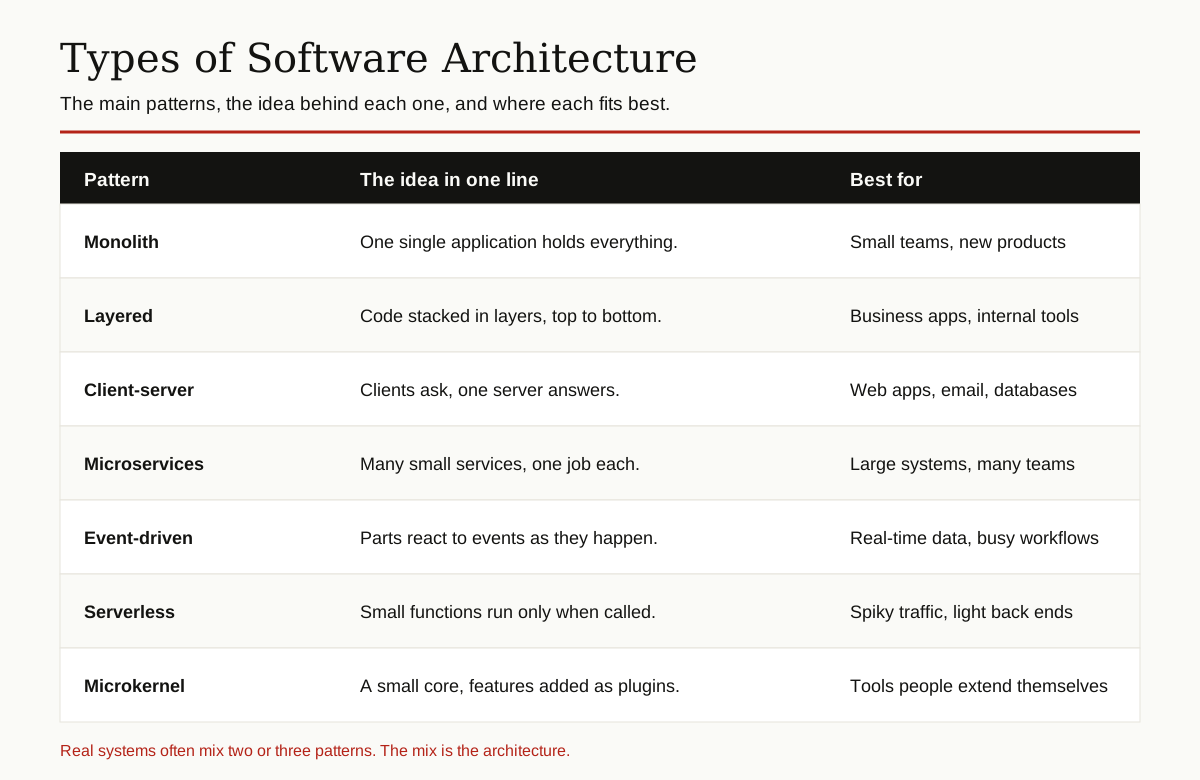
Most real systems are built from a small set of known software architecture patterns. Here are the seven you will meet most often, with the honest tradeoffs of each.
Monolith
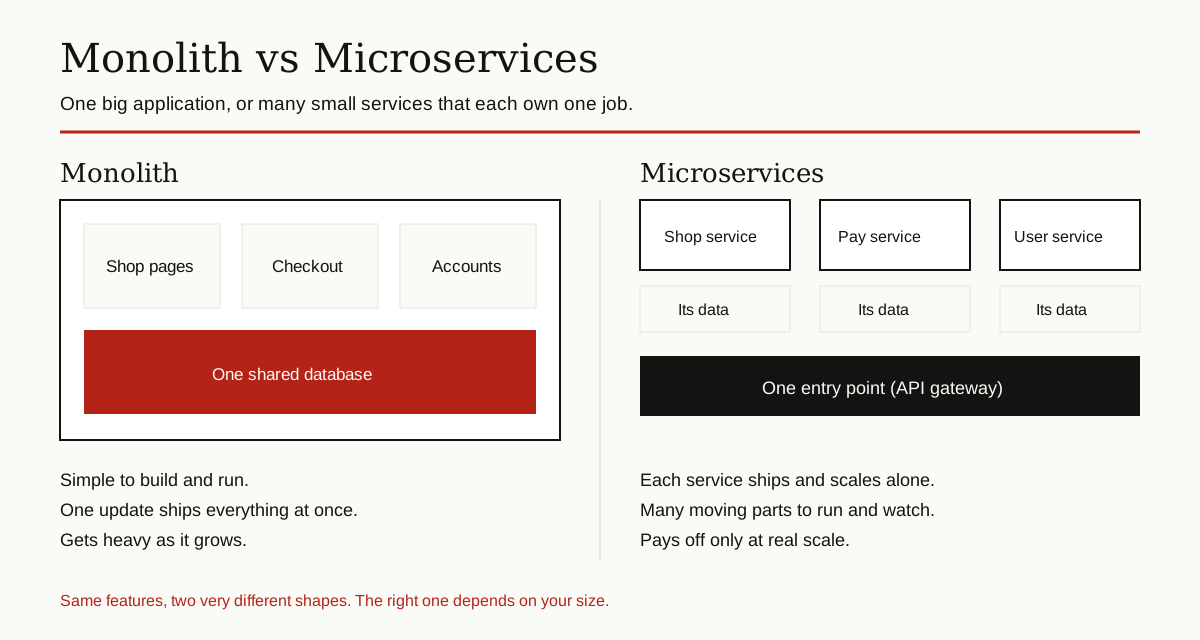
The idea. One single application holds everything: pages, business logic and data access, shipped and run as one unit.
Simple example. A small online shop built by three developers, where the catalog, checkout and accounts all live in one codebase with one database.
Strengths. Simple to build, test and run. One deployment, one log to check, no network puzzles between parts. For small teams it is fast to work in.
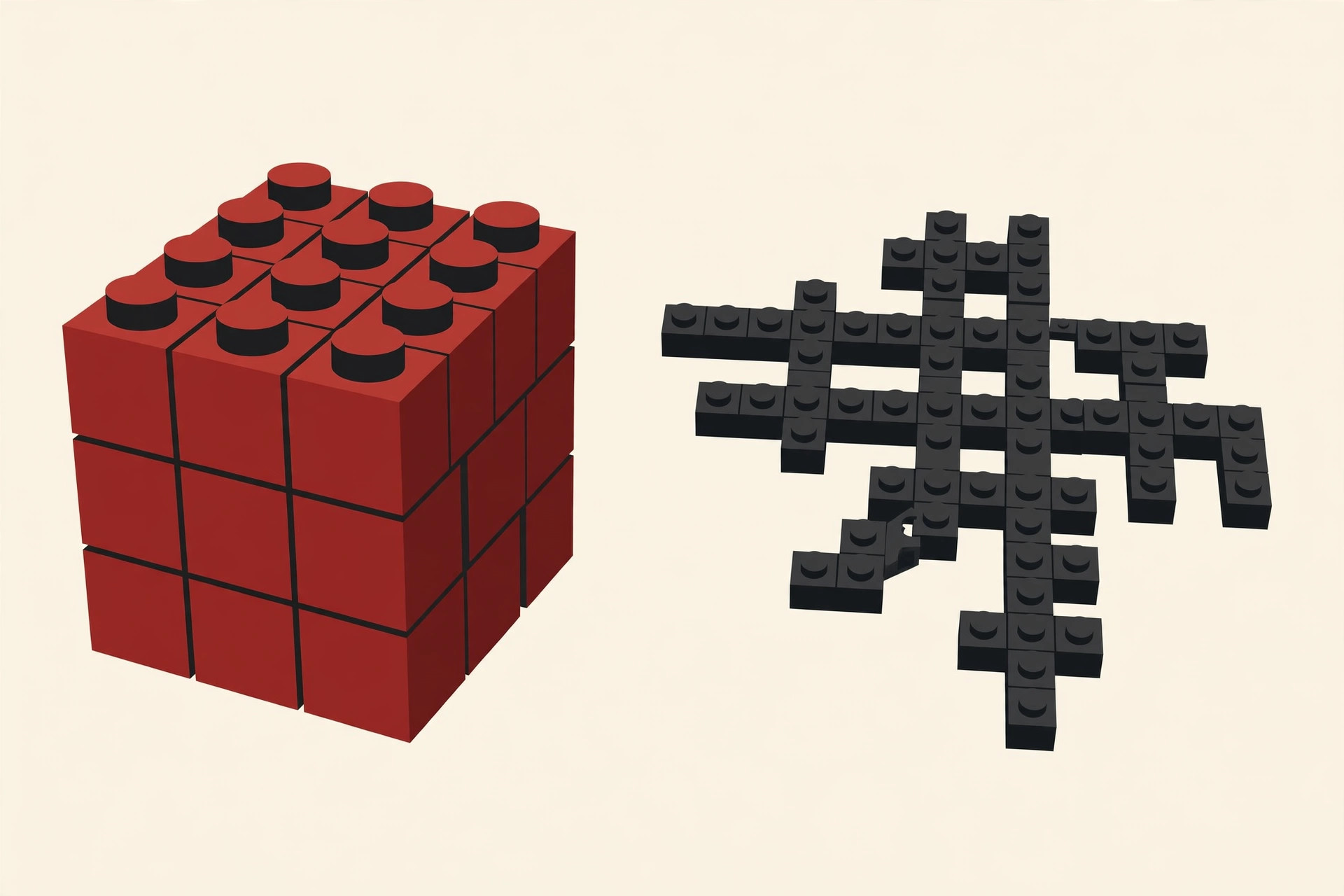
Watch-outs. As it grows, builds slow down, one bug can crash everything, and every update ships the whole system at once, even for a tiny fix.
Layered Architecture
The idea. Code is stacked in horizontal layers, most often presentation on top, then business rules, then data access, then the database. Each layer talks only to the one below it.
Simple example. A classic company admin tool: screens call services, services apply rules, and a bottom layer reads and writes the database.
Strengths. Easy to understand, easy to hire for, and easy to test layer by layer. It is the default shape of a huge share of business software.
Watch-outs. Layers can turn into a slow relay race, where every request passes through all of them. Teams also get tempted to skip a layer, and the neat stack quietly erodes.
Client-Server Architecture
The idea. Clients, such as browsers or phone apps, ask for things. A server holds the data and the rules and answers the requests.
Simple example. Your email app is the client. The mail server stores every message and sends them down when you ask.
Strengths. Data and rules live in one trusted place, so updates happen once, on the server, and reach everyone. Clients can stay light and cheap.
Watch-outs. The server is a single point of pressure and failure. If it slows down or goes offline, every client feels it at the same time.
Microservices Architecture
The idea. The system is split into many small services, each owning one job and usually its own data. Services talk through APIs and messages, and each can be built, shipped and scaled on its own.
Simple example. A large streaming or shopping platform where separate services handle accounts, payments, search and recommendations, maintained by separate teams.
Strengths. Teams work independently, busy parts scale alone, and one failing service need not take the rest down. Good API design principles keep the borders between services clean.
Watch-outs. You trade one kind of simplicity for another. Now there are many deployments, many logs, and data that must agree across services. This shape needs strong tooling and experienced operators.
Event-Driven Architecture
The idea. Parts do not call each other directly. Instead, something announces that an event happened, such as “order placed”, and any interested part reacts. The announcer does not know or care who is listening.
Simple example. When a payment succeeds, an event goes out. One part sends the receipt, another updates stock, a third books the delivery. None of them waited on the others.
Strengths. Parts stay loosely connected, so new reactions can be added without touching the old ones. It handles busy, real-time workloads gracefully.
Watch-outs. Following the flow of one request across many reactions is hard, and debugging can feel like detective work. You need good logging and tracing from the start.
Serverless Architecture
The idea. You write small functions, and a cloud provider runs them only when called, scaling them up and down automatically. There is no server for your team to patch or feed. The big cloud platforms, such as those in the AWS architecture library, treat this as a first-class way to build.
Simple example. A photo upload triggers a function that resizes the image, another that stores it, and a third that notifies the user. Nothing runs while nobody uploads.
Strengths. You pay mostly for actual use, idle systems cost close to nothing, and sudden spikes are the provider’s problem.
Watch-outs. Functions have time limits, debugging across many tiny pieces is awkward, and heavy steady traffic can cost more than a plain server would.
Microkernel Architecture
The idea. A small core system does the minimum, and features are added as plugins that plug into the core. Also called plugin architecture.
Simple example. A code editor or browser: a lean core, with extra powers arriving as installable extensions.
Strengths. Users and third parties can extend the product without touching the core. Features can be added, removed or updated one plugin at a time.
Watch-outs. The core must be designed very carefully, because every plugin depends on its rules. A weak plugin system becomes a bottleneck of its own.
Quality Attributes: How Well the System Behaves
Features say what a system does. Quality attributes say how well it does it, and architecture is where they are won or lost.
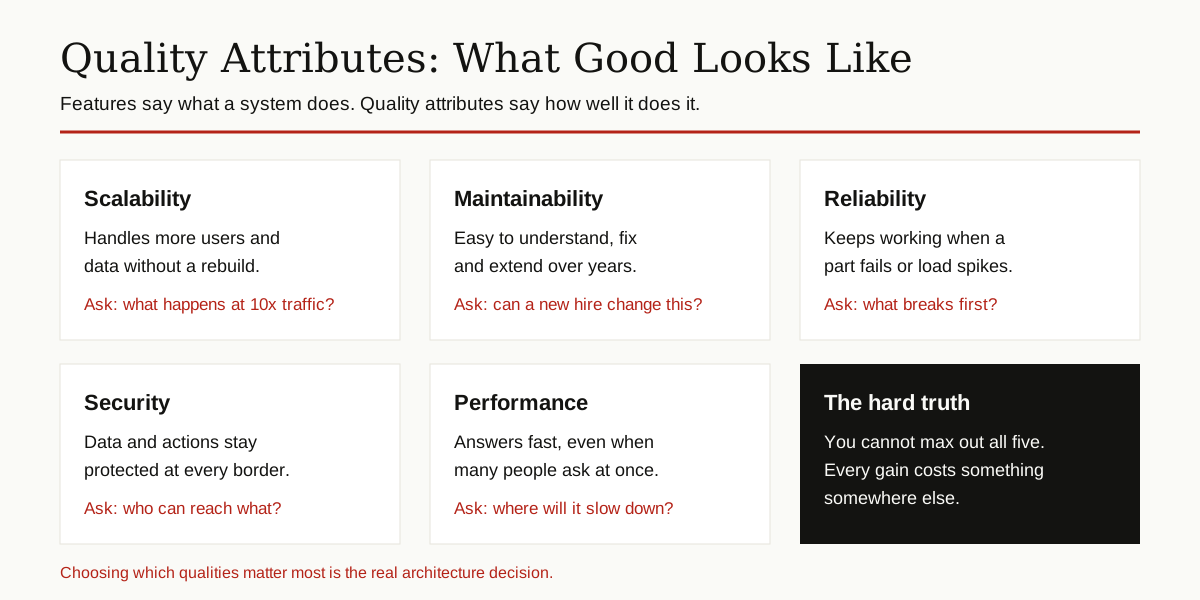
- Scalability: the system handles more users and data by adding resources, not by being rebuilt.
- Maintainability: a new developer can understand the shape, find the right place for a change, and make it safely.
- Reliability: when a part fails, the rest keeps serving users, and the failed part recovers.
- Security: data and actions are protected at every border, especially where parts talk to each other.
- Performance: answers come back fast, even when many people ask at the same time.
The hard truth is that you cannot maximize all five at once. Splitting a system into services can raise scalability while lowering simplicity. Heavy security checks can cost performance. Deciding which attributes matter most for your product, and saying it out loud, is the heart of software application architecture work.
How to Choose an Architecture
There is no universal winner, only a good fit for a situation. These questions do most of the work.
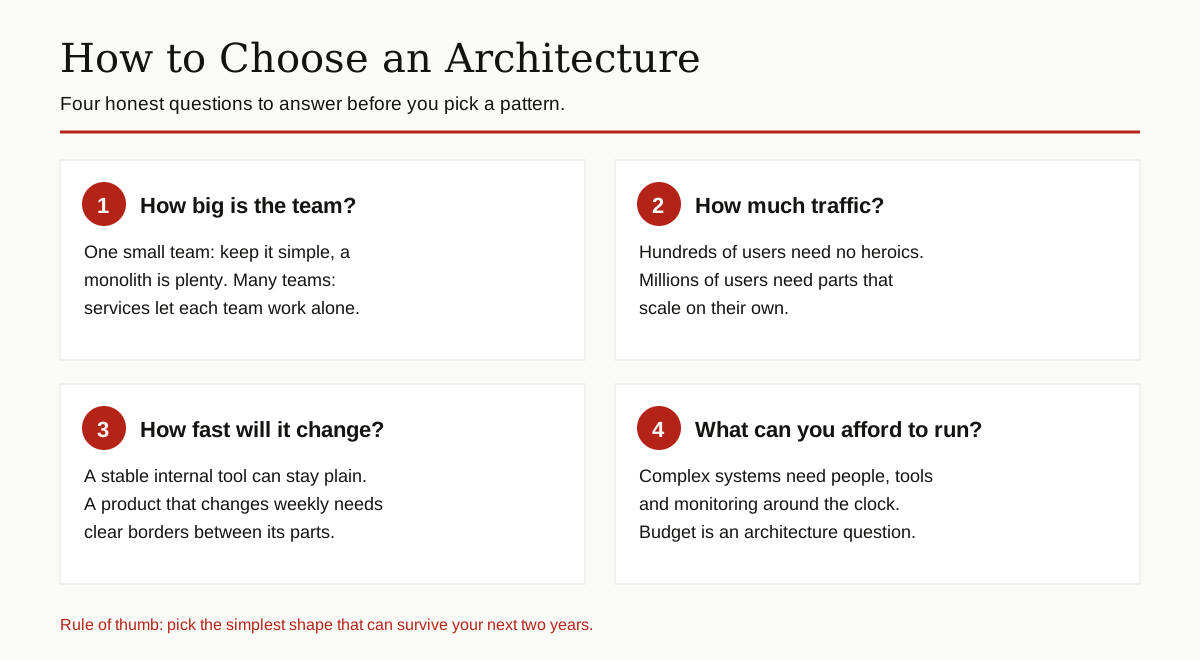
Start with the team. One small team cannot feed a giant architecture. If five people must run fifty services, they will spend their days on operations instead of features.
Match the stage. A new product needs speed of change, not planet-scale design. A proven product with growing traffic can afford to split the parts that hurt.
Respect the budget. Complex shapes need monitoring, automation and on-call humans. That cost is part of the choice, not an afterthought.
Start simple, then evolve. Fowler’s well-known advice is to begin with a monolith, even when you expect growth, because you do not yet know where the real borders are. Splitting a tidy monolith later is easier than guessing the borders on day one and living with the wrong ones.
The Software Architect Role
A software architect is the person responsible for those hard-to-change decisions and for keeping the overall shape honest as the system grows.
The job is less about drawing boxes and more about tradeoffs and communication. Architects study what the business actually needs, pick which quality attributes come first, explain the choice so every team can build within it, and review the shape when reality changes. On small teams, a senior developer often carries the role part-time. On large programs, it is a full-time job shared with lead engineers.
Diagrams and Documentation
Good software architecture is written down, briefly. A simple diagram with boxes for the parts and arrows for how they talk is worth a long meeting, because everyone finally looks at the same picture.
Keep the record light and current. One page that shows the main parts, one short note for each big decision and why it was made, and the rules parts must follow when they connect. Store the diagrams with the code, in the same version control systems your team uses for everything else, so they evolve with the system instead of rotting in a forgotten folder. A diagram that no longer matches the code is worse than none, so update it whenever the shape changes.
Common Mistakes
Over-engineering. Building for a million users you do not have, with patterns your team cannot run. The system becomes slow to change, which is the one thing a young product cannot afford.
The big ball of mud. The opposite failure: no plan at all. The name comes from a famous paper by Brian Foote and Joseph Yoder, who described systems that grow without any clear structure, where everything depends on everything and every fix risks a new break. Most mud starts as honest deadline pressure. The cure is small, steady cleanup, not a heroic rewrite.
Copycat architecture. Adopting the shape of a giant company because it is famous. Their problems are not your problems, and their headcount is not your headcount either.
Forgetting the tradeoffs. Every pattern trades something away. Trouble starts when a team takes the benefits list at face value and never asks what the pattern costs.
Conclusion
Software architecture is simply the set of big, hard-to-reverse decisions about how a system is put together. Learn the handful of classic patterns, be honest about the quality attributes your product needs most, and pick the simplest shape your team can actually run.
Start plain, keep the borders clean, and let the architecture grow with the product. You will find more guides like this in our software development category.