Ask a group of people to explain generative AI vs predictive AI, and most will shrug. The names sound alike, the headlines mix them up, and both get called just “AI” as if they were the same thing. They are not.
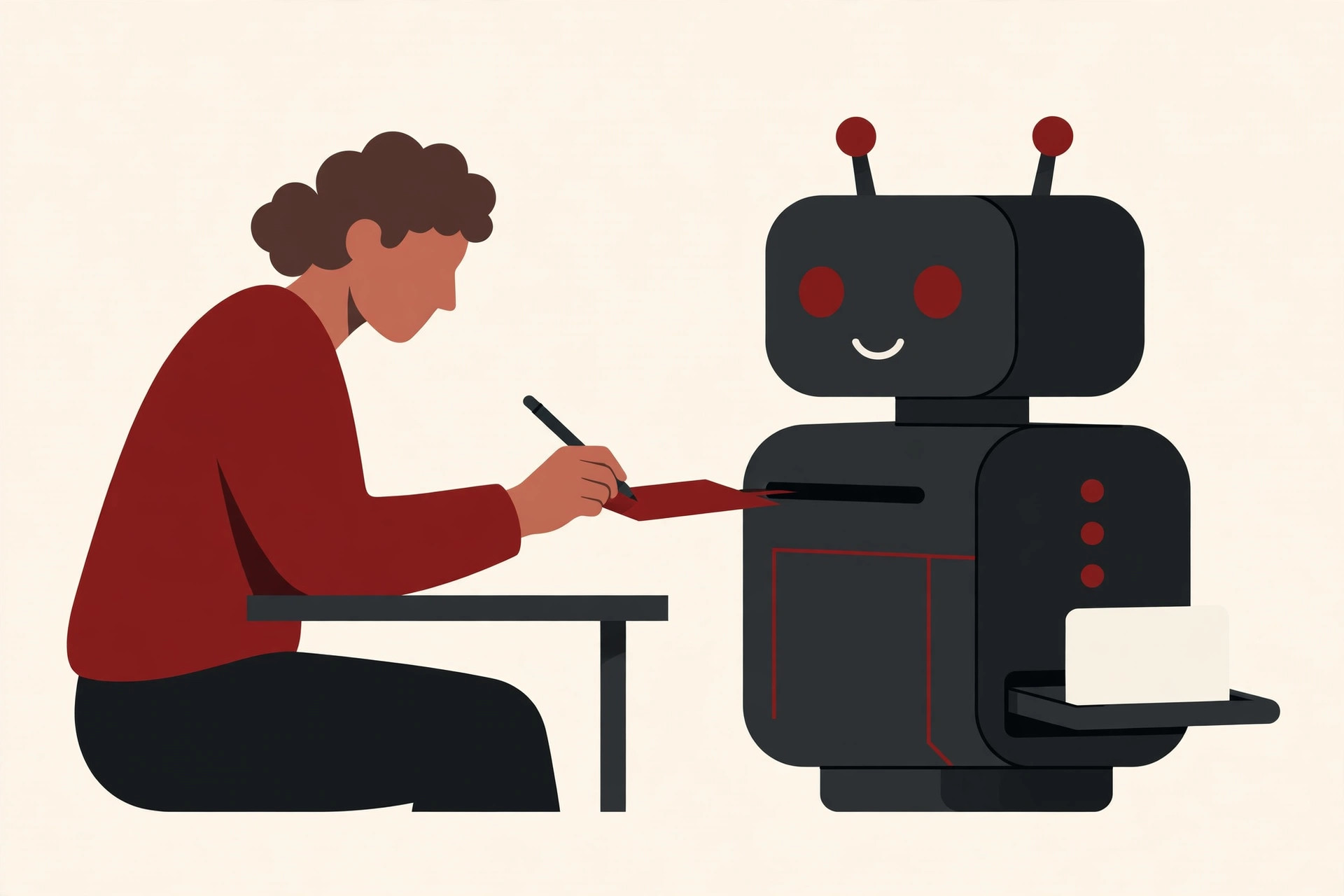
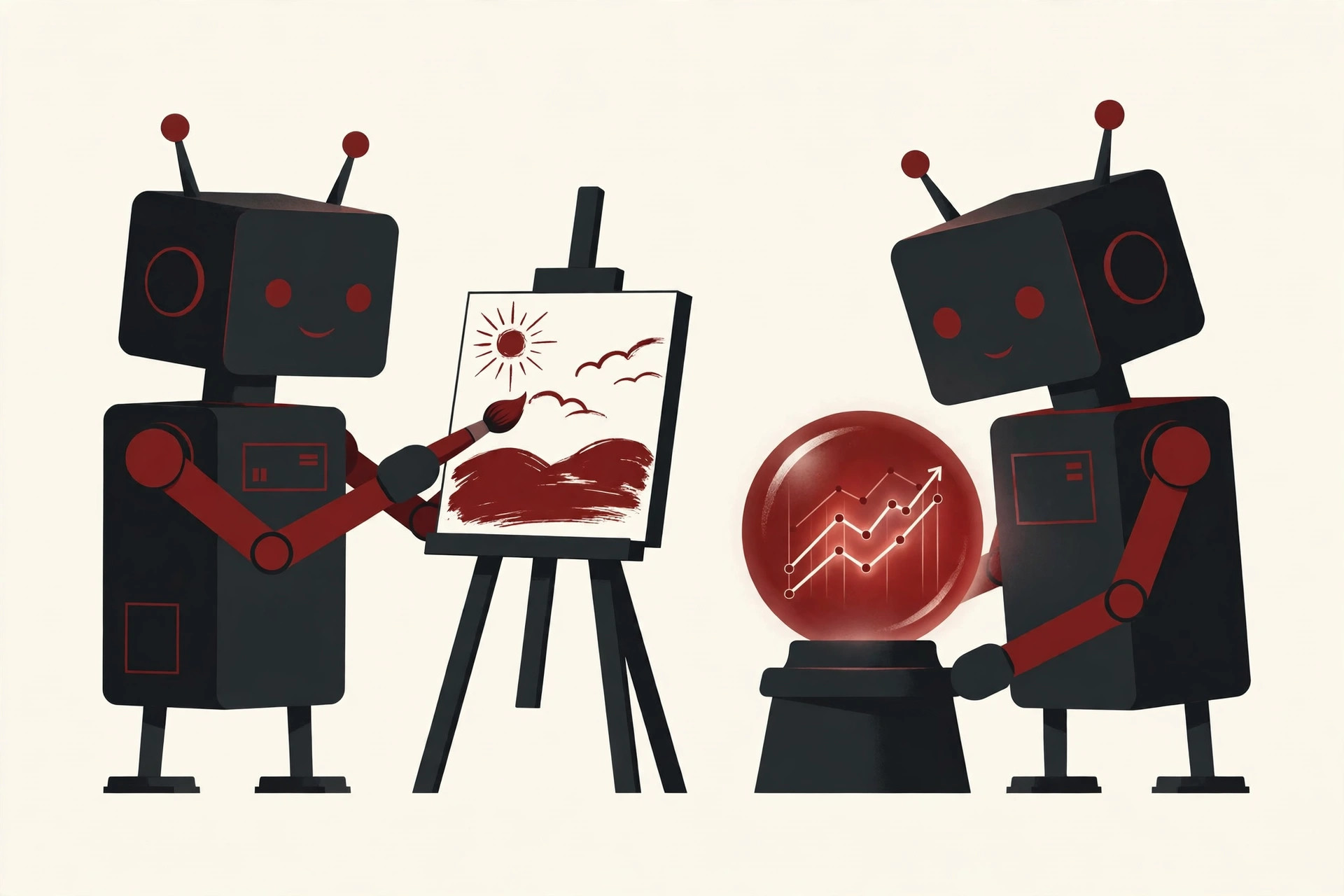
Here is the whole difference in one line: generative AI makes new things, and predictive AI forecasts what happens next. One is a creator. The other is a forecaster. Once you see that split, almost every AI product you know falls neatly into one of the two camps.
This guide walks through both sides in plain English: what each one is, what it eats for input, what it gives back, and where you already use it every day. We will also show where generative AI vs predictive AI stops being a contest, because the smartest teams use the two together. As Google puts it in its AI basics, AI is a broad field, and these are two of its most useful branches.
What Is Generative AI?
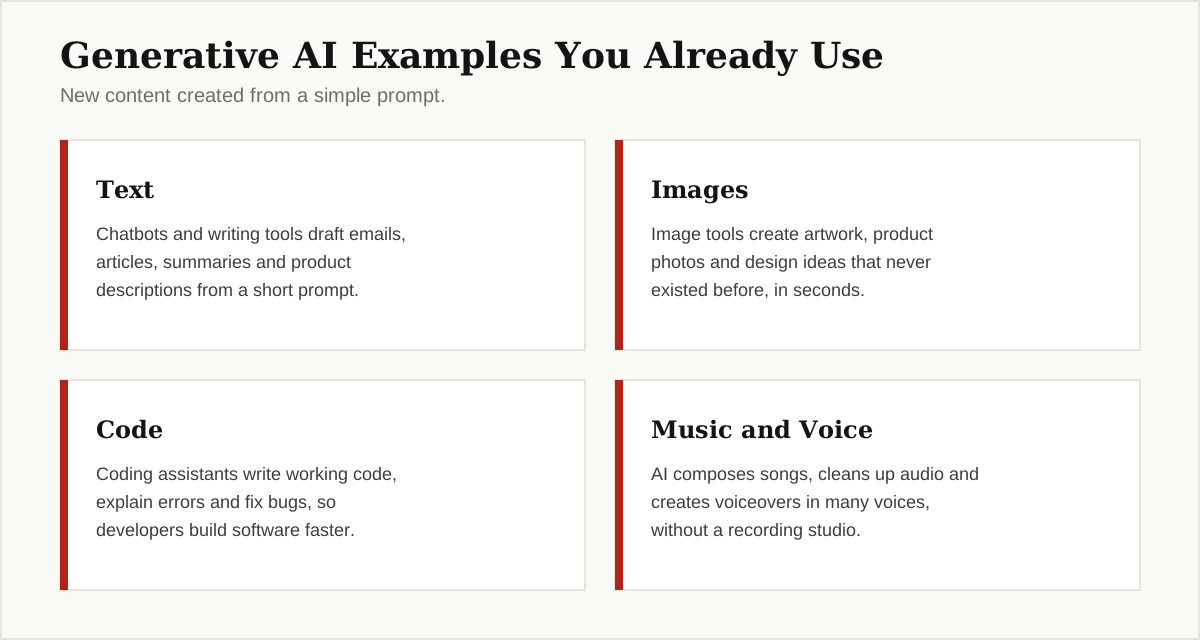
Generative AI creates brand new content. You give it a prompt, a short request in your own words, and it produces something that did not exist a moment ago: a paragraph, a picture, a song, a block of code, a voiceover.
It can do this because it was trained on enormous collections of text, images and sound. During training, it learned the patterns of how words follow words, how pictures are put together, and how code is usually written. When you prompt it, it uses those patterns to build a fresh result, one piece at a time.
You already know the famous examples. Chatbots like ChatGPT write essays and answer questions. Image tools turn a sentence into artwork. Coding assistants draft whole functions while a developer watches. IBM describes generative AI as technology that creates original content after learning from huge data sets, which matches what you see in practice.
A helpful way to picture it: generative AI is like a very fast, very well-read assistant who has studied millions of examples and can now improvise new work in the same styles.
Key things to remember about generative AI:
- Its output is content: text, images, audio, video or code.
- Its input is a prompt: the better your request, the better the result.
- It does not know facts the way a database does: it produces what sounds or looks right, which is why it can sometimes invent wrong details with total confidence.
What Is Predictive AI?
Predictive AI looks the other way. Instead of creating something new, it studies the past and makes a smart guess about the future.
So, what is predictive AI in everyday terms? It is the technology behind the forecast. A store uses it to guess how many umbrellas it will sell next week. A bank uses it to spot a card payment that looks like fraud. A factory uses it to warn that a machine is likely to break down soon, a practice often called predictive maintenance.
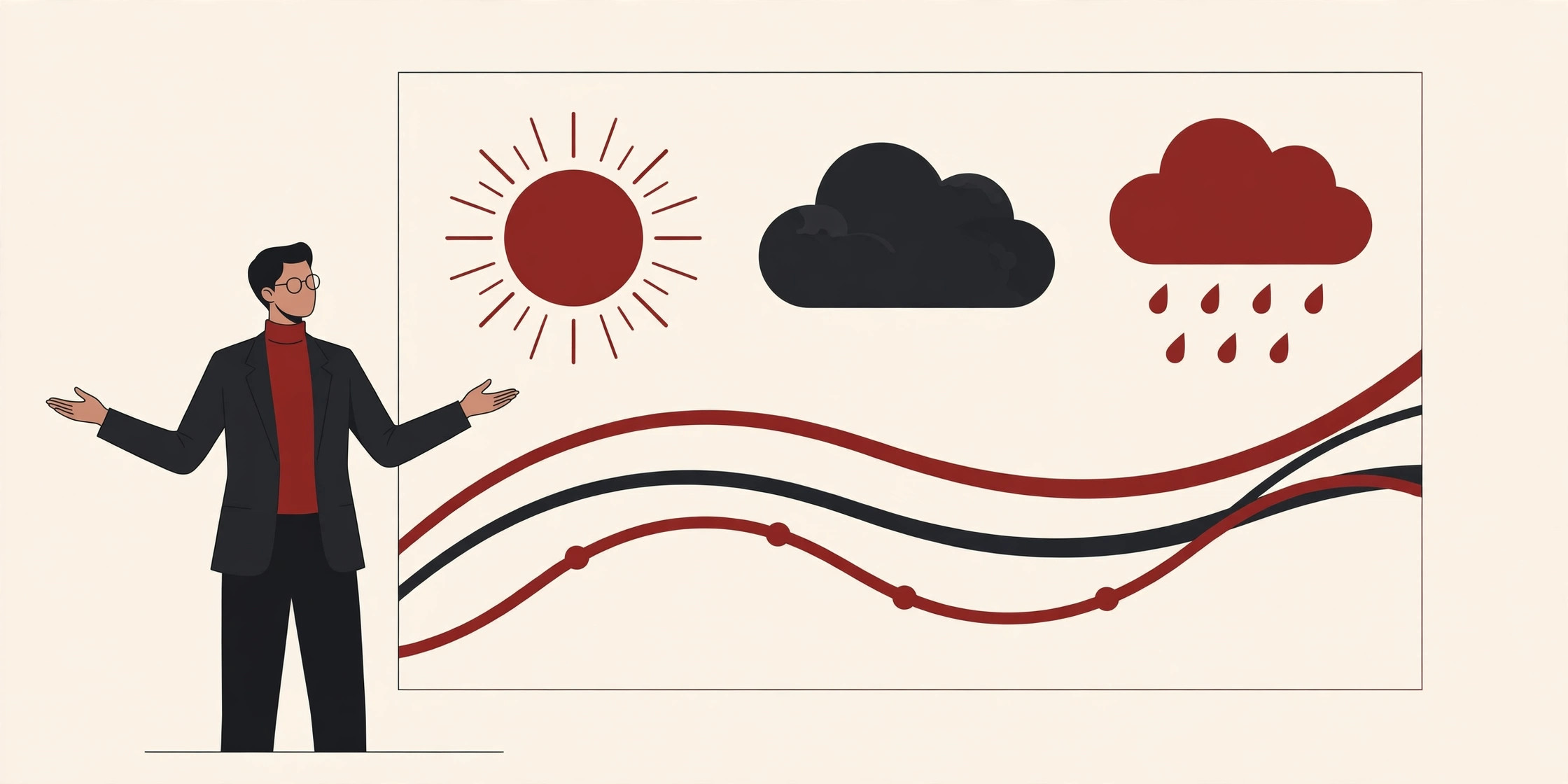
Under the hood, predictive AI runs on machine learning models that were trained on history with known outcomes. Show the model ten thousand past loans and which ones were repaid, and it learns the warning signs. Then, when a new loan application arrives, it scores the risk in a fraction of a second.
These predictive ai models usually answer with a number or a label: an 82 percent chance this customer will cancel, a high risk flag on this transaction, an estimated delivery date for this parcel. No new content, just a well-informed bet about what comes next.
Predictive models come in a few common flavors, and you do not need the technical names to get the idea. Some sort things into groups, like safe payment or likely fraud. Some estimate a number, like next month’s sales or tomorrow’s temperature. Others watch a stream of data over time and raise a hand when the pattern starts to look wrong, which is how many maintenance warnings work. Different flavors, same habit: study what happened before, then speak up about what is likely to happen next. When people compare generative ai vs predictive ai tools in real products, this quiet, number-based style is what the predictive side looks like.
Key things to remember about predictive AI:
- Its output is a forecast: a score, a probability, a category or a warning.
- Its input is data: records of what happened before.
- It can be measured: you can check later whether the forecast was right, which makes it easy to test and improve.
Generative AI vs Predictive AI: The Big Differences
Now let us put the two side by side. This comparison table is the heart of the generative AI vs predictive AI debate, and it is simpler than the names suggest.
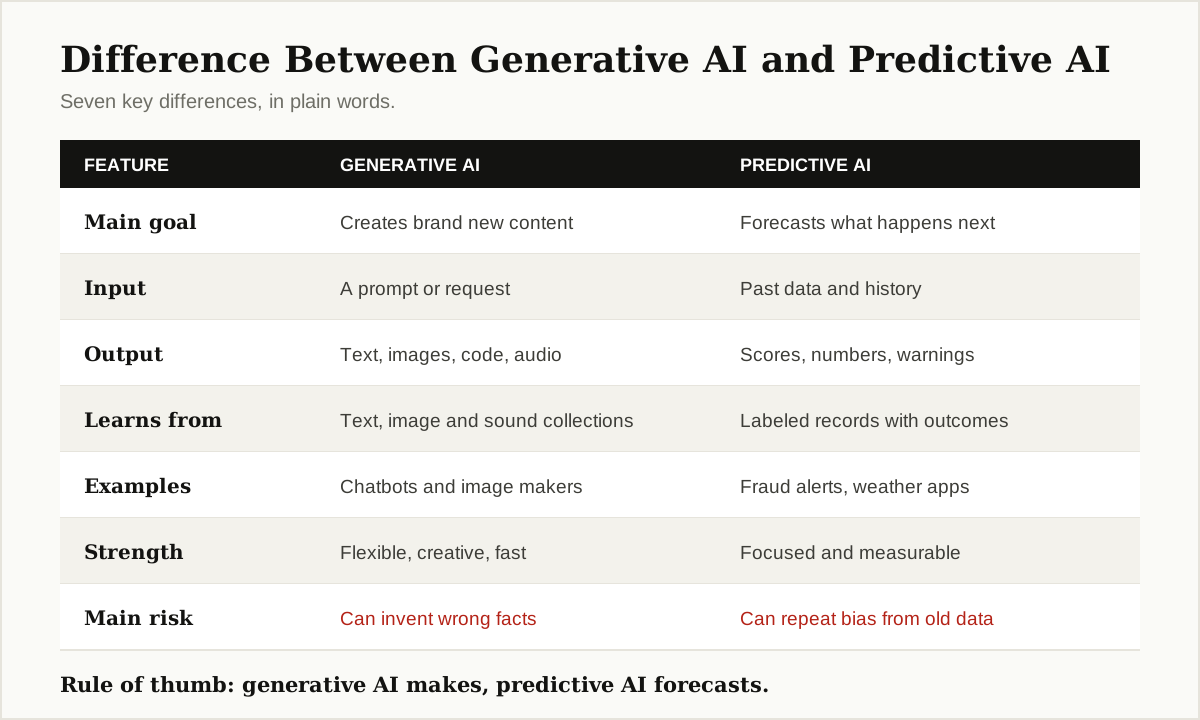
| Point | Generative AI | Predictive AI |
|---|---|---|
| Main goal | Create new content | Forecast what happens next |
| Input | A prompt or request | Past data and records |
| Output | Text, images, code, audio | Scores, numbers, warnings |
| Training data | Huge sets of text, images and sound | Labeled history with known outcomes |
| Everyday examples | Chatbots, image makers, code helpers | Fraud alerts, weather apps, stock planning |
| Biggest strength | Flexible and creative | Focused and measurable |
| Main risk | Can invent wrong facts | Can repeat bias found in old data |
| How you judge it | Does the result look and read well? | Did the forecast come true? |
Read the table once and the pattern is clear. Generative AI starts with a request and ends with something new. Predictive AI starts with history and ends with a prediction. Different inputs, different outputs, different jobs.
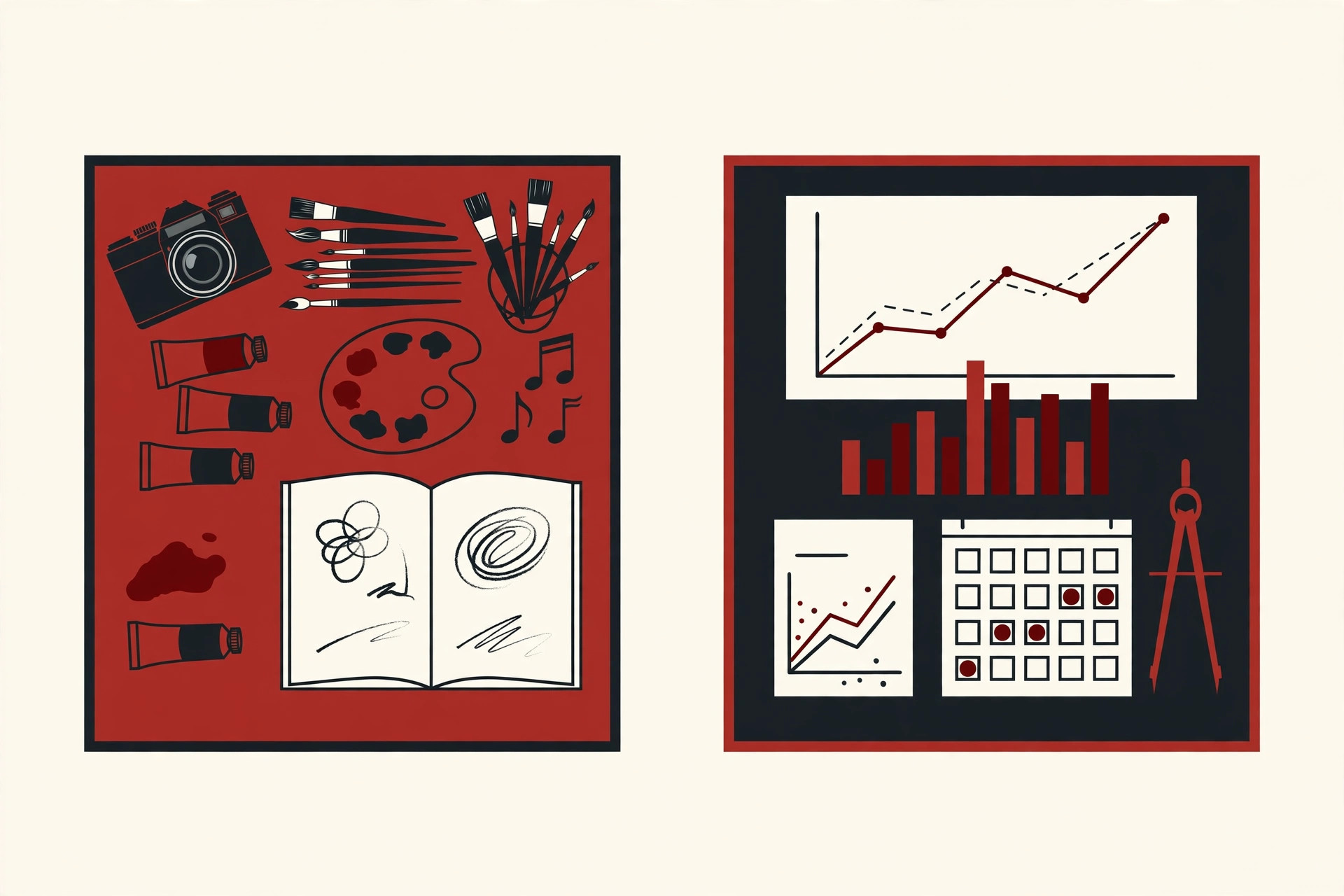
This is also why asking “which one wins in generative AI vs predictive AI?” is the wrong question. A paintbrush and a weather forecast are not rivals. You reach for each when its job needs doing.
Examples, Side by Side
Abstract definitions stick better with real life. Here are five everyday moments, each handled by one side or the other. Notice how naturally the generative AI vs predictive AI split shows up once you know what to look for.
- Writing a product description: generative. The tool invents fresh sentences about your new shoes.
- Guessing how many shoes you will sell: predictive. The model studies last year’s sales and the season, then forecasts demand.
- Designing a logo: generative. You describe the style, and it creates options that never existed.
- Flagging a stolen card: predictive. The system compares the payment with your normal habits and raises an alert.
- Answering a customer in chat: generative, usually. The bot composes a new reply on the spot. But if it first predicts which customers are angry, that scoring step is predictive.
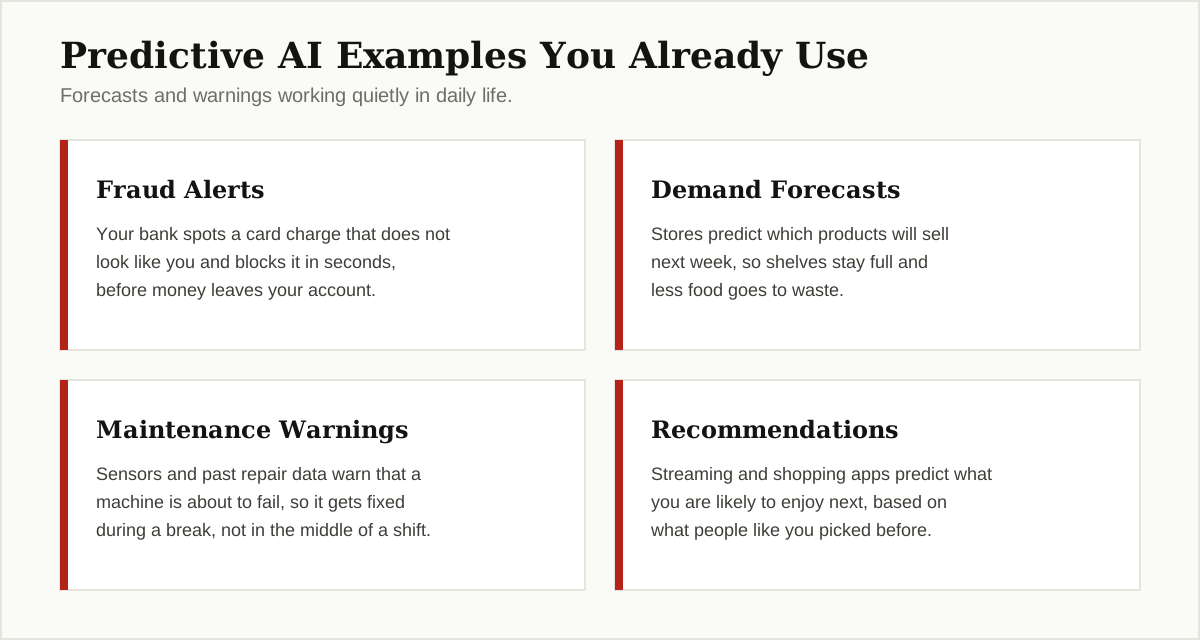
One more pair worth knowing: the recommendation row on a streaming app is predictive (it ranks what you are likely to watch), while the auto-generated summary of a show is generative (it writes new text). Many products quietly mix both, which brings us to the most interesting part.
How They Work Together: Generative AI for Predictive Analytics
The real magic starts when the two types stop working alone. In modern teams, generative AI for predictive analytics is becoming a standard pattern: the predictive model spots what is coming, and the generative model creates the response.
Picture an online shop. Its predictive model notices that 300 customers look likely to stop buying, and it can even rank who is most at risk. That is useful, but a list of names fixes nothing. So the shop feeds the list to a generative tool, which writes a personal win-back message for each customer, in the right tone, with a suitable offer. Sales staff then review and send them. The forecast found the problem. The generator did the talking.
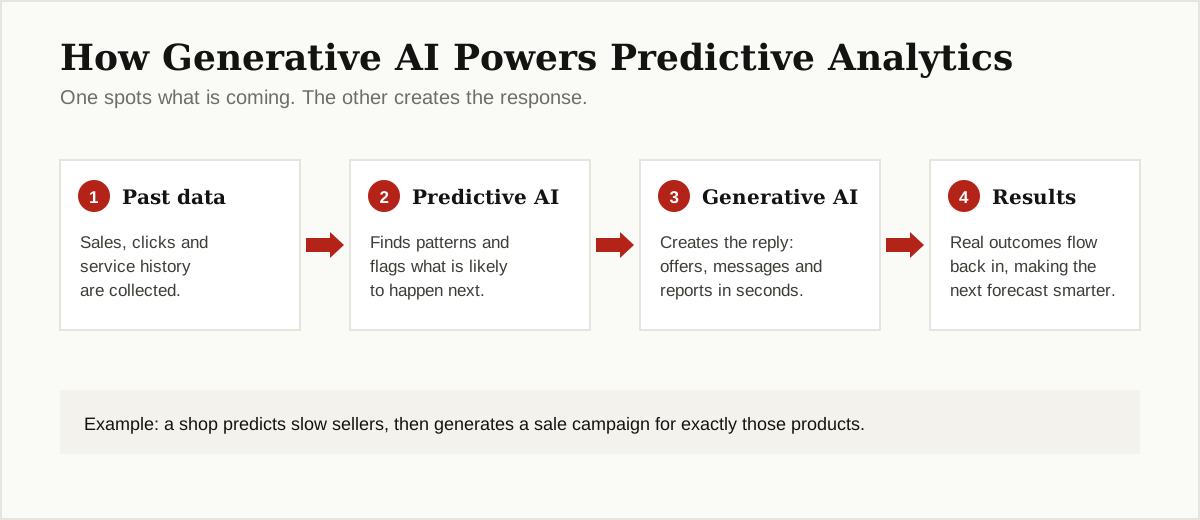
You can see the same teamwork in a hospital billing office. A predictive model scans insurance claims and flags the ones most likely to be rejected, based on thousands of past claims and their outcomes. A generative assistant then drafts the corrected explanation text for each flagged claim, so staff only have to review and send. The forecast aims the work. The generator does the paperwork. Neither tool alone would save the team as much time, and the same idea is now showing up in banking, logistics and customer support desks everywhere.
The same pattern appears everywhere. A predictive system flags a machine that may fail, and a generative assistant turns the sensor data into a clear repair brief for the technician. A forecast predicts a busy weekend, and a generative tool drafts the staff schedule announcement. This teamwork is one reason the agentic AI vs generative AI conversation matters: systems that plan and act on their own usually combine a forecasting brain with a creating one.
There is a data benefit too. Generative tools can create extra training examples, rewrite messy records into clean text, and turn raw model output into reports anyone can read. IBM’s guide to predictive analytics covers the forecasting side of this partnership in depth, and our own walkthrough of predictive analytics in supply chain shows the pattern running warehouses and delivery networks.
Which One Does Your Business Need?
Still deciding where to invest first? Ask one simple question: do I need something made, or something predicted?
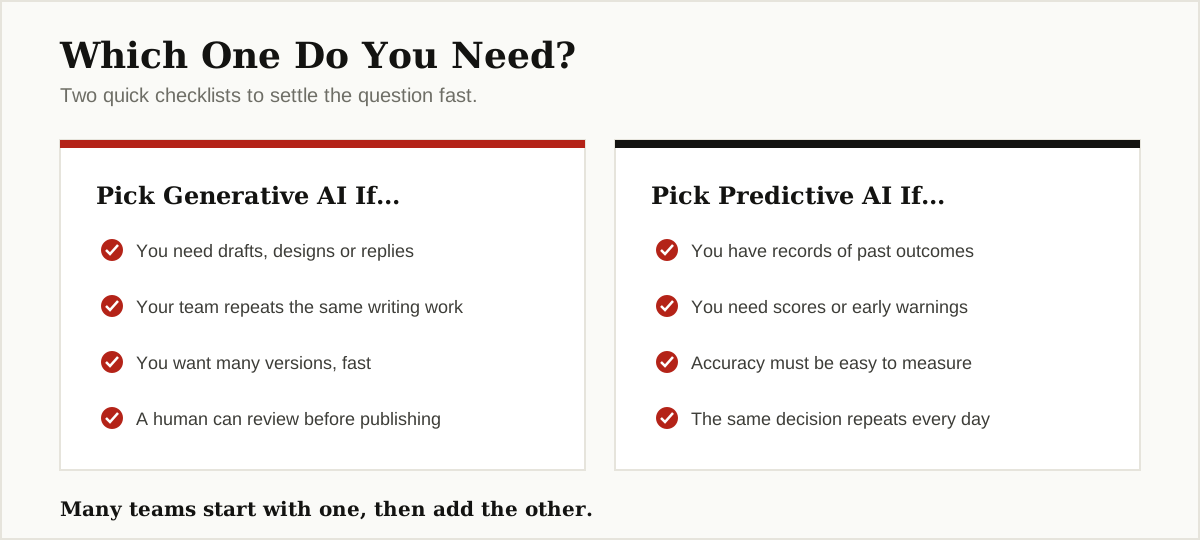
Choose predictive AI when:
- You have records of past events and their outcomes.
- You need a score, a ranking or an early warning.
- Being measurably right matters, like in fraud, credit or safety.
Choose generative AI when:
- Your team spends hours drafting, designing or answering.
- You need many variations of content, fast.
- A human will review the output before it ships.
Most growing companies end up with both, because the two solve opposite halves of the same workflow. Predictions tell you where to act. Generation helps you act quickly and at scale. Starting small is fine: one forecasting report or one writing assistant is enough to learn what works for your team.
Honest Limits of Both
Neither side is magic, and a fair look at generative AI vs predictive AI has to include the weak spots.
Generative AI can sound sure while being wrong. It invents facts, dates and quotes, a problem often called hallucination. Anything important it writes needs a human check. Its style can also feel samey, because it leans toward the most average answer.
Predictive AI is only as honest as its history. If past data contains unfair patterns, the model will learn and repeat them. It also struggles when the world changes suddenly, because a forecast built on yesterday can miss a brand new trend. And a confident percentage is still a guess, never a promise.
Knowing these limits is not a reason to avoid the tools. It is how you use them well: checks on generated content, fairness reviews on forecasts, and humans making the final calls that matter.
The Bottom Line
Generative AI creates. Predictive AI forecasts. That single sentence carries the whole generative AI vs predictive AI comparison: one produces new text, images, code and sound from a prompt, while the other studies history and returns scores, warnings and estimates.
You do not have to pick a permanent side in the predictive AI vs generative AI question. Use prediction to decide where to look, use generation to do the work once you get there, and let the two cover each other’s weak spots.
Want to keep learning in plain English? Browse our Generative AI and Agentic AI guides, where we break down agents, prompting and the newest AI tools the same simple way.