Two terms now show up in almost every talk about artificial intelligence: generative AI and agentic AI. They sound like close cousins, and vendors often use them as if they mean the same thing. They do not.
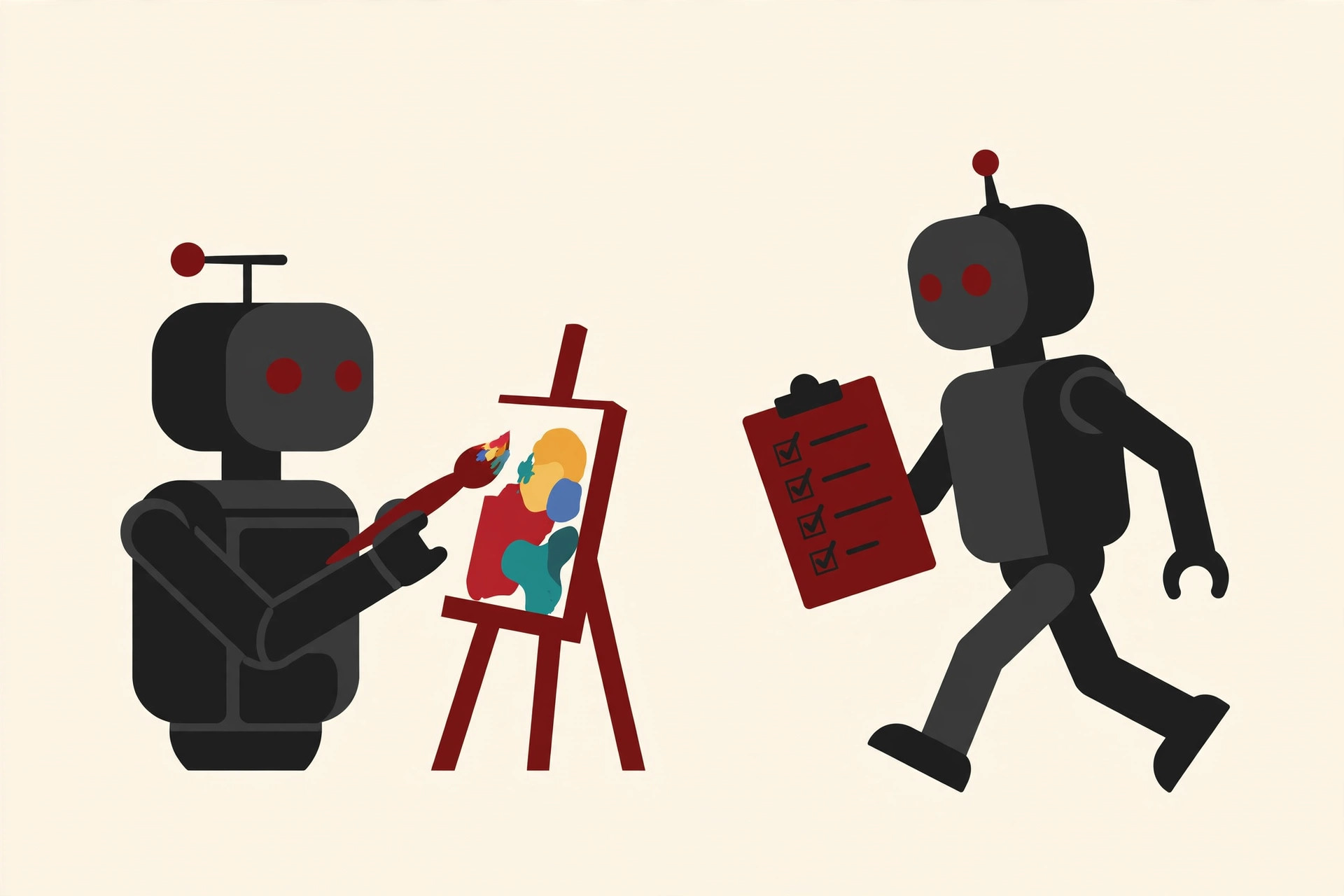
Here is the one-line difference. Generative AI creates content. You ask, it produces text, images, code, or audio, and then it stops. Agentic AI takes actions to finish a goal. You give it a target, and it plans the steps, uses real tools, checks its own work, and keeps going until the job is done.
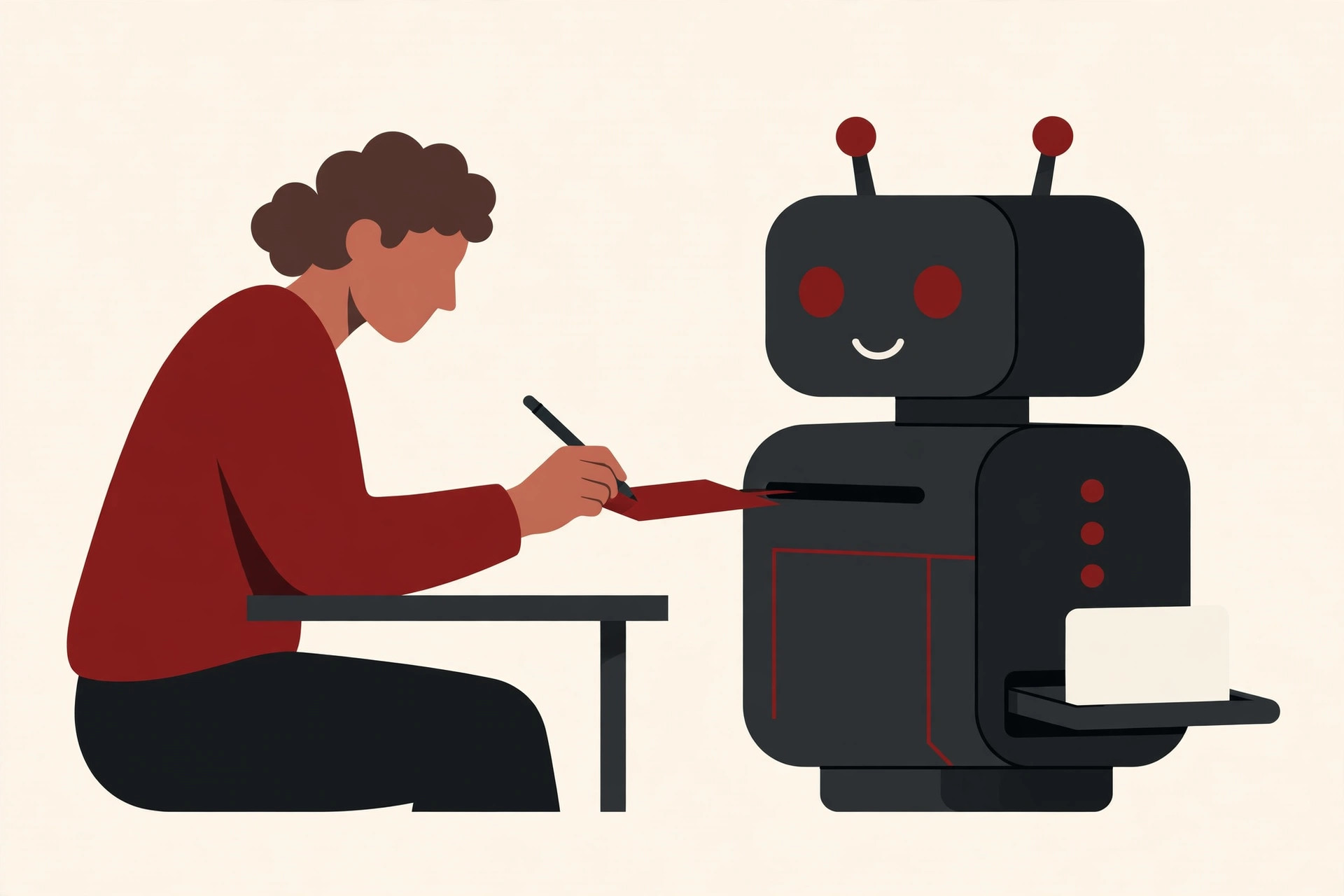
Think of generative AI as a talented writer at a desk, waiting for your next request. Think of agentic AI as a project manager with a to-do list, working through the list while you do other things.
This guide explains agentic AI vs generative AI in plain words: what each one is, how the same job looks through both lenses, where they overlap, and how to know which one you actually need. If you want the deep dive on the agent side alone, start with our guide on what agentic AI is and how it works.
Generative AI and Agentic AI, Defined Simply
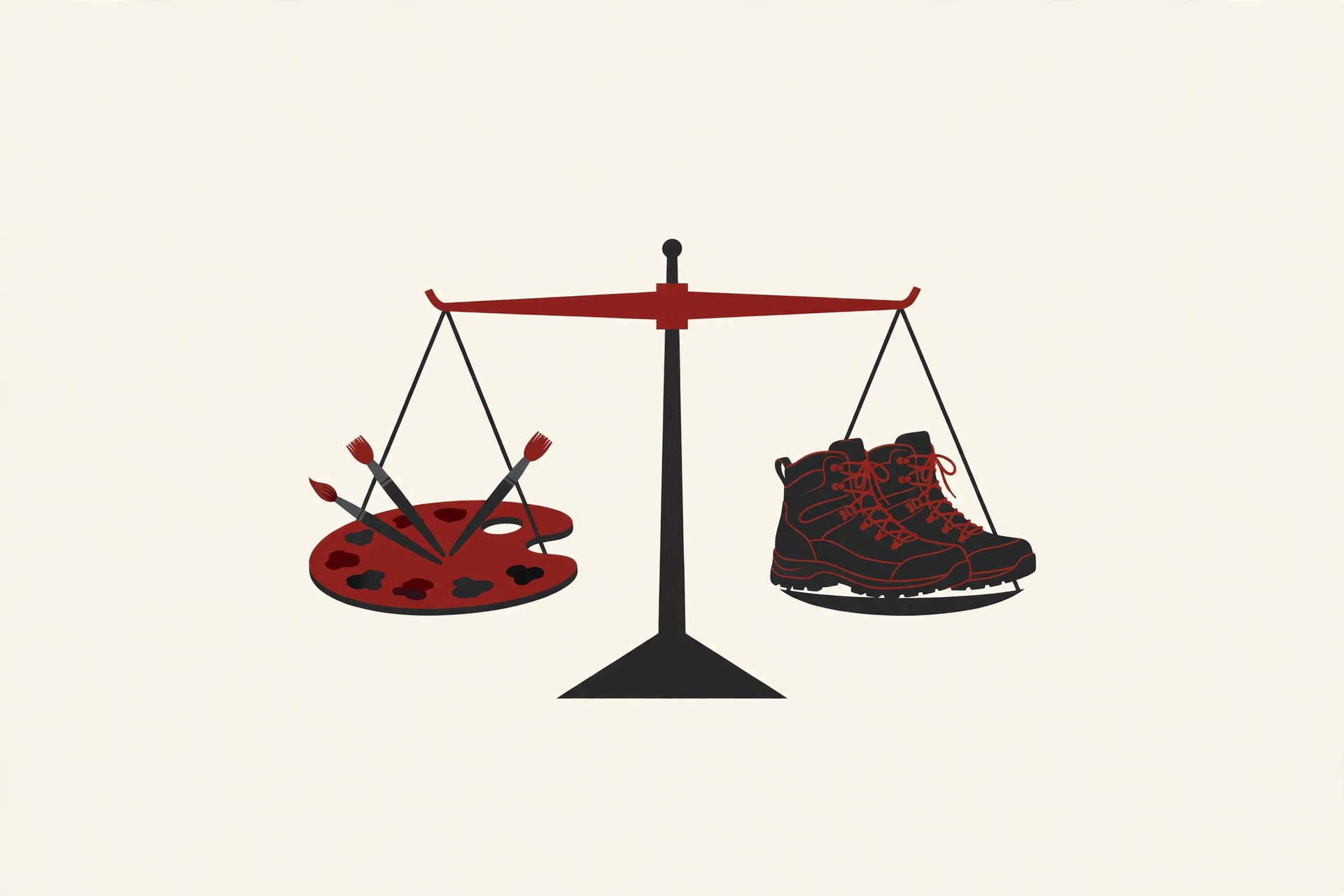
The fastest way to keep the two apart is to watch what each one does after you give it a job. One hands you something to read or look at. The other goes off and does things.
What Is Generative AI?
Generative AI is a type of AI that makes new content. It studies huge amounts of text, images, or sound, learns the patterns, and then produces fresh output that follows those patterns. ChatGPT writing an email, an image tool drawing a logo, a coding assistant suggesting a function: all generative AI.
IBM’s plain definition of generative AI describes models that create original content in response to a prompt. That last part is the key limit. A generative model works one request at a time. It has no memory of your bigger goal, no access to your tools, and no plan beyond the answer in front of it. You are the one who copies the output, pastes it into the next tool, and decides what happens next.
What Is Agentic AI?
Agentic AI is AI that acts like an agent: a worker you can hand a goal to. Instead of answering one prompt, it breaks the goal into steps, picks tools, does the work, looks at the result, and adjusts. It can browse the web, write and run code, send messages, update spreadsheets, and call other software through APIs.
IBM explains agentic AI as systems that act independently, plan ahead, and use external tools to reach a goal with limited human input. The human still sets the goal and the limits. The agent handles the steps in between.

Why This Debate Is Happening Now
Generative AI had its breakout moment first. When ChatGPT arrived in late 2022, millions of people suddenly had a machine that could write, summarize, and answer on demand. Businesses rushed to add chatbots and writing tools, and generative AI became the default meaning of “AI” for most people.
Agentic AI is the newer wave built on top of that success. Once the models got good at reasoning and following instructions, the obvious next question was: why should a human carry every answer to the next tool by hand? Companies began wrapping models in software that plans, clicks, calls, and checks. The result is the current shift from AI that talks to AI that works, and it is exactly why the agentic AI vs generative AI question matters for anyone buying or building with these tools.
One Goal, Two Approaches: The Product Launch Test
The difference between agentic AI and generative AI is easiest to see when both face the same job. Say your small company is launching a new product next month.
Hand the job to generative AI, and you get a helpful set of pieces. It writes the launch announcement. It drafts the emails. It creates a product image and a week of social posts. Every piece is useful, and every piece lands on your desk. You still have to research rival prices yourself, schedule the posts, send the emails, watch the replies, and build the report.
Hand the goal to an agentic system, and the work itself gets carried. The agent researches rival products, uses a generative model to write the copy, schedules the posts in your tools, sends the emails, tracks who replies, and hands you a summary at the end. You approve the plan and check the results. The agent does the walking between the steps.
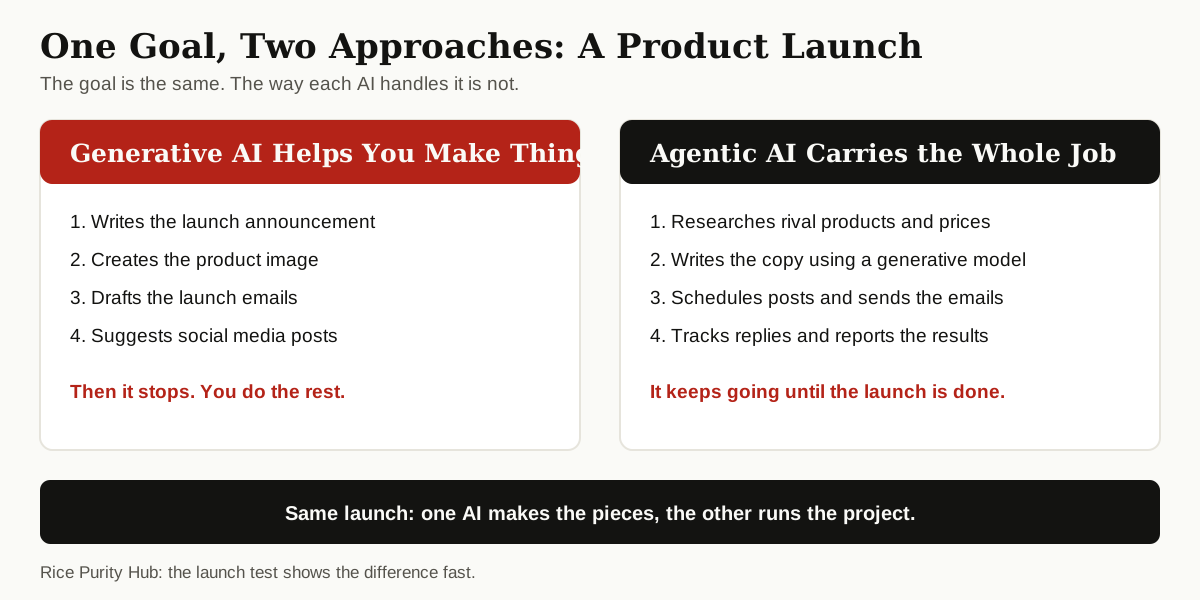
Notice the important detail: the agentic system still used generative AI inside step two of its work. That pattern shows up everywhere, and we will come back to it below.
Agentic AI vs Generative AI: The Full Comparison
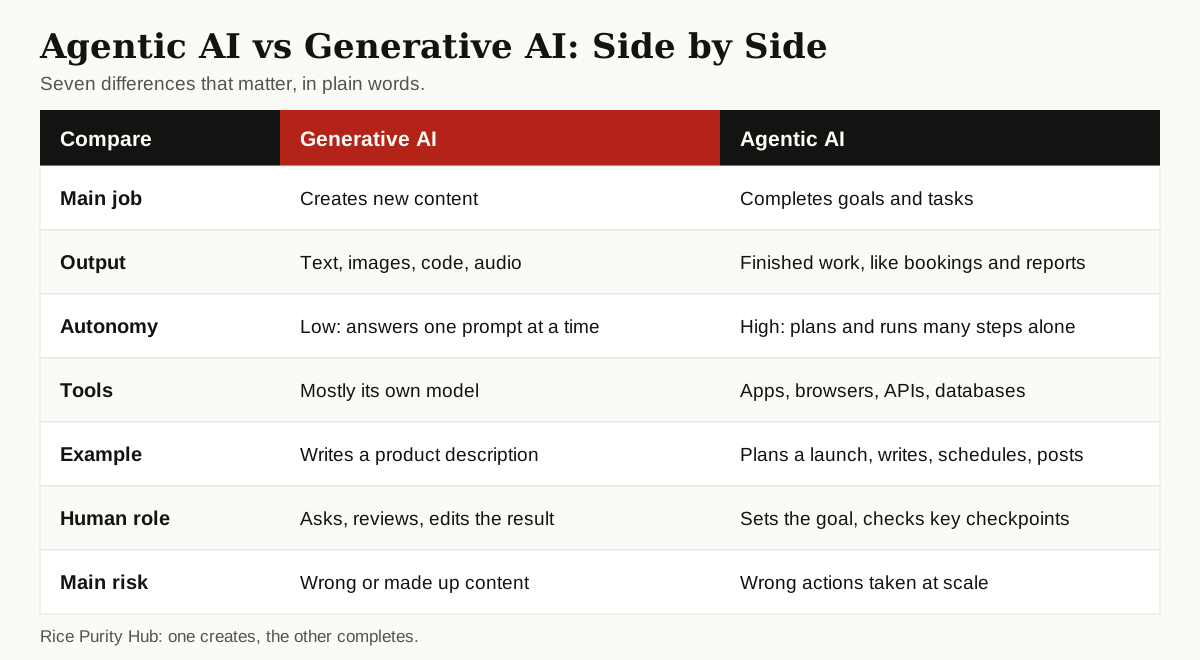
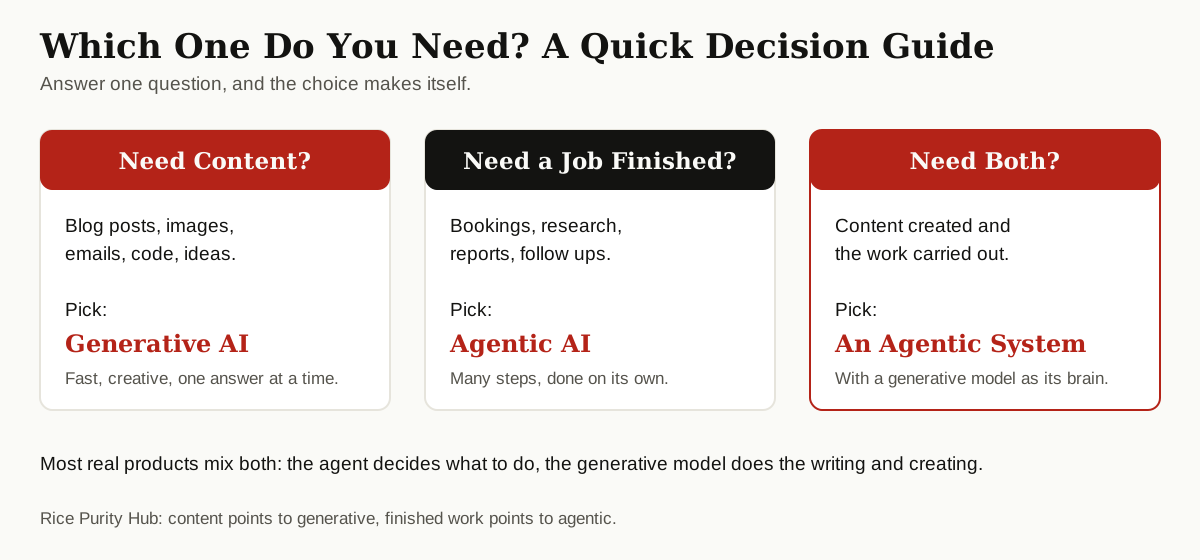
Here is the full generative AI vs agentic AI comparison in one place, first as a picture, then as a table you can scan.
| Compare | Generative AI | Agentic AI |
|---|---|---|
| Main job | Creates new content | Completes goals and tasks |
| Output | Text, images, code, audio | Finished work, like bookings and reports |
| Autonomy | Low: answers one prompt at a time | High: plans and runs many steps alone |
| Tools | Mostly its own model | Apps, browsers, APIs, databases |
| Memory | Forgets when the chat ends | Tracks goals, steps and results over time |
| Example | Writes a product description | Plans a launch, writes, schedules, posts |
| Human role | Asks, reviews, edits the result | Sets the goal, checks key checkpoints |
| Main risk | Wrong or made up content | Wrong actions taken at scale |
One row deserves a second look: memory. A basic generative chat forgets the conversation when it ends, unless the app saves it for you. An agentic system is built to remember the goal, the steps it already took, and what it learned along the way, sometimes across days of work. That memory is a big part of what makes long, multi-step jobs possible at all.
How They Work Together in Real Systems
Here is the part most explainers skip: in real products, the agentic AI vs generative AI debate is rarely an either-or choice. Agentic systems use generative models as their brain.
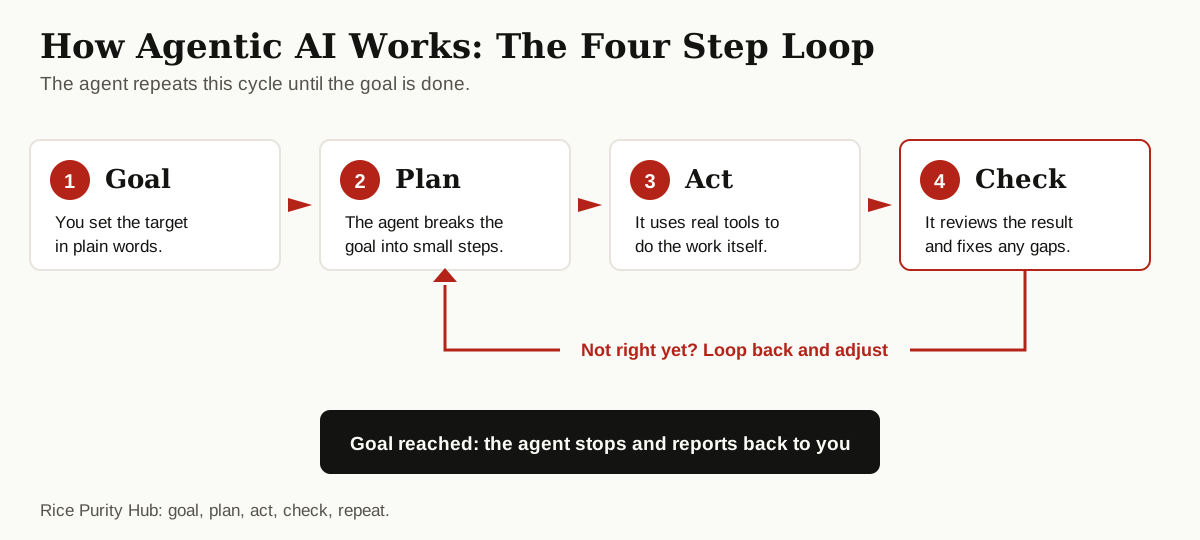
The loop looks like this. You set a goal. The agent plans the steps, which is a generative model thinking in text. The agent acts, calling a tool like a browser, a calendar, or a database. Then it checks the result, again using the model to judge what happened, and loops back until the goal is met.
The quality of that brain matters, which is why prompt engineering, the skill of asking models the right way, shapes how well agents reason and plan. And when an agent needs facts, it often pulls them from company documents using search built for AI, a pattern covered in our guide to agentic RAG. The generative model thinks and writes. The agent framework gives it hands, eyes, and a schedule.
See the partnership in one everyday job. An agent watching a support inbox reads a new complaint with a generative model, decides the customer needs a replacement, checks stock in the warehouse system, books the shipment, writes the apology email with the model again, and logs everything for the team. One goal in, six steps handled, and a person only steps in if the agent flags something it cannot solve.
Agentic AI vs AI Agents: Clearing Up the Confusion
If that comparison was not confusing enough, there is a third pair people mix up: agentic AI vs AI agents. They are related, but they are not the same thing.
An AI agent is one worker: a single unit built to do a job, like a support agent that answers tickets or a booking agent that reserves meeting rooms. Agentic AI is the wider approach and system: the planning, the tools, the memory, and often several agents working together under one goal.
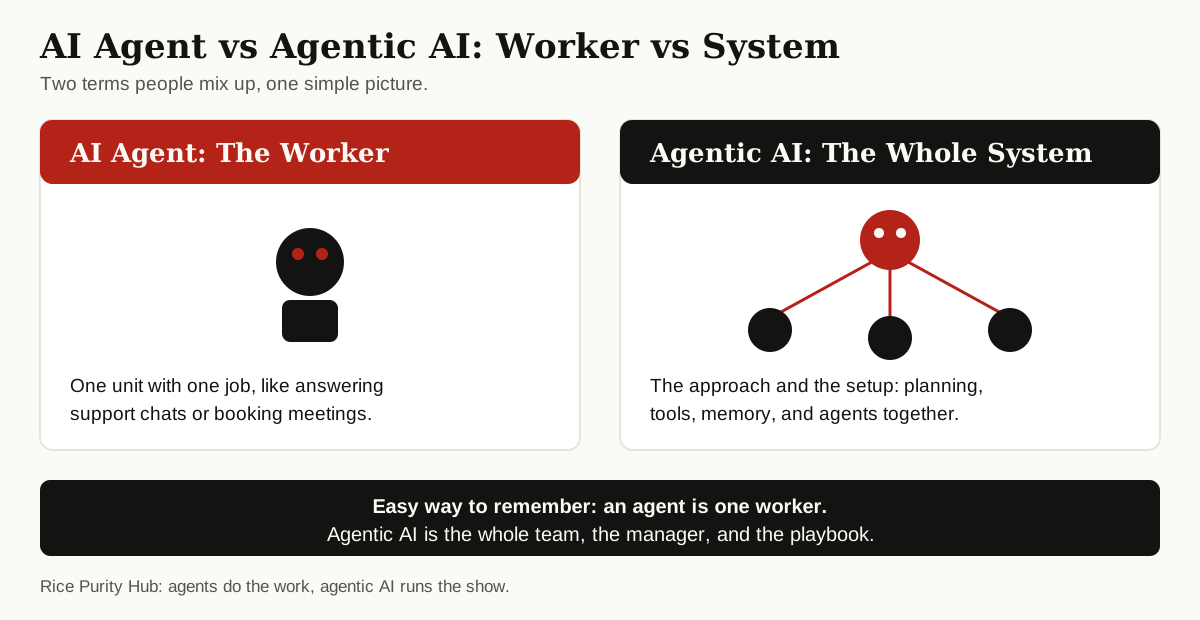
Google Cloud draws the same line in its guide to what AI agents are, where agents are the acting units inside these systems. Simple rule: if you can point at one worker doing one job, that is an agent. If you mean the whole setup that plans and coordinates the work, that is agentic AI.
Which One Does Your Business Actually Need?
Most teams do not need to choose a side forever. They need to match the tool to the job in front of them. That matching is the practical heart of agentic AI vs generative AI.
Choose generative AI when the output is the product: marketing copy, first drafts, images, summaries, code suggestions, brainstorming. A human reviews everything anyway, and the work is done in minutes.
Choose agentic AI when the job is a chain of steps with a clear finish line: processing invoices, qualifying sales leads, running weekly reports, triaging support tickets, keeping records in sync across tools. The value is not one good answer. It is fifty small actions finished without you touching each one.
Start small either way. Give an agent one narrow, low-risk job, watch how it handles the work, and widen its freedom only after it earns trust. That habit matters more than any feature list.
Agentic AI Examples vs Generative AI Examples
Still deciding which camp a tool belongs to? Run it through these pairs. The left side creates. The right side completes.
- Content: Generative AI writes a product description. An agent researches rival listings, writes the description, publishes it, and adjusts the price when stock runs low.
- Support: Generative AI drafts a reply to an angry customer. An agent reads the ticket, checks the order, issues the refund, sends the reply, and logs the case.
- Research: Generative AI summarizes one report you paste in. An agent gathers ten reports, compares the numbers, builds a table, and emails you the findings.
- Coding: Generative AI suggests the next lines of code. An agent takes a bug report, finds the faulty file, writes a fix, runs the tests, and opens the change for review.
- Travel: Generative AI writes a pretty itinerary. An agent checks real flight times, books within your budget, adds the trip to your calendar, and watches for delays.
The Honest Limits of Both
Neither side is magic, and both fail in their own ways.
Generative AI can sound confident while being wrong. It invents facts, copies the style of its training data, and has no idea whether its answer worked, because it never sees the result. Every output needs a human reader with judgment.
Agentic AI adds a sharper risk: it acts. A wrong answer in a chat is embarrassing. A wrong action, like emailing the wrong client, deleting the wrong file, or booking the wrong flight, costs real money. Agents also fail at long chains: one small error early can poison every step after it. That is why serious setups include spending limits, approval checkpoints for big actions, and logs a human can review.
Cost is a real limit too. An agent that loops for an hour uses far more computing power than one chat answer, and someone pays for every loop.
The Bottom Line
If you remember one rule from this agentic AI vs generative AI guide, make it this one: if you need something made, use generative AI. If you need something done, use agentic AI.
Generative AI is the creative engine: fast, flexible, and happiest with a human steering each step. Agentic AI is the operator built around that engine: it plans, acts, checks, and finishes. The most useful systems of the next few years will not pick a side. They will pair a strong generative brain with careful agentic hands, and keep a human in charge of the goals.
Keep exploring with our other Generative AI and Agentic AI guides, where we break down agents, prompting, and real business use cases in the same plain English.