Every day, millions of people talk to AI chatbots. They ask for recipes, homework help, business plans, and advice at 2 in the morning. Most of those chats stay private. But some of them end up in a public AI chatbot conversations archive, where anyone can read and study them.
An archive like this may sound strange at first. Why would anyone save old chats? The answer is simple: real conversations are gold for the people who build AI. They show how real people actually talk, ask, and complain, and that helps builders train better chatbots.
In this guide, you will learn what these archives are, where they come from, and which ones are famous. You will also learn the honest privacy risks, plus how to export and delete your own chats.
What Is an AI Chatbot Conversations Archive?
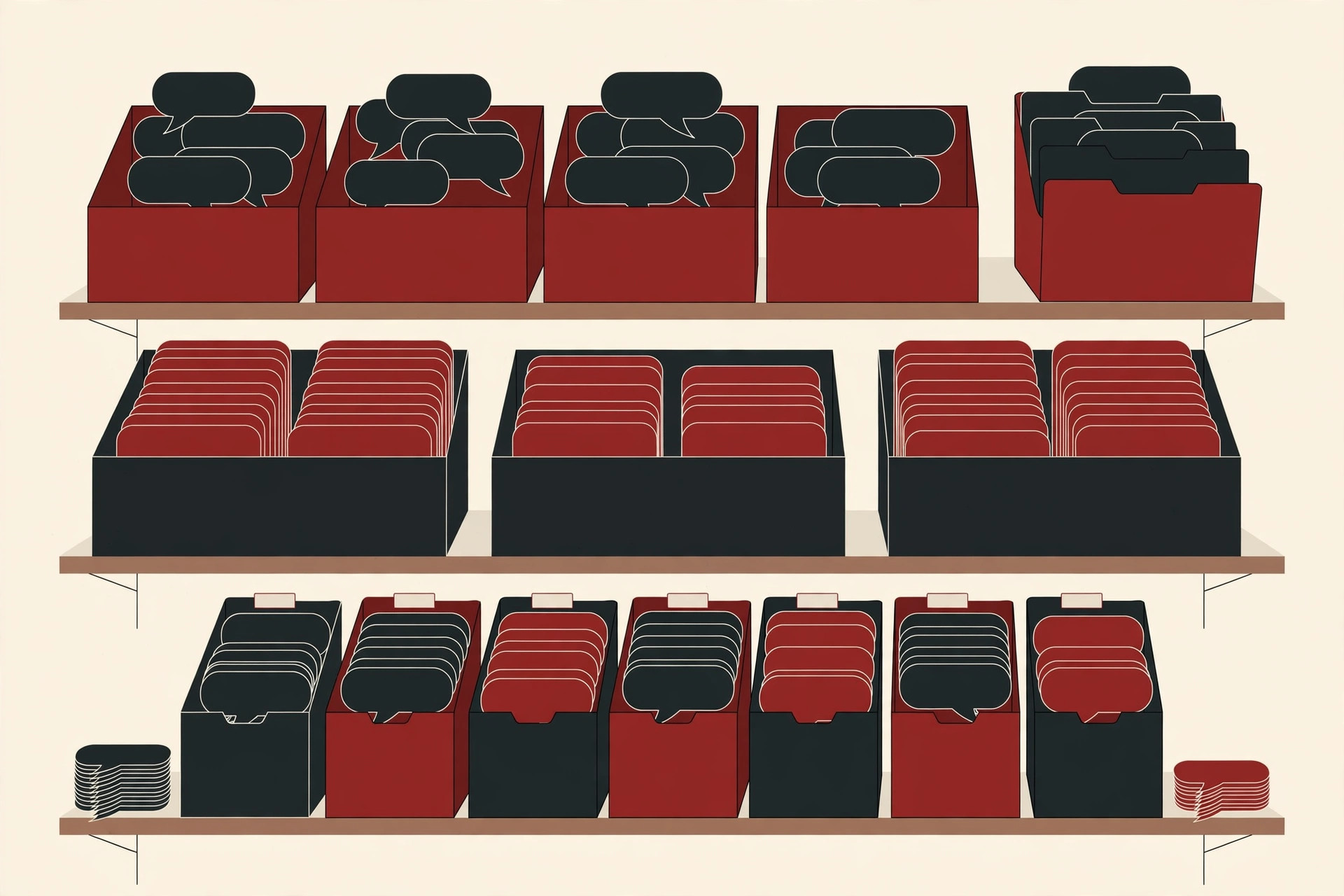
An AI chatbot conversations archive is a big collection of real chats between people and AI chatbots, saved together in one file or database. Each record holds the full back and forth: what the person asked, and what the chatbot answered.
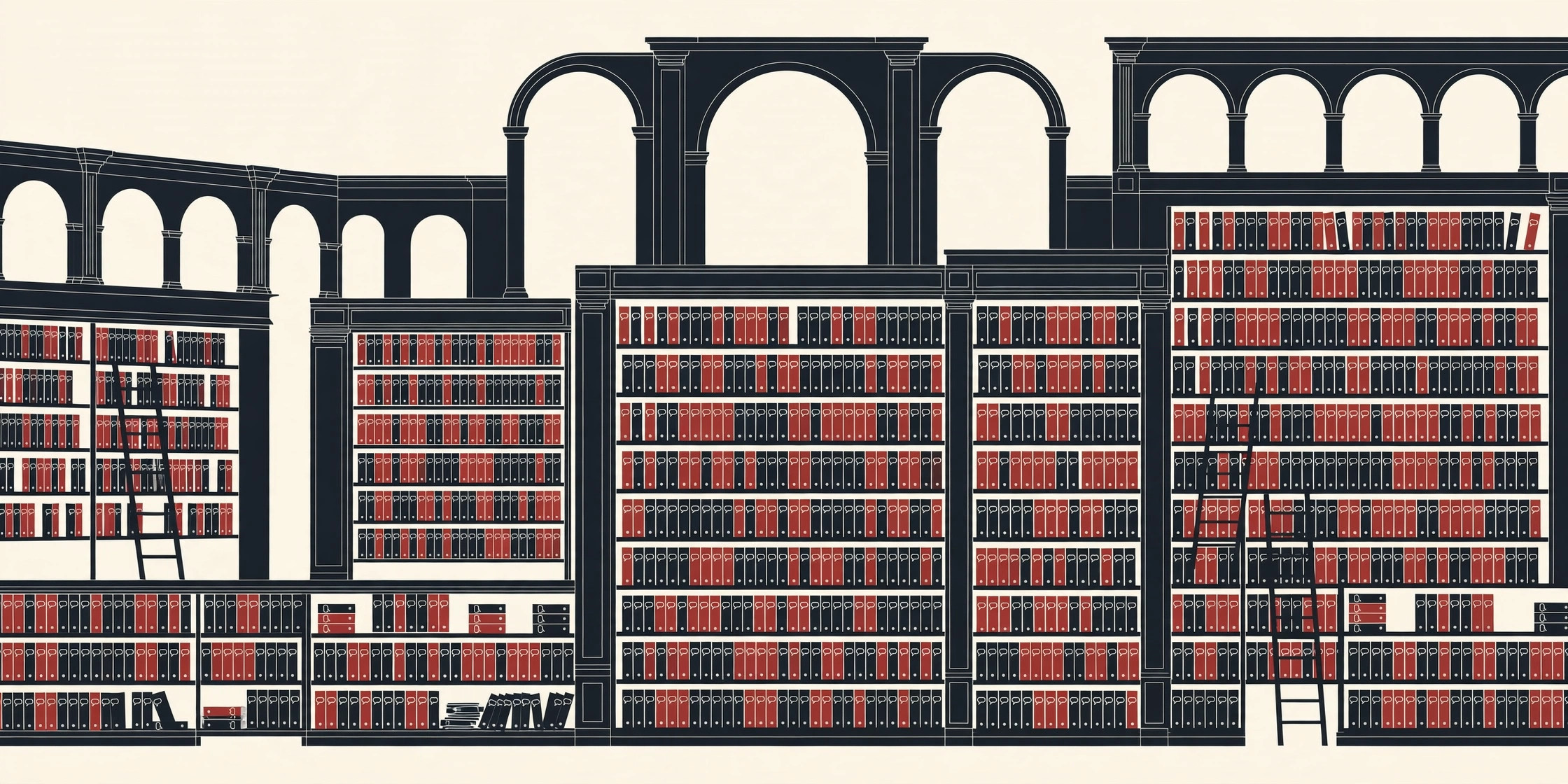
Think of it like a library. A normal library stores books. This kind of library stores conversations. Some hold a few thousand chats. The biggest ones hold more than a million.
Builders often call the same thing an ai chatbot conversation dataset, because they use the chats as training data. Most archives are free to download. Research teams post them on sites like Hugging Face, where anyone can take a copy for study.
Open one record and you will usually see the same parts: the exact words the person typed, the full answer from the chatbot, the name of the model, and the date. Some archives also note the language of the chat and a safety flag from an automatic filter. Nothing fancy, just the raw material of a conversation, saved in a tidy row.
If you are new to this world, it helps to know how these models learn in the first place. Our guide to machine learning models explains it in plain words.
Where Do These Archives Come From?
These archives come from three main places.
First, some users share their own chats on purpose. In early 2023, a site called ShareGPT let people post their best ChatGPT chats with one click, using a small browser add-on. Thousands of people shared funny, useful, or surprising chats, mostly for fun.
Second, some archives come from free chatbot services. Research groups ran free chatbots online, and in return, visitors agreed that their chats could be saved for research. The person got a free tool, and science got real data.
Third, some come from test sites where people compare chatbots. On Chatbot Arena, visitors chatted with two anonymous chatbots side by side and voted for the better answer. Those chats, and the votes, became research data too.
In all three cases, the deal was based on consent. People clicked agree, or chose to share. That detail matters, and we will come back to it in the privacy section below.
The Famous Public Archives
Three archives are famous in the AI world. If you read anything about chatbot research, you will meet these names again and again.
ShareGPT
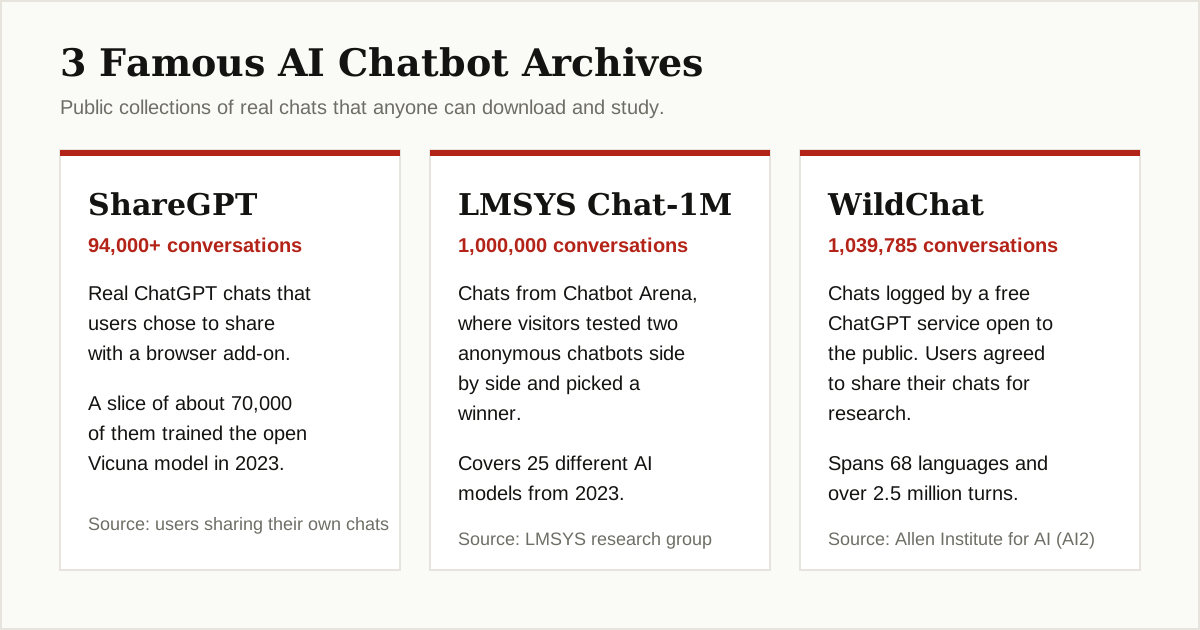
ShareGPT was the first big one. Users shared their ChatGPT chats on a public site, and the collection grew to more than 90,000 conversations with GPT-3.5 and GPT-4.
In 2023, the Vicuna team took about 70,000 of those chats and used them to train an open chatbot called Vicuna. The result surprised everyone: a small open model, trained on shared chats, reached about 90 percent of ChatGPT quality in early tests judged by GPT-4.
The sharegpt dataset, as builders call it, proved a big point. Real chats could teach a model almost as well as expensive examples written by hand.
LMSYS Chat-1M
Next came LMSYS Chat-1M, built by the LMSYS research group, a team based at UC Berkeley with partner universities. It holds one million real conversations with 25 different AI models, collected between April and August 2023 on the Vicuna demo and Chatbot Arena sites, from more than 200,000 visitors.
Before release, the team removed personal details, and consent came from the terms of use on the sites. You can browse the LMSYS Chat-1M dataset on Hugging Face today.
WildChat
WildChat came from the Allen Institute for AI, known as AI2. The team offered free access to chatbots powered by GPT-3.5 and GPT-4, hosted in public, and users agreed that their chats could be collected for research.
The result was WildChat, with 1,039,785 conversations, more than 2.5 million turns, and 68 languages. Personal details were removed before release, and IP addresses were hashed, which means they were scrambled so the original numbers cannot be read.
Here is the quick comparison:
| Archive | Where the chats came from | What it is used for |
|---|---|---|
| ShareGPT | Users shared their own ChatGPT chats | Training open chatbots like Vicuna |
| LMSYS Chat-1M | Chatbot Arena and the Vicuna demo | Studying users, safety tests, training |
| WildChat | A free public ChatGPT service by AI2 | Research on real use and toxic chats |
What Is This Data Used For?
So why do researchers want millions of old chats? There are four main reasons.
Training new chatbots. A model learns to talk by studying examples. Real chats teach it how people really ask questions, with typos, slang, and all. This is the same idea behind natural language processing, the field that helps computers understand human language.
Testing and safety. Archives include rude, tricky, and harmful prompts that real users typed. Safety teams use them to check whether a new model can be pushed into bad behavior.
Studying people. The chats show what the public actually uses AI for: writing, coding, study help, and plenty of strange experiments. That is hard to learn in any other way.
Building test questions. Hard questions from real chats become exam questions for new models, so builders can score one model against another.
When a team downloads an AI chatbot conversations archive for training, they usually clean it first. They remove duplicates, spam, and any personal details that slipped through.
Libraries and universities like these files for another reason: they are a time capsule. Ten years from now, a researcher will be able to open one of them and see exactly how people in 2023 talked to the first famous chatbots, what they asked for, and what they worried about.
The Privacy Risks You Should Know
Now the honest part. A shared chat can say a lot about the person who wrote it.
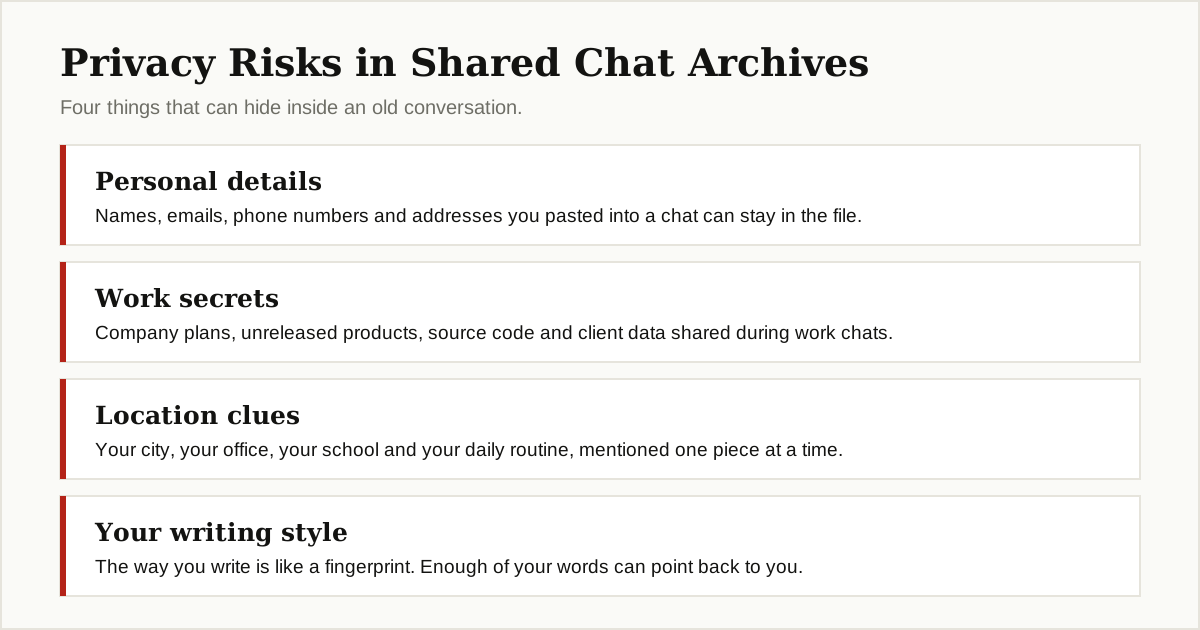
People paste personal things into chatbots all the time: names, email addresses, health worries, money problems, and work documents. If that chat is shared or logged, those details can travel with it. Good archive teams remove personal details before release, and both the LMSYS and WildChat teams say they did. But no cleaning process is perfect.
There are quieter risks too. Small clues add up: your city, your job, your school, and your daily routine can identify you when combined. Even your writing style is a kind of fingerprint. And once a chat lands inside a public AI chatbot conversations archive, you cannot pull it back, because copies spread fast and deleting the original does not delete the copies.
The lesson is not to fear chatbots. The lesson is to think before you paste. Treat every chat like a postcard, not a sealed letter: fine for normal use, but do not write secrets on it. And never share a chat in public until you have read it again with fresh eyes.
If you want the bigger picture of how this data trains models, see our explainer on machine learning algorithms.
How to Export Your Own Chats
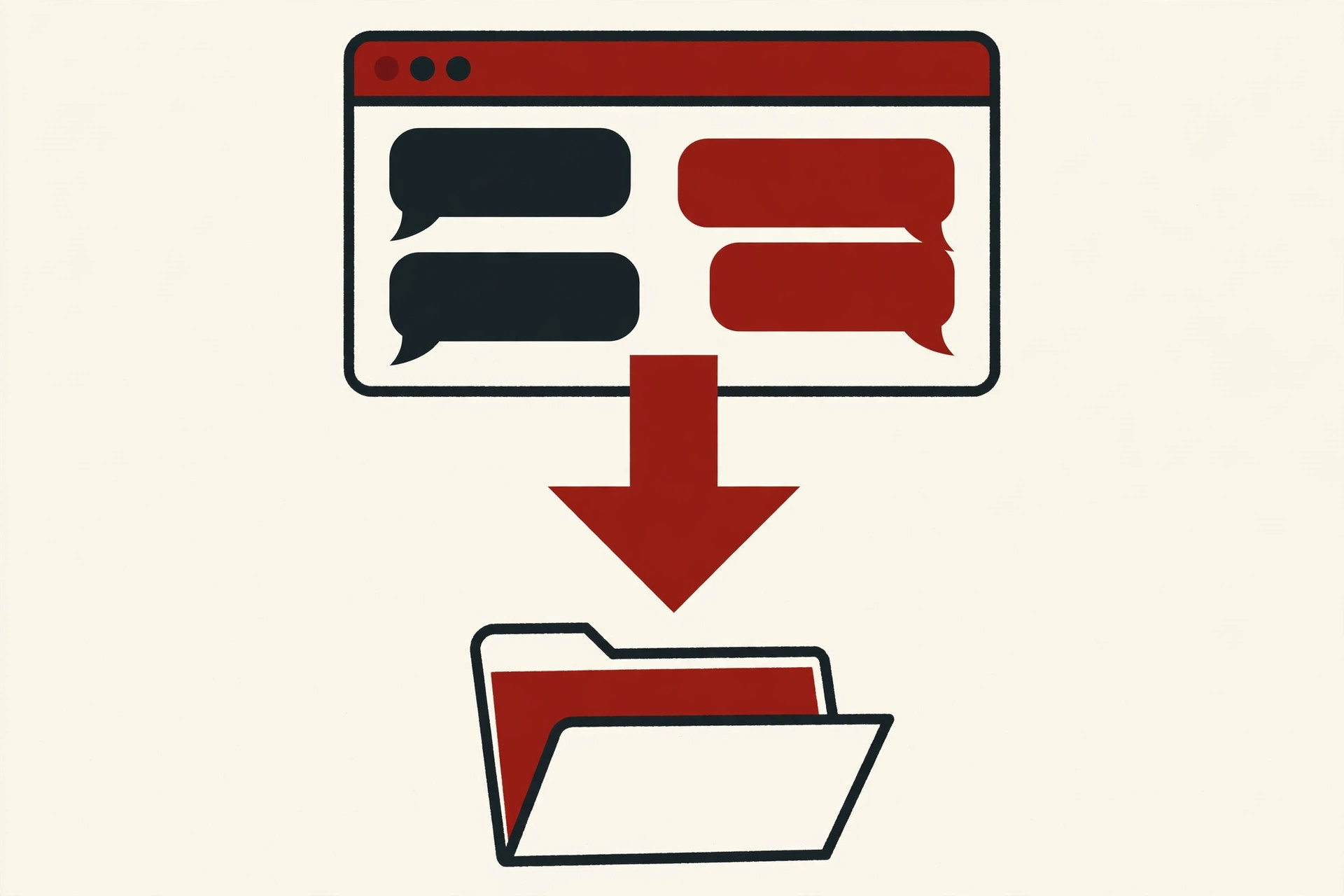
Public archives are only half the story. Your own chatbot conversation history matters too. Maybe you want a backup before you delete an account. Maybe you keep useful prompts and answers for work. Either way, an export gives you a private copy that you control.
In a few minutes, you can build a personal AI chatbot conversations archive on your own computer, one that nobody else can see.
ChatGPT
The steps for ChatGPT are simple, and OpenAI explains them on its export help page.
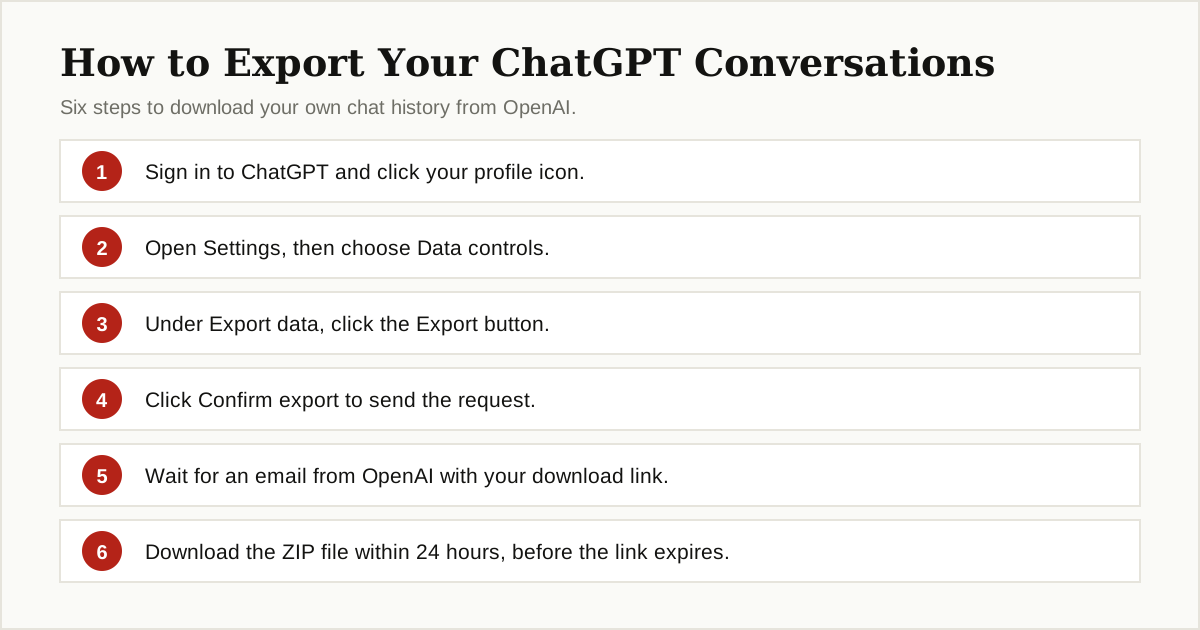
- Sign in to ChatGPT and click your profile icon.
- Open Settings, then choose Data controls.
- Under Export data, click Export.
- Click Confirm export.
- Wait for an email from OpenAI. For big accounts, this can take a while.
- Download the ZIP file within 24 hours, because the link expires.
Inside the ZIP you will find a chat.html file that you can read in any browser, plus a conversations.json file with the same chats in data form. Store the file somewhere safe, because it holds everything you ever typed into the app.
A word of care: your export is sensitive. It can hold years of questions about health, money, work, and family. Keep it on your own device or in a private folder, and never upload it to a random converter site just to read it. The chat.html file inside already opens in any browser.
Claude and Gemini
Claude has a similar option. Open Settings, go to the Privacy section, and look for the export button. Anthropic emails you a download link when your file is ready.
For Gemini, your chats live inside your Google account. Open Google Takeout, pick Gemini Apps, and export. Google sends you a copy of your activity, including your Gemini chats.
Whichever tool you use, the pattern is the same: ask for the export, wait for the email, and download fast before the link dies.
How to Delete Your Chats
Export first, delete second. That order keeps you safe, in case you change your mind or delete the wrong thing.
In ChatGPT, open the chat you want to remove, click the three dots next to its name, and choose Delete. To remove everything at once, open Settings, then Data controls, and choose Delete all chats. OpenAI says deleted chats leave your account at once and are removed from its systems within 30 days in most cases.
In Claude, you can delete single chats from the sidebar, or manage your data in Settings. In Gemini, open the Gemini Apps Activity page inside your Google account. There you can delete one chat, delete a whole period, or turn off saving completely.
One warning: deleting a chat inside the app does not remove copies that were already shared in public. If you shared a chat link in the past, open the shared links list in your settings and remove it there too.
Conclusion
An AI chatbot conversations archive is a library of real human and AI chats. The famous ones, ShareGPT, LMSYS Chat and WildChat, helped train and test the chatbots we all use today. They also carry real privacy risks, which is why the best teams clean them with care, and why you should think before you share or paste.
Your own chats are in your hands. Export a copy for safekeeping, delete what you do not want kept, and you get the best of both worlds.
For more plain English guides like this one, browse our AI, ML and Data Science category.