Type “agentic ai pindrop anonybit” into a search engine and you will find dozens of pages treating the three terms like one single product. They are not one product, and nobody sells a bundle with that name. So why do the searches keep growing?
The short answer is fear, and a real one. AI can now copy a human voice from a short recording. AI agents, software that acts on its own, can call your bank, chat with support desks and move through business systems without a person touching a keyboard. Companies suddenly need two answers at once: is this voice real, and is the person or agent behind it who they claim to be?
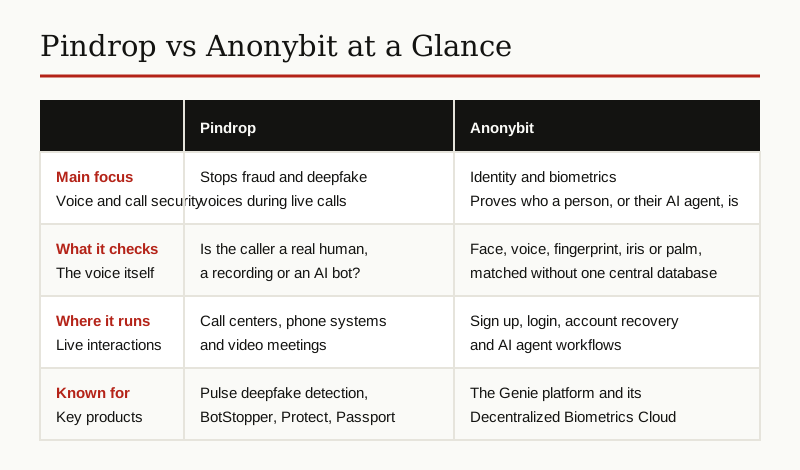
That is where the two companies in this search come in. Pindrop works on the first question, the voice. Anonybit works on the second, the identity. This guide explains what each one actually does, what is verified and what is not, and why agentic AI is forcing both questions into the same conversation.
The Problem: AI Voice Clones and Agent Scams
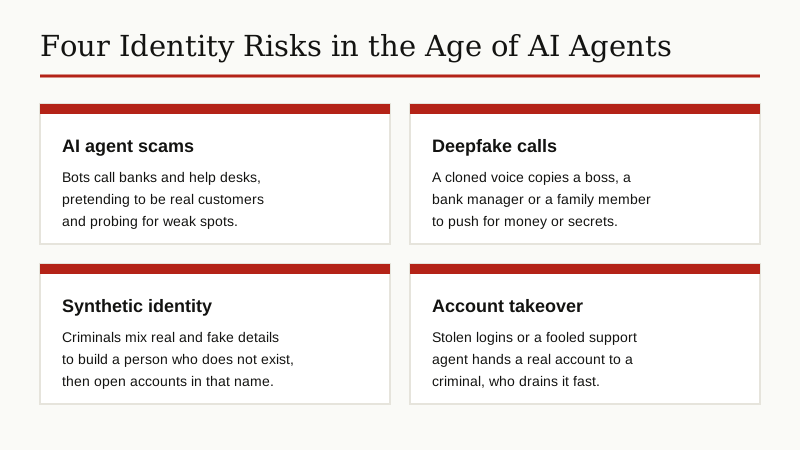
A deepfake voice is a computer copy of a real person’s voice. Feed a cloning tool a few seconds of audio, often taken from a video or a voicemail greeting, and it can speak new sentences in that voice. Criminals use these clones in two main ways.
The first is the family emergency scam. A grandparent gets a call from a voice that sounds exactly like a grandchild in trouble, asking for money fast and begging them not to tell anyone. The second is aimed at companies. A cloned executive voice calls a finance worker and orders an urgent payment, or a bot calls a bank help desk again and again, testing questions until it finds a weak one.

AI agents make this bigger. An agent does not get tired, does not need sleep and can make thousands of calls. Pindrop says AI powered attacks across more than 700 million customer interactions it monitors rose nearly 1,680 percent since late 2024. That is a company figure, so treat it as a claim from an interested seller, but the direction matches what banks and hospitals report in public: machine callers are now a daily problem, not a rare trick.
There is a second identity problem too. Criminals build synthetic identities, fake people stitched together from real and invented details, and use them to open accounts that no real person stands behind. Add stolen logins and fooled support agents, and you get account takeover, where a criminal walks into a real account through the front door.

What Pindrop Does: Guarding the Voice
Pindrop is a voice security company founded in 2011 in Atlanta. Its software sits inside call centers and phone systems and listens to calls as they happen. According to Pindrop, its tools study more than 1,300 signals on a call, covering the voice itself, the device and the network the call came from. Three product names matter here:
- Pindrop Protect scores each call for fraud risk, so suspicious callers can be slowed down or sent to a fraud team before money moves.
- Pindrop Passport checks whether a caller matches who they claim to be, quietly in the background, instead of relying on easy to steal security questions.
- Pindrop Pulse is the deepfake detection engine. It looks for the tiny flaws that separate a living human voice from a synthetic one, and it also works in video meetings on platforms like Zoom, Webex and Teams.
In September 2026, Pindrop launched a product aimed squarely at the agent era. As Pulse 2 reported, Pindrop BotStopper is a standalone tool that detects AI voice agents and automated callers in real time. It is built on Pulse, and Pindrop says it can decide in about two seconds whether a caller is a human or a machine. It is backed by the company’s AI Voice Consortium, a registry of more than 5,000 known AI voices, which helps the system recognize specific known agents, not just flag that a voice sounds synthetic.
Pindrop calls this the first step toward “agentic identity”. Its chief executive, Vijay Balasubramaniyan, put it plainly in the launch announcement: “The goal is not to block AI agents.” The goal, he said, is to know which agent is calling, who it represents and what it should be allowed to do. In the same announcement, Pindrop shared a production example: at one large health care organization, bot calls peaked at 6,668 in a single month with about 15.1 million dollars of health savings account balances at risk, and that bot activity fell by 94.3 percent within four months of using its bot detection. Optum Financial, part of UnitedHealth Group, is a named Pulse customer in the release.

What Anonybit Does: Guarding the Identity
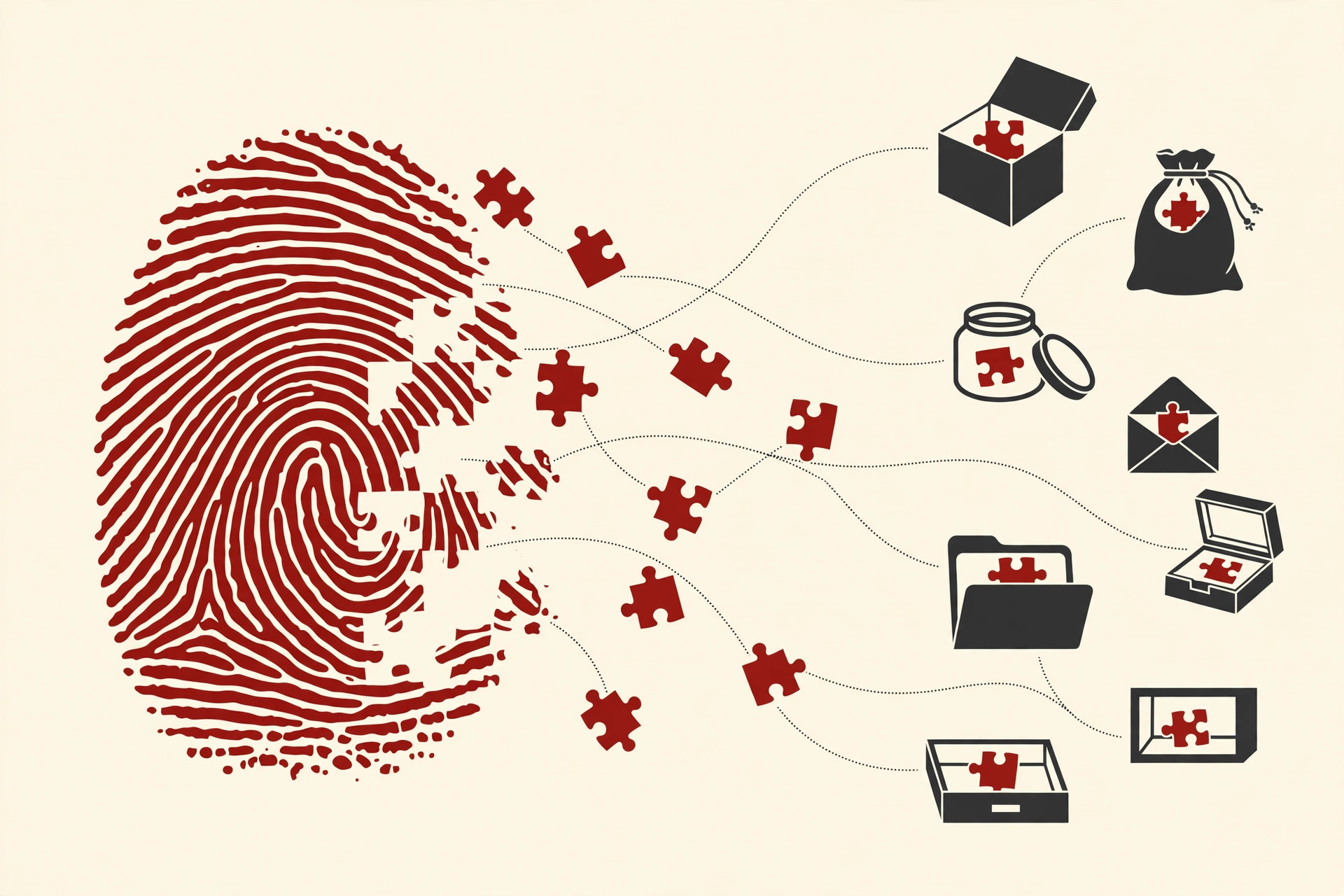
Anonybit attacks the other side of the problem. It is an identity company whose main idea is simple: biometric data, the digital map of your face, voice, fingerprint, iris or palm, should never sit in one big database waiting to be stolen. A password can be reset after a breach. A face cannot.
So Anonybit splits each biometric template into encrypted pieces and spreads those pieces across many servers, an approach it calls decentralized biometrics. Matching still works: when you log in, the system compares a fresh sample against the scattered pieces without ever rebuilding a complete copy in one place. The company is clear that this is not blockchain; it is a patented storage and matching design.
Its main platform is the Anonybit Genie, which connects the full identity journey: signing up, proving who you are, logging in without a password, and recovering an account safely. Under it sit the Decentralized Biometrics Cloud, which does the split storage and matching for face, voice, fingerprint, iris and palm, and a Decentralized Data Vault that protects other personal data the same way. The platform plugs into enterprise systems such as PingOne DaVinci and Microsoft Entra.
Anonybit moved into the agent era in May 2025. In its own announcement, the company said it had launched, with the no-code agent platform SmartUp, the first live use of agentic commerce secured by decentralized biometrics. The idea: before an AI agent acts for a person, that person proves who they are with biometrics, and the agent then carries a secure identity token that limits what it may do and leaves an audit trail of its actions. Co-founder and chief executive Frances Zelazny said agentic commerce brings real risks around trust, fraud and control without identity, and that identity-bound agents can work “in production, not just in theory.”
The Connection: Two Layers, One Problem
Here is the honest part, because this is the part most pages get wrong. We found no official partnership, integration or joint product between Pindrop and Anonybit. Neither company has announced one, and reputable coverage of each company does not mention the other. Blog posts describing a single combined “agentic ai pindrop anonybit stack” are describing an idea, not a product you can buy.
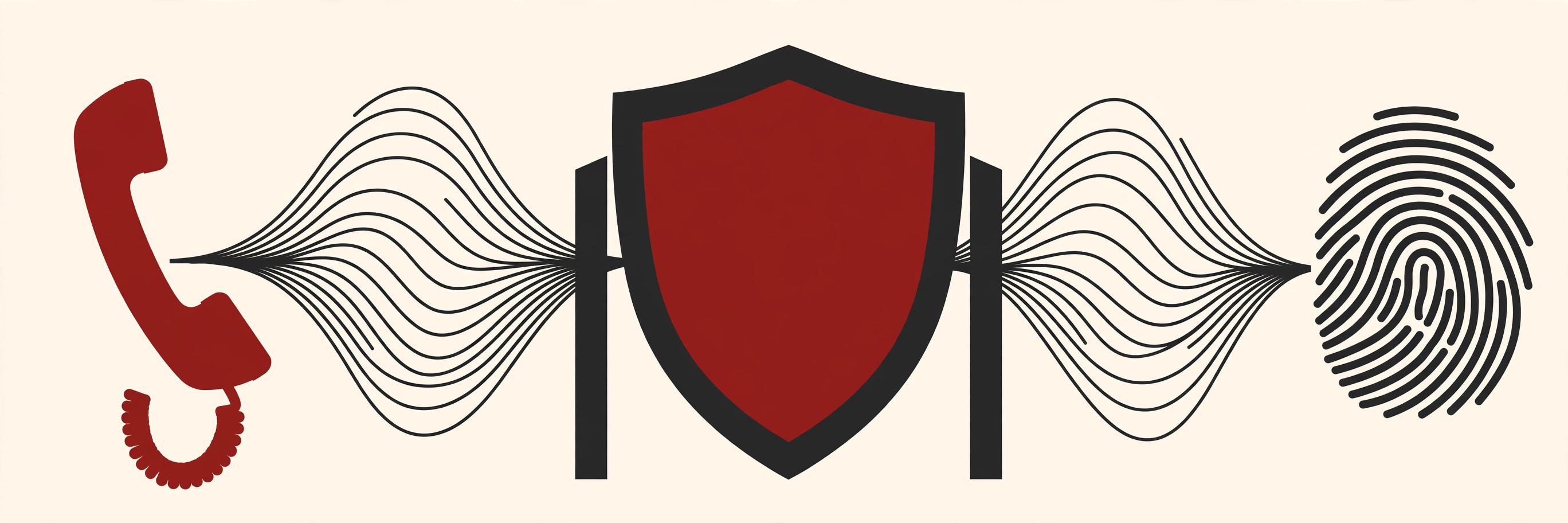
But the idea itself makes sense, and it explains the search volume. The two companies cover two different layers of the same phone call:
- Pindrop asks: is this voice real? It studies the sound and the call itself, and flags deepfakes and bots.
- Anonybit asks: is this the right person? It checks biometrics and identity, stored in a way that resists breaches.
A bank could, in theory, use tools like both. A call arrives, voice detection checks whether a machine is speaking, and an identity check confirms the customer behind the request. If an AI agent calls on a customer’s behalf, the agent era version of the same flow, the bank needs both answers: which agent is this, and which verified human authorized it? Pindrop is building toward the first answer with BotStopper and its voice registry. Anonybit is building toward the second with its identity-bound agent tokens. Voice analysis leans on the same natural language processing and audio machine learning covered elsewhere on this site, while face checks lean on computer vision. The two approaches fit together neatly. They are just not, as far as anyone has announced, one company or one deal.
How This Tech Works, Step by Step
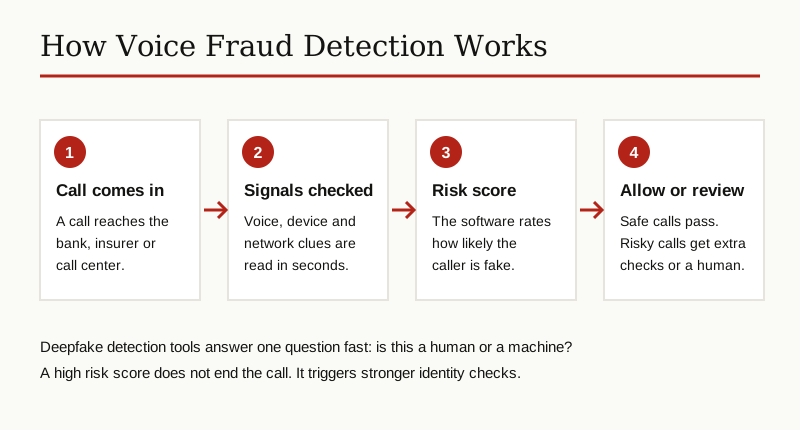
Strip away the brand names, and the flow behind the agentic ai pindrop anonybit idea looks like this:
- A call or request arrives. It might be a customer, a cloned voice, or an AI agent working for someone.
- The voice is checked. Detection software studies the audio and the call signals for signs of synthetic speech, recordings and known bots, and produces a risk score in seconds.
- The identity is checked. If the risk is high, or the request involves money, the system asks for stronger proof: a biometric match, a secure token, or both.
- A decision is made. Low risk requests pass with no friction. Medium risk gets extra checks. High risk is blocked or handed to a human fraud team.
- Everything is logged. For AI agents especially, each action is tied back to the verified person who allowed it, so there is a record when something goes wrong.
Who Uses This Kind of Protection
The buyers are organizations that lose money when identity fails on the phone or online. Banks and credit unions protect accounts and wire transfers. Health care companies protect patient data and savings accounts, as the Pindrop example above shows. Insurers guard claims lines, phone companies fight SIM swap fraud that often starts with a call, and large employers use identity tools for passwordless login and safe account recovery for staff. In general terms, if a company runs a big call center or lets AI agents touch customer accounts, it is shopping in this market. That is also why the agentic ai pindrop anonybit search keeps growing: buyers are trying to cover both layers, voice and identity, at the same time.
Honest Limits
None of this is magic, and three limits deserve plain words. Pages ranking for agentic ai pindrop anonybit sometimes promise one finished shield against every threat in this article. No such shield exists yet.
First, false alarms happen. A real customer with a bad connection, a cold, or an unusual calling pattern can look risky to detection software. Good systems answer with extra checks, not a slammed door, but friction is real.
Second, this is an arms race. Voice cloning tools improve every few months, so detectors must retrain constantly, and a detector that wins today can fall behind next year. Any vendor accuracy number, including the ones in this article, is a snapshot, not a promise.
Third, privacy questions are fair to ask. Voice and biometric checks mean companies process deeply personal data. Anonybit’s whole design is one answer to that worry, since no single database holds a complete template. But laws on biometric data vary by place, and companies still have to earn consent and handle data carefully. Finally, there is no shared industry standard yet for agentic identity. Pindrop and Anonybit each use their own approach, and how these systems will plug together across companies is still being worked out.
What This Means for Regular People
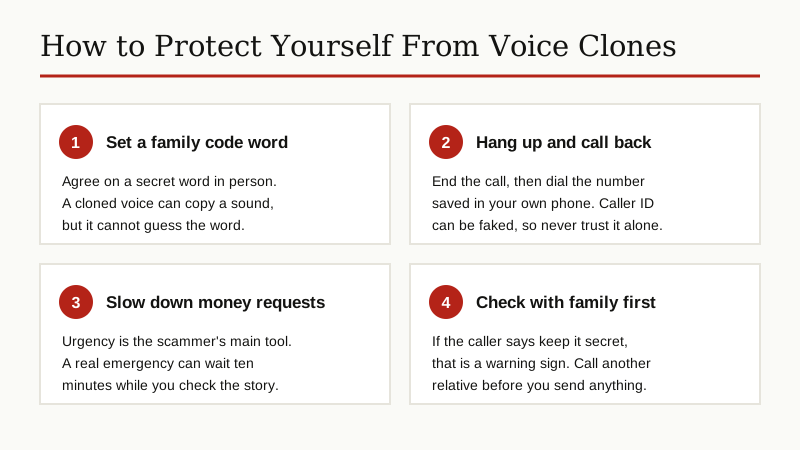
You will probably never buy either product, but the scams they fight can reach your phone. The US Federal Trade Commission gives simple advice for voice cloning scams: do not trust the voice. If a loved one calls in a panic asking for money, hang up and call them back on the number saved in your phone. Agreeing on a family code word in advance is even stronger, because a cloned voice can copy how someone sounds, but it cannot know a secret word that was never posted online. Treat urgency itself as a warning sign. Real emergencies survive a ten minute check; scams are built to prevent one.
Conclusion
The phrase agentic ai pindrop anonybit is not a product. It is a shortcut for a real shift in security: as AI learns to speak and act like us, proving who is on the other end becomes the central problem. Pindrop guards the voice, checking whether a caller is human, a recording or a known AI agent. Anonybit guards the identity, checking the person behind an account or an agent without keeping everyone’s biometrics in one risky pile. No partnership between them has been announced, but the questions they answer belong together, and banks, hospitals and call centers are already paying for both kinds of answers. More guides like this one live in our Generative AI and Agentic AI section.