If you follow uk ai regulation news today 2025, one fact stands out above the rest: the United Kingdom still has no single law for artificial intelligence. While the European Union has written one large rulebook, the EU AI Act, Britain has picked a different path. It lets the regulators it already has watch over AI in their own fields, and it tests the most powerful models in a government lab instead of licensing them.
That choice shapes everything else in this story. It explains why the big uk ai regulation news 2025 headlines were about a growth plan, a renamed safety institute, a refused signature in Paris and a loud fight over copyright, rather than about a new act of Parliament.
This guide pulls the whole year together in plain words: how the UK system works, the key dates in 2025, what the AI Security Institute does, and what may come next. Our AI news and regulation section tracks these stories as they develop.
The UK Approach, Explained in Plain Words
In March 2023, the UK government published a white paper called “A pro-innovation approach to AI regulation”. You can read the official approach on the government policy page. The plan rests on one simple idea: do not build a new AI regulator and do not pass one giant AI law. Instead, give the job to the regulators that already exist.
Each regulator covers the field it knows. The Information Commissioner’s Office watches data and privacy. Ofcom watches media and online safety. The Competition and Markets Authority watches fair competition, and the Financial Conduct Authority watches banks and finance. In February 2024, the government asked these regulators to publish how they would handle AI in their areas.
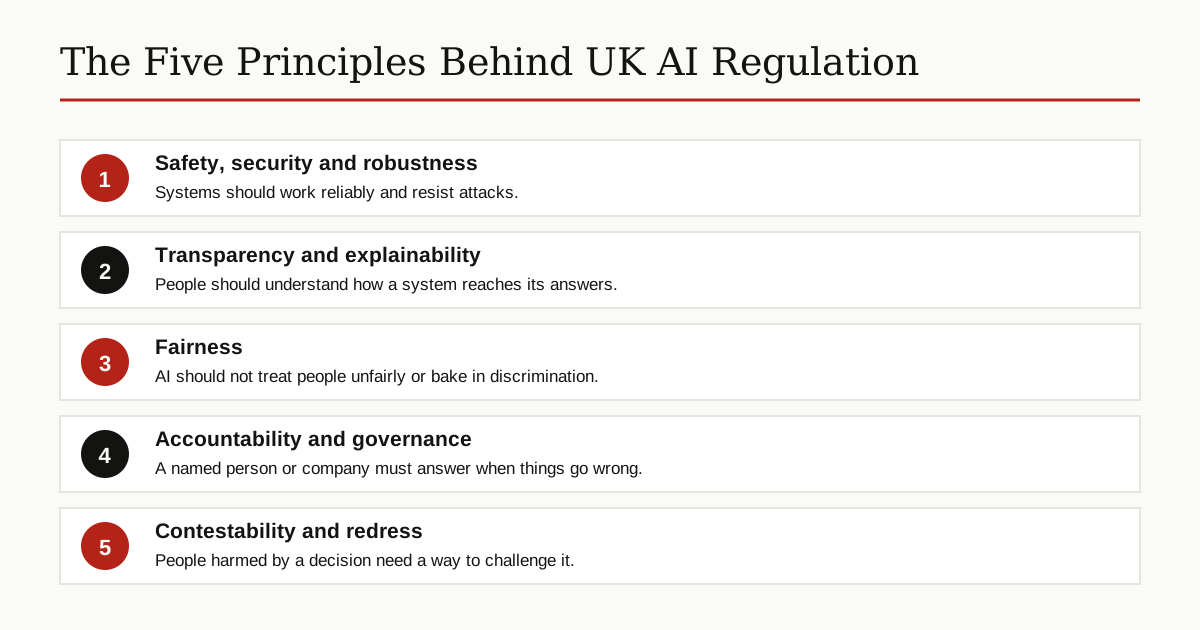
To keep them pulling in the same direction, the white paper set five principles that every regulator should apply:
- Safety, security and robustness. AI systems should work reliably and resist attacks.
- Appropriate transparency and explainability. People should be able to understand how a system reaches its answers.
- Fairness. AI should not treat people unfairly or bake in discrimination.
- Accountability and governance. A named person or company must be responsible when something goes wrong.
- Contestability and redress. People harmed by an AI decision need a way to challenge it and get it fixed.
The principles are guidance, not law. Regulators apply them using powers they already have under older laws, such as data protection and consumer law. Supporters say this keeps rules flexible and close to real problems. Critics say a patchwork of guidance leaves gaps, because no single body can ban a risky AI product outright. That debate runs through almost every piece of uk ai regulation news in 2025.
The Big UK AI Regulation News in 2025
13 January 2025: A Growth Plan Comes First
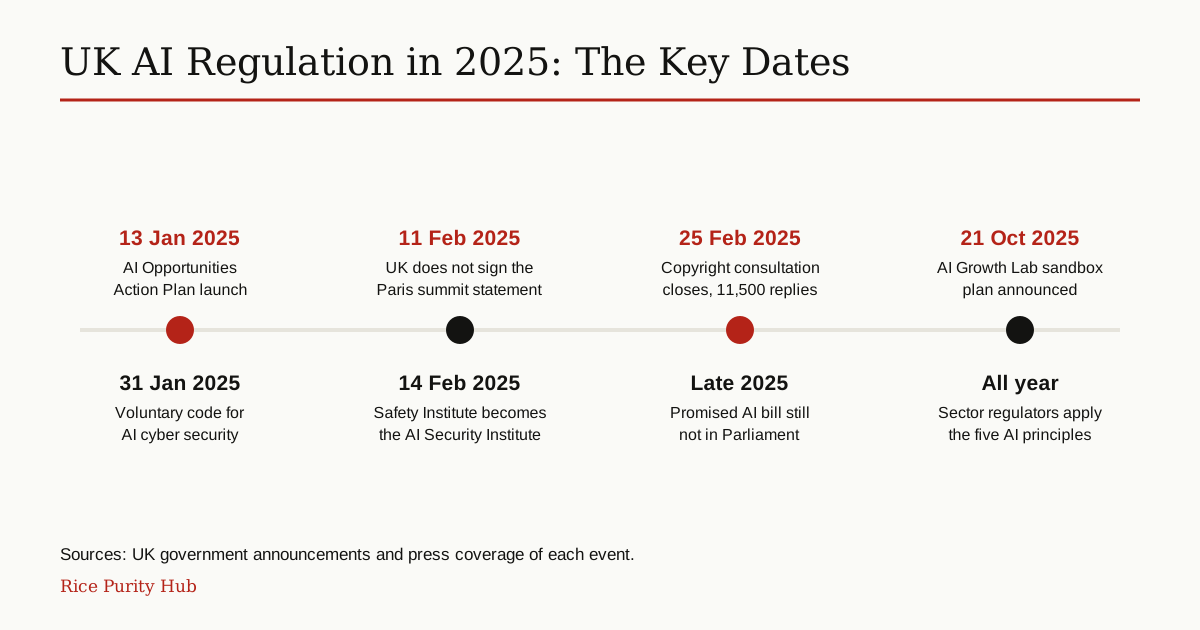
The year opened with growth, not rules. On 13 January 2025, the government published the AI Opportunities Action Plan, written by tech entrepreneur Matt Clifford. The plan listed 50 recommendations, covering faster data centers in new AI Growth Zones, at least twenty times more public computing power by 2030, and wider AI use in public services. Prime Minister Keir Starmer backed the plan in full, and the government agreed to 48 of the 50 recommendations and partly agreed to the other two. The message was clear: Britain wants to be an AI maker, not just an AI buyer.
31 January 2025: A Voluntary Code for AI Cyber Security
On 31 January 2025, the government published a voluntary Code of Practice for the Cyber Security of AI. It gives developers a checklist for building and running AI systems safely, from training data to user access. Because it is voluntary, no company can be fined for ignoring it. Still, it shows where ministers think the real dangers sit: stolen models, poisoned data and weak access controls.
11 February 2025: Britain Says No in Paris
In February, world leaders met in Paris for the AI Action Summit. About 60 countries signed a closing statement that promised AI would be open, inclusive and sustainable. The United Kingdom and the United States refused to sign. The UK government said the statement did not go far enough on national security and global governance, and a Downing Street spokesperson said Britain would only sign initiatives that are in the UK national interest, as Computer Weekly reported at the time. Safety campaigners criticized the move, but it matched the government’s new tone: growth and security first, shared ethics statements second.
14 February 2025: The Safety Institute Gets a New Name
Three days after Paris, on 14 February 2025, the AI Safety Institute became the AI Security Institute. The government said the new name matches a narrower job: risks with a security angle, such as AI help for cyber attacks, chemical and biological weapons, fraud and child sexual abuse material. The renamed institute would not focus on bias or free speech, the government added. On the same day, the UK also signed a partnership with the AI company Anthropic on using AI in public services. This renaming is the most quoted fact in uk ai safety regulation news today 2025 coverage, because it showed the government shifting from broad safety worries to national security risks.
Through 2025: The AI Bill That Has Not Arrived
In the King’s Speech of July 2024, the government promised laws to place requirements on the people building the most powerful AI models. Reports through 2025 said the bill was delayed more than once, first early in the year and again in the summer, when Technology Secretary Peter Kyle spoke of a wider, more comprehensive bill in a later session of Parliament. By the end of 2025, no AI bill had been put before Parliament. The promised law is expected to be narrow: it would turn today’s voluntary model testing into a legal duty for a small number of frontier AI labs.
21 October 2025: Testing AI in a Sandbox
The most practical uk ai regulation october 2025 update came on 21 October 2025, when Technology Secretary Liz Kendall announced the AI Growth Lab at the Times Tech Summit. The lab will run regulatory sandboxes, safe testing zones where companies can trial AI products in real world conditions with some rules relaxed for a limited time under close supervision. The first sandboxes will cover health care, professional services, transport and advanced manufacturing. The idea is simple: let innovators prove a product works before the full weight of regulation lands on it.
The AI Security Institute and What It Tests
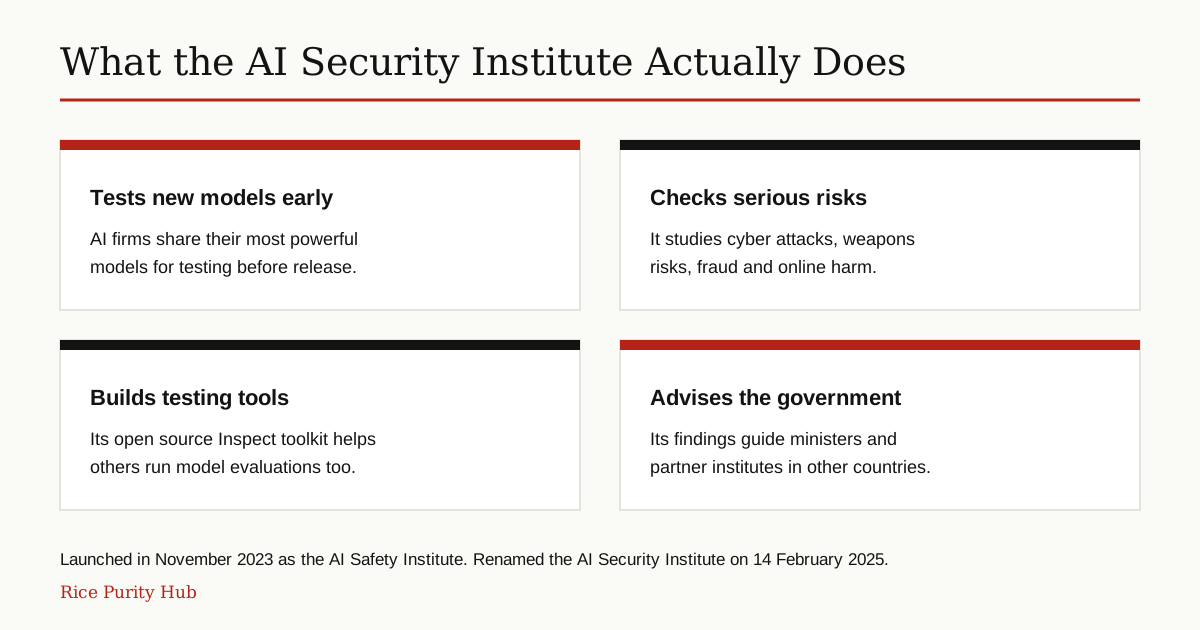
The institute at the center of uk ai regulation news today 2025 is the AI Security Institute, often shortened to AISI. You can see its current work on the institute’s official page. It launched in November 2023, at the time of the global AI Safety Summit at Bletchley Park, where the UK hosted the world’s first big meeting on frontier AI risks.
The institute does not regulate shops, apps or hospitals. Its job is science: it studies what the most powerful AI models can do, and it tells the government what it finds. Its main tasks are:
- Testing frontier models, often before they are released, for dangerous abilities.
- Studying misuse risks, such as help with hacking, scams or weapons.
- Building shared testing tools, including its open source Inspect evaluation toolkit.
- Working with sister institutes in countries such as the United States and Japan.
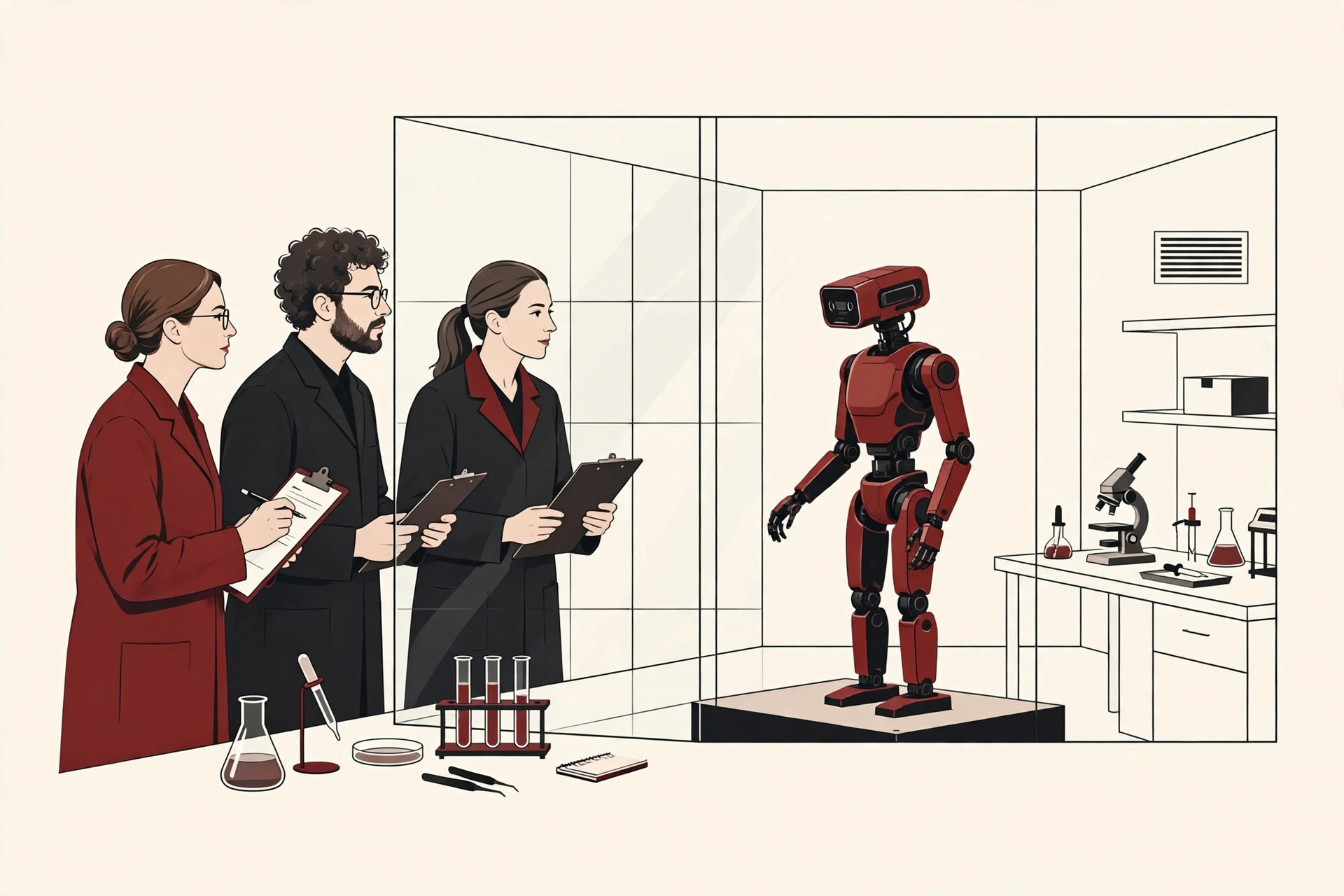
Access to models is voluntary. At Bletchley Park in November 2023, leading labs agreed that governments could test their models before release. Then, at the AI Seoul Summit in May 2024, 16 companies, including OpenAI, Google, Anthropic, Microsoft and Meta, signed the Frontier AI Safety Commitments. In those commitments, firms promised to publish safety frameworks and, in extreme cases, to not release a model at all if its risks could not be controlled.
These promises are real, but they are not law. If a lab refused access tomorrow, the institute could complain, not compel. That gap is exactly what the promised AI bill is meant to close.
The Copyright Fight: Creators vs AI Firms
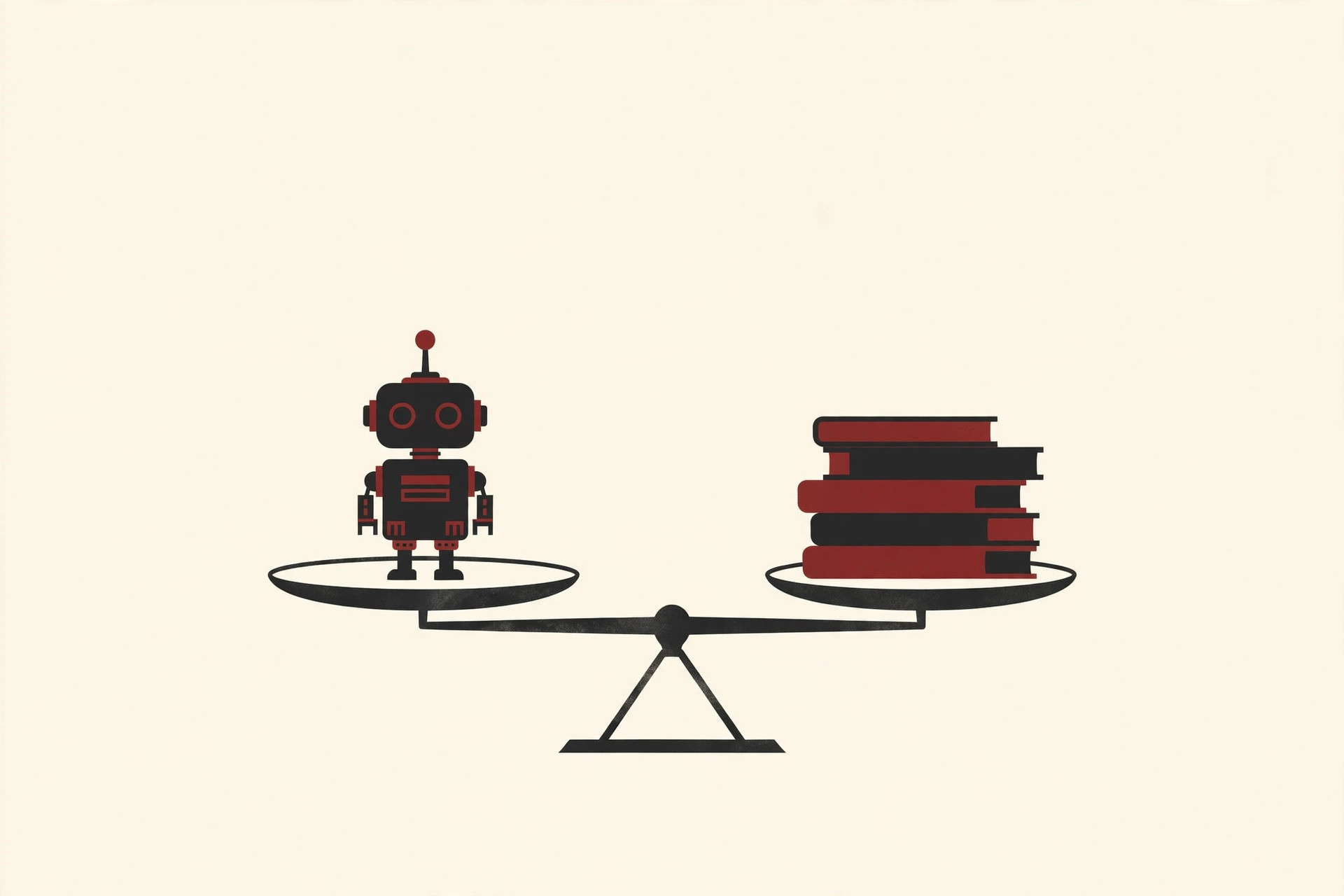
No part of uk ai regulation news 2025 caused more anger than copyright. AI models learn from huge amounts of text, images and music, and much of that material belongs to writers, artists, photographers and news publishers.
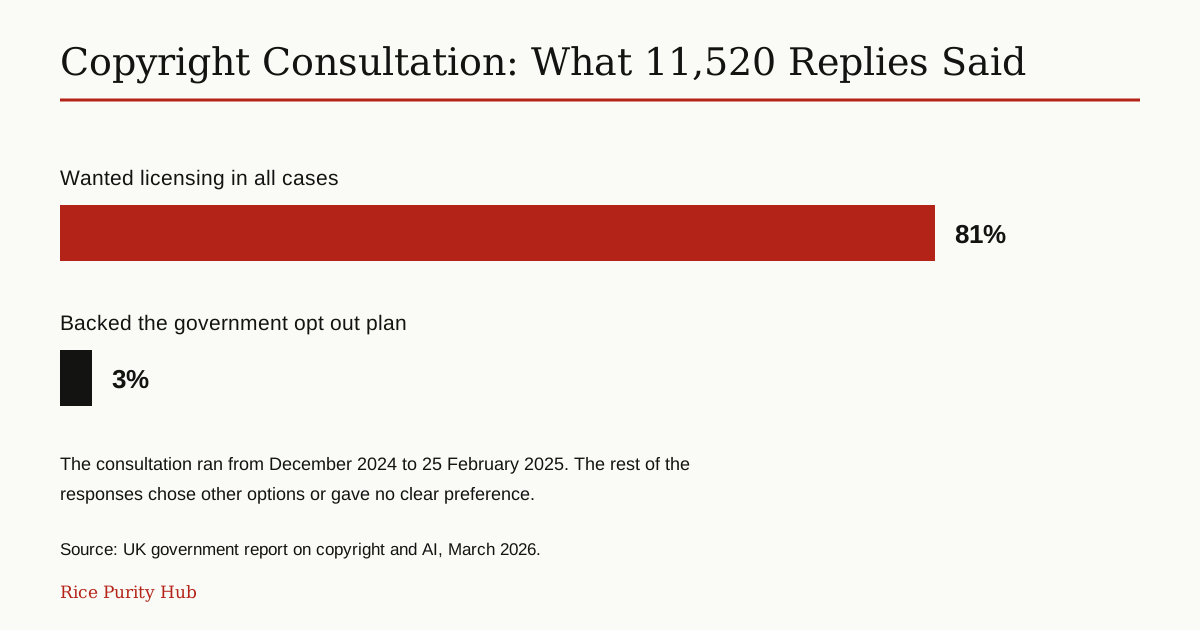
In December 2024, the government opened a consultation on a plan to let AI firms train on creative work without a license, unless the owner had opted out. Musicians, authors and publishers campaigned hard against it, arguing that an opt out puts the burden on creators and is nearly impossible to police across the whole internet. AI firms argued the opposite: that strict licensing rules would push AI development out of Britain.
The consultation closed on 25 February 2025 with more than 11,500 responses. During 2025, members of the House of Lords also tried to add copyright transparency rules to the Data (Use and Access) Bill, which became law in June 2025. That law forced the government to publish a full report on copyright and AI. When the report arrived in March 2026, it showed a lopsided verdict: only about 3 percent of responses had backed the opt out plan, while about 81 percent wanted licensing in all cases. The same report said the broad opt out exception was no longer the government’s preferred way forward. For now, the old rules stand: training on creative work generally needs a license, unless a narrow research exception applies.
UK vs EU vs US: Three Different Playbooks
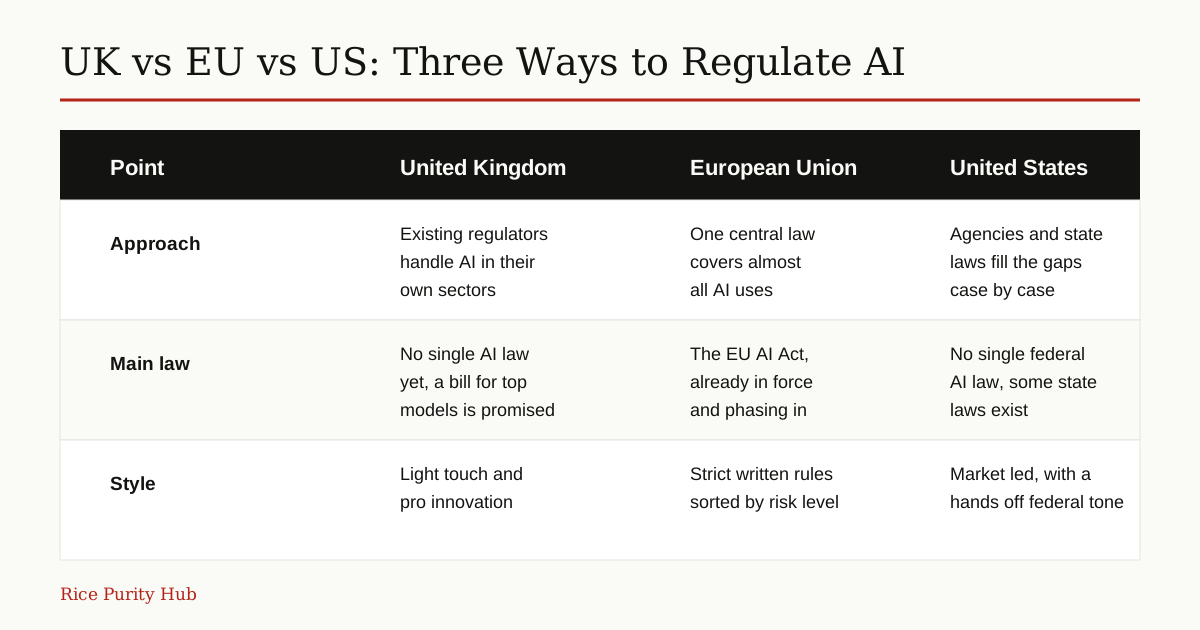
Britain’s choices make more sense next to its two biggest partners. Our explainer on the EU AI Act and its deadlines covers the European side in detail, but the short version fits in one table:
| Point | United Kingdom | European Union | United States |
|---|---|---|---|
| Approach | Existing regulators handle AI in their sectors | One central law covers almost all AI | Agencies and state laws fill the gaps |
| Main law | No single AI law yet, a bill for top models is promised | The EU AI Act, in force and phasing in | No single federal AI law, some state laws exist |
| Style | Light touch, pro innovation | Strict written rules sorted by risk | Market led, hands off at federal level |
The difference matters in practice. A hospital AI tool sold in Paris must meet the AI Act’s written duties on a fixed timetable. The same tool sold in London faces the health and data regulators, who judge it under existing law and the five principles. Neither system is simply better. The EU offers clarity, the UK offers speed, and companies that sell in both places must satisfy both. The wider debate about rules and growth echoes the questions we explored in our piece on AI transformation and governance.
What UK Businesses Should Do Now
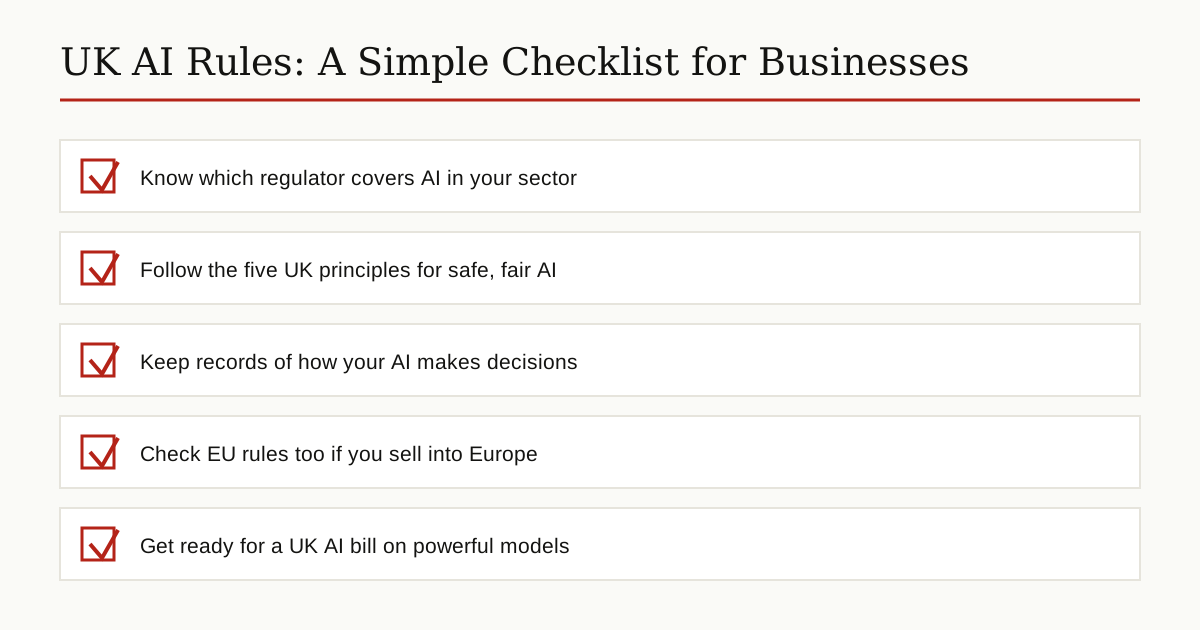
No AI act does not mean no rules. If you build or use AI in Britain, the practical list looks like this:
- Find your regulator. Work out which body oversees your sector, and read its AI guidance. Finance answers to the Financial Conduct Authority, health products to the medicines regulator, and almost everyone answers to the data watchdog on privacy.
- Follow the five principles anyway. Safety, transparency, fairness, accountability and a way to challenge decisions are the standard regulators already judge against.
- Keep records. Note what data trained your system, what tests you ran, and who signed off. If a regulator or a court asks later, paper beats memory.
- Check Europe separately. If your product reaches EU customers, the AI Act applies to you there, whatever London decides. The same need to stay current applies to fast moving model releases, which we track in our roundup of the latest LLM news.
- Use the sandboxes. If regulation is blocking a launch, the new AI Growth Lab may let you test the product under supervision first.
What to Watch Next
Three stories will decide where uk ai regulation news goes in 2026. First, the promised AI bill: watch for a consultation on legal duties for frontier labs, and for a plan to put the AI Security Institute on a legal footing. Second, copyright: after dropping the opt out idea, the government must find a licensing path that both creators and AI firms can accept. Third, the sandboxes: if the AI Growth Lab works in health and transport, expect pressure to widen it.
Pressure for a stronger law is also growing inside Parliament. In September 2026, a committee of MPs and peers called for a dedicated AI bill and an independent regulator with real powers, so the debate is far from settled.
Conclusion
The UK has bet that flexible regulators, a strong testing institute and voluntary deals with labs can keep AI safe without slowing it down. The EU has bet on one big law, and the US has bet on the market. The uk ai regulation updates today 2025 story is really a story of a promise: a short, sharp law for the most powerful models, still waiting to arrive. Until it does, the five principles, the existing regulators and the AI Security Institute are the whole system. Whether that is enough is the question 2026 will answer.