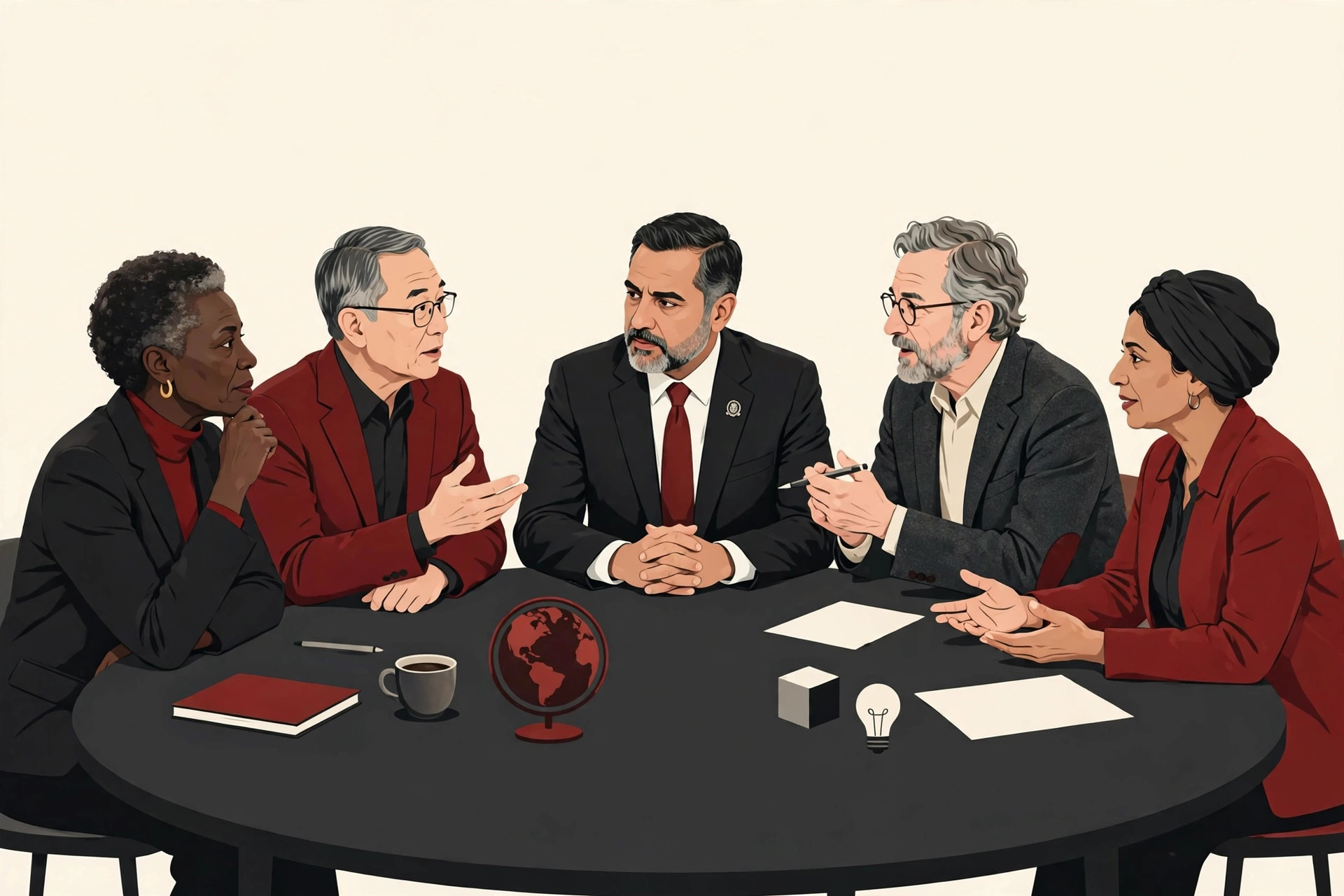
If you search for the Kellogg Innovation Network, the first thing to know is that it has nothing to do with cereal. The Kellogg in the name is the Kellogg School of Management at Northwestern University, one of the best known business schools in the United States. The network, usually shortened to KIN, was the school’s attempt to answer a big question: what happens when you put senior leaders from business, government, universities, nonprofits and the arts in one room, and ask them to work on the world’s hardest problems together?
For more than a decade, that is exactly what KIN did. It was part executive network, part global summit, part launch pad for student ventures. This guide explains what the Kellogg Innovation Network was, who built it, what happened at its KIN Global summit, and, honestly, where things stand today, because the KIN name has quietly faded while its community carried on under a new one.
What Is the Kellogg Innovation Network?
KIN was a membership network based at the Kellogg School of Management in Evanston, Illinois. Kellogg described it as an ongoing forum where select executives and innovators could meet and trade ideas with thought leaders from government, academia, nonprofits and industries such as healthcare, technology and defense.
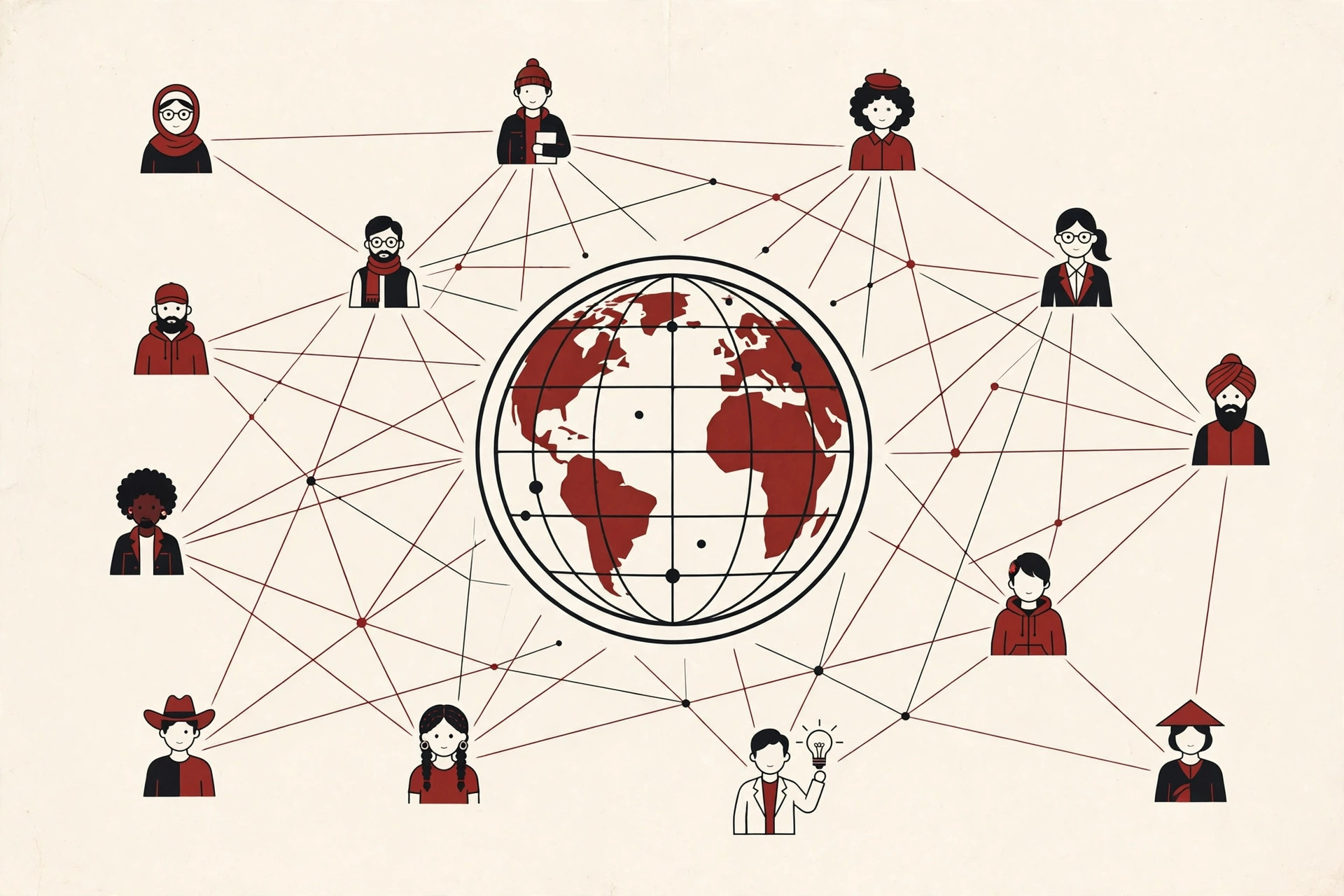
The network had two sides. For the companies that joined, it was a place to learn how other large organizations actually drive innovation, beyond the slogans, and to sharpen the value proposition that would keep them growing when their markets changed. For Kellogg, it was a two-way street: the school gave members a neutral meeting ground, and in return the network informed faculty research by surfacing the real issues that innovation leaders were struggling with.
Its stated ambition was unusually large for a business school program. KIN did not exist just to help companies sell more. Its goal, repeated across Kellogg’s coverage, was innovation in service of global prosperity: growth that spreads widely enough to lift whole societies, not just share prices.
How the Kellogg Innovation Network Began
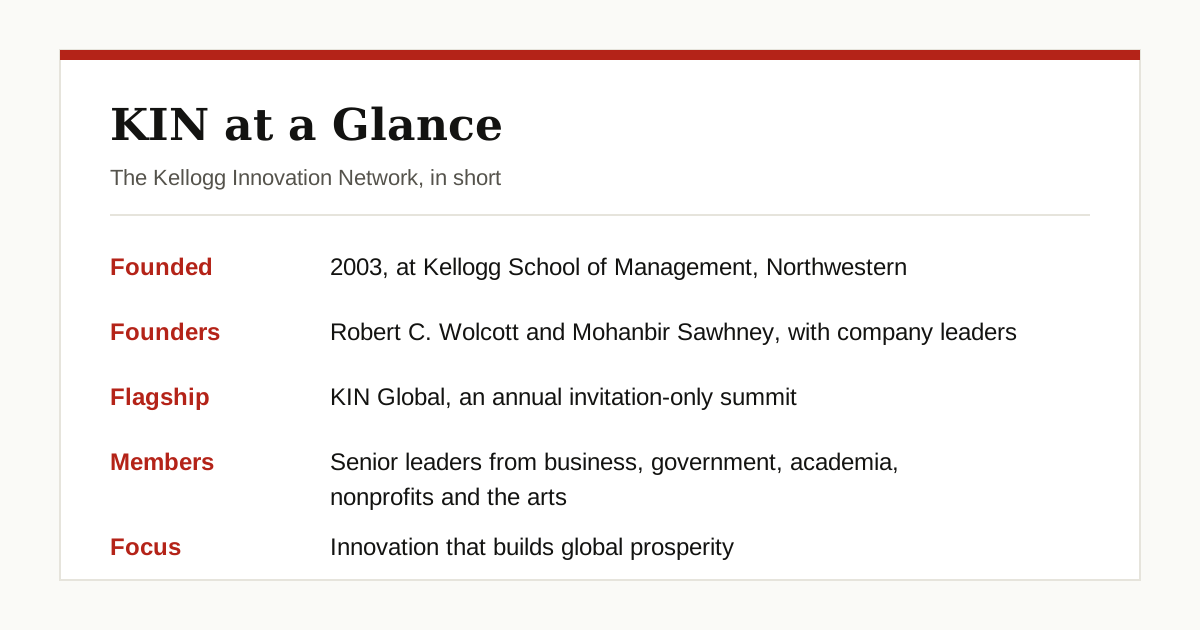
Kellogg’s own histories agree on the starting point: KIN began in 2003. Kellogg’s account of the network says it was initiated that year by two faculty members, Robert C. Wolcott and Mohan Sawhney, together with a dozen corporate innovation leaders from global companies.
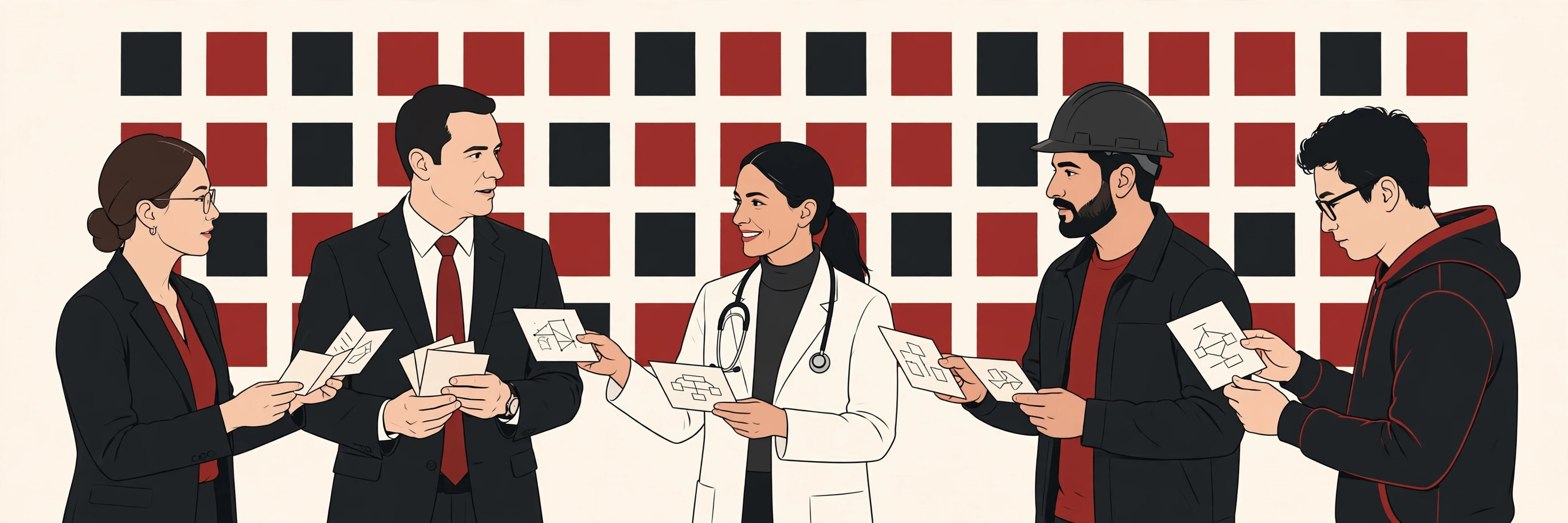
Wolcott became the network’s executive director and its public face. His Kellogg CV describes KIN as an exclusive membership network of senior executives, from vice president level up to the C-suite, and names early member firms such as Cisco, Kraft, IBM, DuPont and Raytheon. The same CV notes that the program raised more than 1 million dollars from corporate donors in its first three years, which gives a sense of how seriously companies took it.
Sawhney, the McCormick Tribune Professor of Technology, brought the technology and marketing side. The pairing mattered. KIN was never just a professor’s seminar, and never just a corporate club. It was built, from day one, as a meeting point between the people who study innovation and the people who have to deliver it.
The KIN Global Summit
The network’s flagship event was KIN Global, an annual summit held at Kellogg. In 2008, Dean Dipak Jain invited Wolcott to create it, and the first edition ran from June 1 to 3, 2009, under the theme Building Global Prosperity: Innovation and Action.

The numbers from Kellogg’s report of that first summit show the idea clearly. About 160 invitation-only delegates came from more than 20 countries and all six inhabited continents. Heads of defense from the United States and Colombia sat alongside corporate chief executives, nonprofit founders, professors, and award-winning authors and composers. In an unusual twist, nearly half of the program was decided during the conference itself, with delegates proposing and choosing the topics they most wanted to work on.
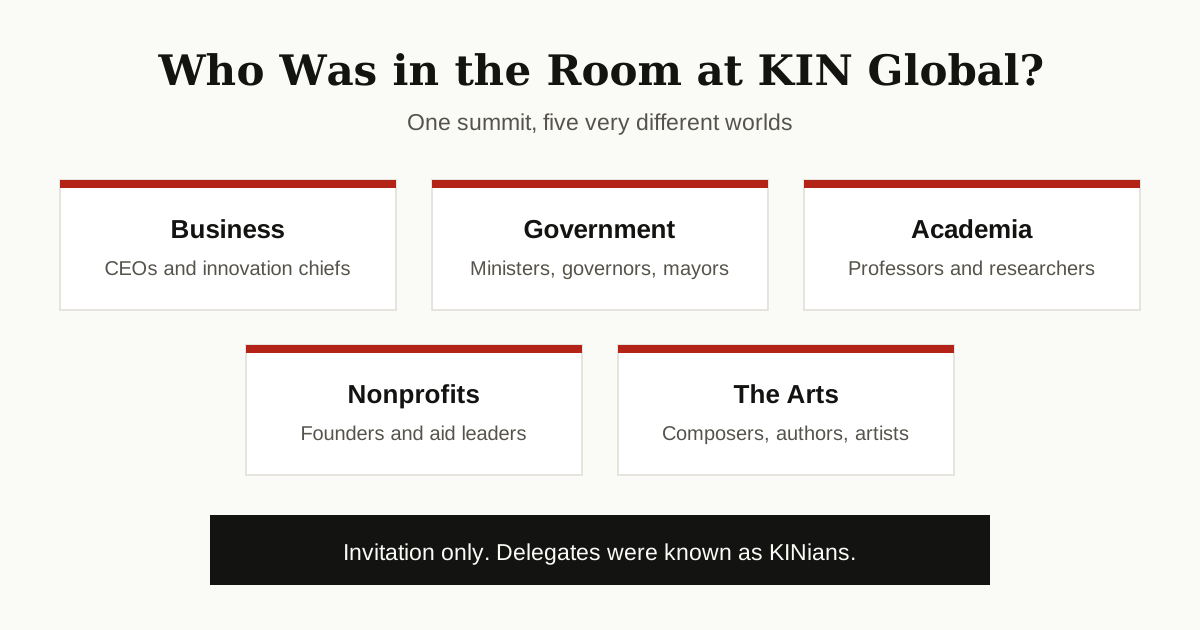
Later editions kept the same recipe. The third summit, in 2011, drew representatives from 25 nations. The fourth, in 2012, gathered roughly 200 delegates at the James L. Allen Center on Northwestern’s Evanston campus. Delegates, nicknamed KINians, were expected to arrive with a real problem they were facing, and to leave with names, ideas and partners who could help solve it. That habit of working in small, mixed groups on live problems, the same instinct that sits behind good team collaboration tools, was the summit’s signature.
The summit also made deliberate room for the arts. Every year included Etudes for Innovation, an evening performance led by KIN creative director Jeffrey Ernstoff that explored innovation through music and performance. The 2012 edition filled the stage of the Lyric Opera of Chicago. It was an unusual choice for a business gathering, and a telling one: KIN’s organizers believed that people who only ever hear business speakers stop hearing anything new.
Who Could Attend, and How It Worked
You could not buy a ticket. KIN Global was invitation-only from start to finish, and the wider network was a membership community for senior executives rather than an open association. Kellogg students were the one group with a side door: they could earn a place by joining the student leadership team, by winning selection as KIN Global Scholars, or, later, by competing in the KIN Challenge.
For members, the network ran as a year-round forum, not a once-a-year event. Kellogg’s program materials describe KIN as one of the school’s experiential learning programs, bringing together faculty, corporate innovation leaders, nonprofits and government, and culminating at the summit, where students presented their research to the delegates. In plain terms: companies brought problems and experience, faculty brought research, students brought fresh work, and everyone in the room was expected to contribute.
More Than Talk: The KIN Prize and Projects That Shipped
Wolcott liked to say that KIN was about innovation and action, and the network built machinery to prove it. The best example was the KIN Prize, a competition for Northwestern student teams holding action plans to create greater global prosperity.
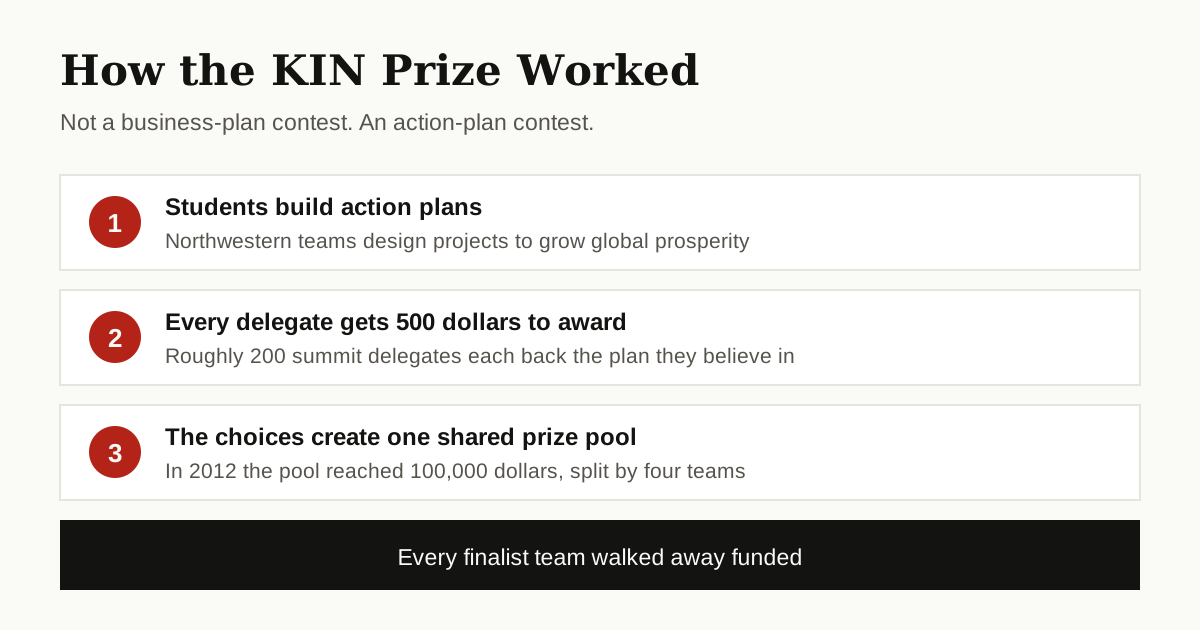
The format was clever. At the 2012 summit, each of the roughly 200 delegates received 500 dollars to award to the team of their choice, creating a prize pool of 100,000 dollars that was shared by four finalist teams. The largest share, 42,700 dollars, went to Fresh Takes Kitchen, a for-profit social venture selling fresh and affordable meals in low-income communities. Wolcott called it the world’s first action-plan competition, a deliberate contrast with business-plan contests that reward documents instead of doing. A year earlier, the winning team, San+Co, had taken home 40,900 dollars in seed money for a plan to turn human waste into energy while tackling India’s sanitation gap. The 2011 edition worked the same way: roughly 160 delegates each directed 500 dollars, and all four finalist teams received funding, so even the teams that did not win left with money to start.
The same spirit showed up outside the prize. At the 2009 summit, a talk by Kimmie Weeks, who survived the Liberian civil war and founded Youth Action International, moved delegates to raise nearly 50,000 dollars on the spot for women’s business centers in Sierra Leone and Liberia. And after a smaller KIN meeting on Iceland’s financial collapse, a group of Kellogg faculty and alumni spent four days visiting Icelandic companies and wrote a recovery strategy, Iceland 2020, that landed on the prime minister’s desk. It was, in effect, a short course in national resilience, delivered by the people in the room.
Students in the Middle: Scholars and the KIN Challenge
Students were not decoration at KIN. At the first summit in 2009, five student teams, the inaugural KIN Global Scholars, spent a quarter on research projects, on questions such as the role of the military in supporting prosperity, and presented their findings directly to the delegates.
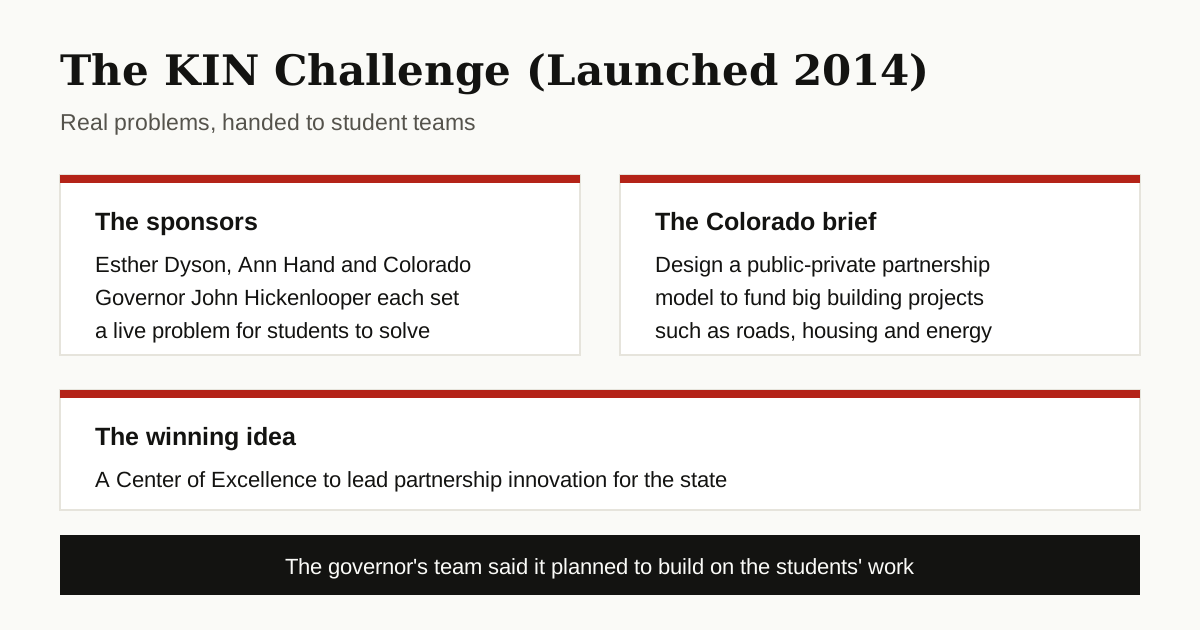
In 2014, the idea grew into the KIN Challenge. Sponsors brought a live problem, and student teams competed to solve it. The first challengers were technology pioneer Esther Dyson, investor Ann Hand, and Colorado Governor John Hickenlooper. Hickenlooper’s brief asked for a model of public-private partnership that could attract private money for large building projects in Colorado, such as infrastructure, public housing and energy projects. The winning student team proposed a Center of Excellence to lead that work. The governor’s chief strategy officer said afterward that the state intended to build on the team’s work and to pursue partnership legislation the following year, which is about the strongest review a student project can get.
How KIN Fed Kellogg’s Teaching and Research
KIN sat inside a larger innovation engine at Kellogg. The problems members brought into the room shaped faculty research agendas, and the research flowed back out as teaching. Wolcott’s book with Michael Lippitz, Grow From Within: Mastering Corporate Entrepreneurship and Innovation, drew on more than a decade of exactly this kind of corporate innovation research, and he taught the subject for Kellogg in Evanston, Miami and Hong Kong.
The model also travelled. At the 2012 summit, Governor Hickenlooper presented the Colorado Innovation Network, his state’s own innovation network, which had been inspired by KIN. For a business school, that is the deepest kind of impact: not just teaching students, but handing governments and companies a working template for how to organize innovation across an entire region.
Is the Kellogg Innovation Network Still Active?
Here is the honest answer: not under the KIN name, and not in the way the old pages describe.
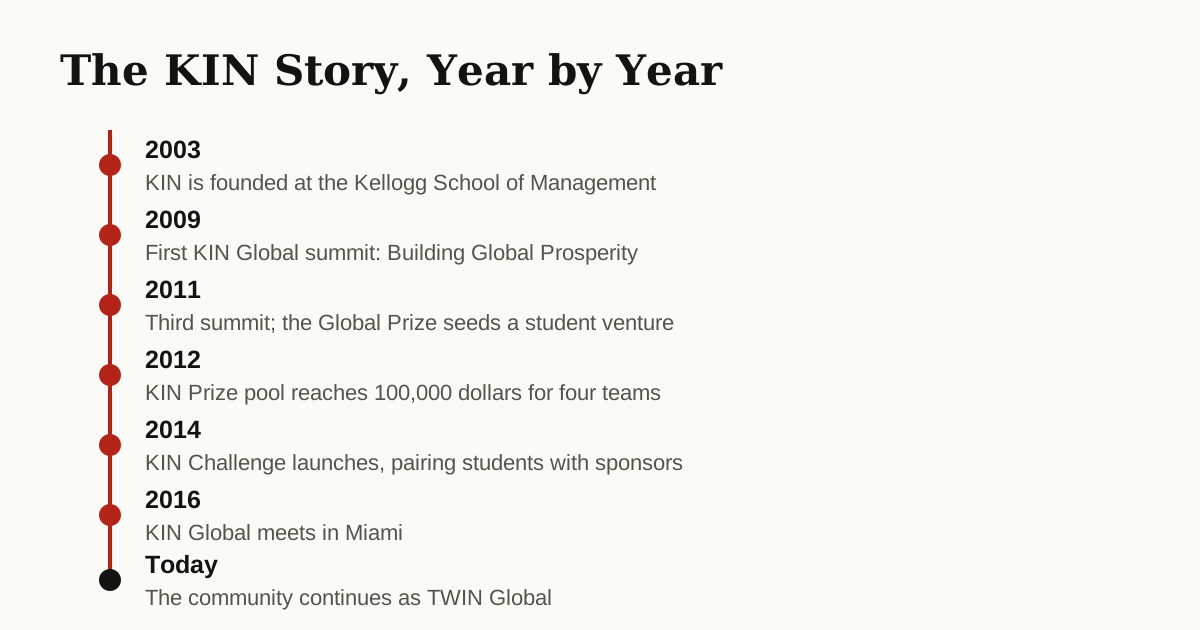
Kellogg’s published stories about KIN cluster between 2009 and 2015. Speaker pages and participant biographies still record a KIN Global 2016 summit in Miami, titled New Worlds: Creating the Future, but we found no Kellogg announcement of a KIN Global after that. The network’s own website, kinglobal.org, which Kellogg’s articles link to throughout their coverage, no longer loads.
What happened next is visible on the website of TWIN Global, short for The World Innovation Network. TWIN dates its own founding to 2003, the same year KIN began, and says it now includes nearly 3,000 participants from more than 30 countries, across business, government, the arts, academia and defense. Wolcott is its co-founder and chair. TWIN’s site even lists Toby Redshaw, a longtime KIN figure, as a co-founder of TWIN and chairman emeritus of KIN. TWIN still gathers every year; its recent editions include a 2023 convening in London and a later gathering in Florida built around Proximity, the theme of Wolcott’s 2024 book of the same name.
Wolcott’s own career moved the same way. After years as a Kellogg clinical professor, he now teaches as an adjunct professor at the University of Chicago Booth School of Business and in Kellogg’s executive education programs. So if you are looking for the living community today, TWIN Global is where it lives. KIN is best understood as its first chapter: the years when a business school in Evanston proved that a carefully mixed room of leaders could turn conversation into action.
The Bottom Line
The Kellogg Innovation Network was Kellogg’s invitation-only community for senior leaders who believed innovation should serve global prosperity, not just quarterly growth. Founded in 2003 by Robert C. Wolcott and Mohanbir Sawhney, it produced the KIN Global summit, the KIN Prize and the KIN Challenge, and it fed real-world problems into Kellogg’s research and classrooms. The KIN name has faded since the mid 2010s, but the community it built continues today as TWIN Global.
If you enjoyed this explainer, browse the tips and tricks category for more plain-English guides.