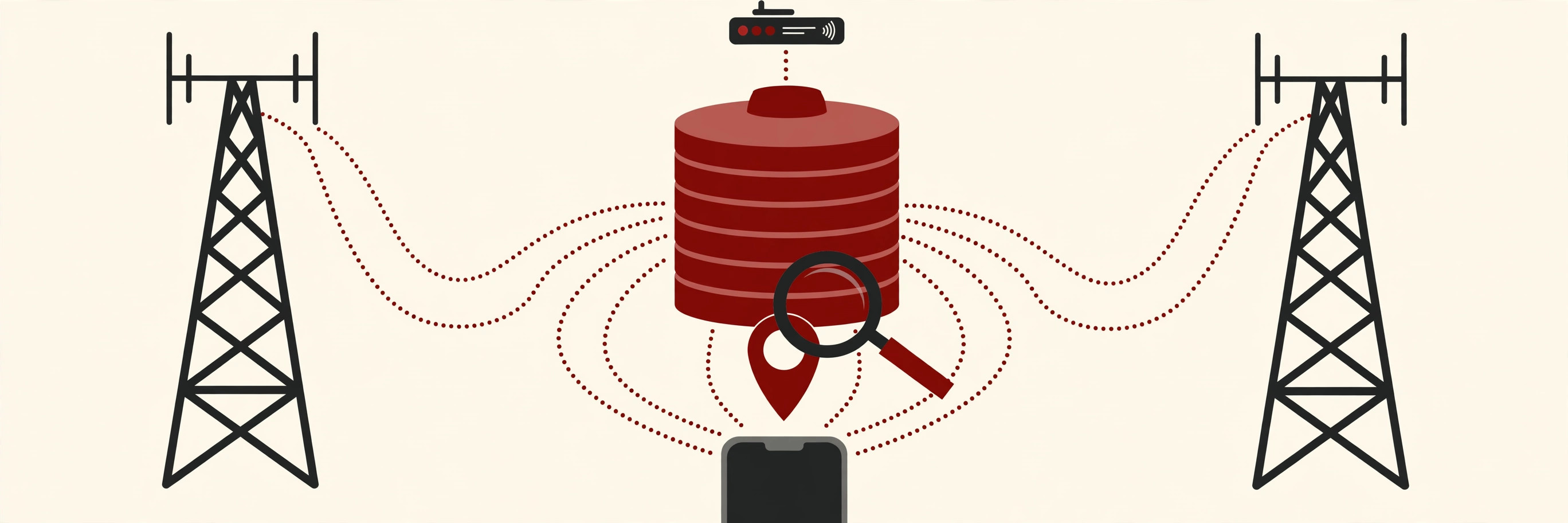
If you found this term in a telecom document, you are in the right place, because the name is misleading. Any time interrogation has nothing to do with police rooms or questioning suspects. It is something a mobile phone network does quietly in the background: it asks its own database where a subscriber is, and what state their phone is in, at any moment it chooses.
That little question and answer exchange has a formal name, a short history, and a surprisingly big security story. This guide explains all three in plain English: what any time interrogation is, who sends it, what the answer contains, what it is used for, and why security experts keep bringing it up.
What Is Any Time Interrogation?
Any time interrogation, usually shortened to ATI, is a procedure built into GSM mobile networks. Oracle, which builds equipment and software for phone networks, defines it in its documentation in one clean sentence: an ATI message allows an external server to interrogate an HLR and obtain information about the location and/or state of a GSM subscriber.
Two names in that sentence do most of the work. The HLR, short for Home Location Register, is the master database an operator keeps for its subscribers. Interrogate is just an old fashioned technical word for asking a database a question and getting an answer back.
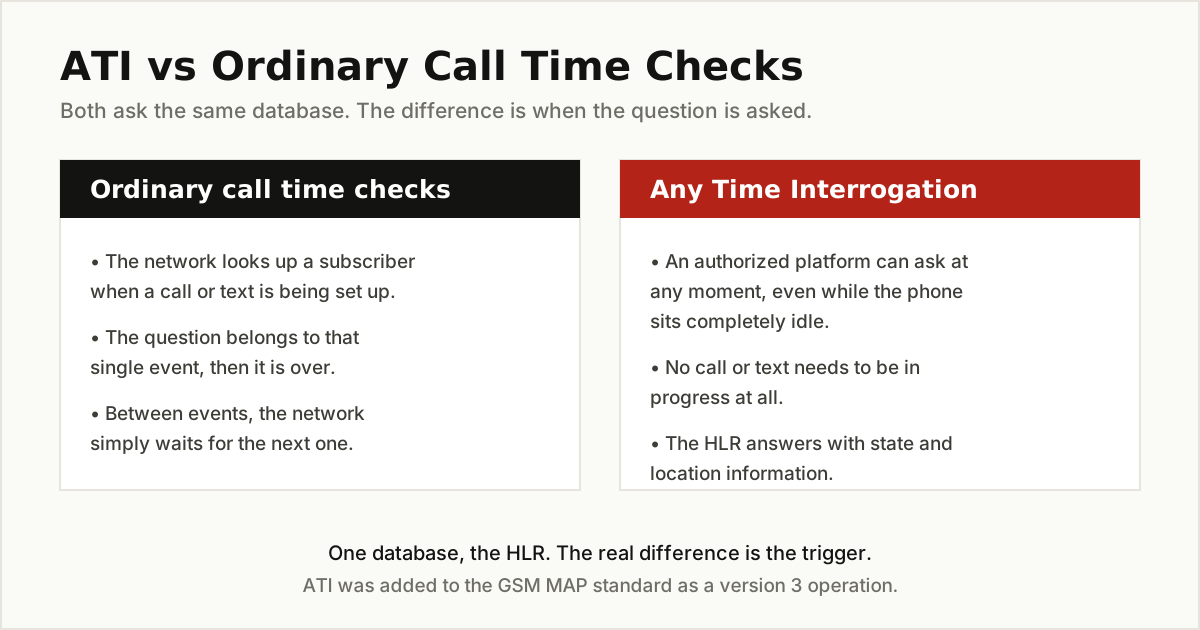
The second half of the name matters just as much. Plenty of network lookups happen while a call or a text is being set up, because the network needs to know where to deliver it. ATI is different. The question can be asked at any time, including while the phone sits in a pocket doing nothing at all. As Coruzant explains in its walkthrough of ATI in modern telecom networks, it works as a simple query and response model that fetches real time subscriber details without disrupting any service that is already running.
In later network generations, the HLR job is folded into a larger database called the HSS, short for Home Subscriber Server, and the same style of question can be put to it. The name on the database changes. The idea stays exactly the same.
The Moving Parts, in Plain Words
An ATI exchange involves a small cast of network parts. Here they are, translated into everyday language.
- The subscriber. That is you, or rather your SIM and phone number as the network sees them.
- The HLR. The home database. It holds the master record for every subscriber of that operator: who you are, which services you pay for, and which part of the network currently serves you.
- The visited network. When your phone connects somewhere, a local register called the VLR keeps a temporary copy of your record nearby. The HLR simply points to it.
- The gsmSCF. A service platform, the brain behind smart network services such as prepaid accounts. This is the part that usually asks ATI questions.
- MAP and SS7. MAP, short for Mobile Application Part, is the language these parts use to talk about subscribers, and it is the standard that defines ATI, in its version 3. SS7 is the old signaling network that carries MAP messages between operators. Think of MAP as the wording of the question and SS7 as the line it travels on.
If you enjoy the picture of network parts constantly checking on each other, our explainer on wireless mesh networks shows the same habit in a very different setting.
How It Works, Step by Step
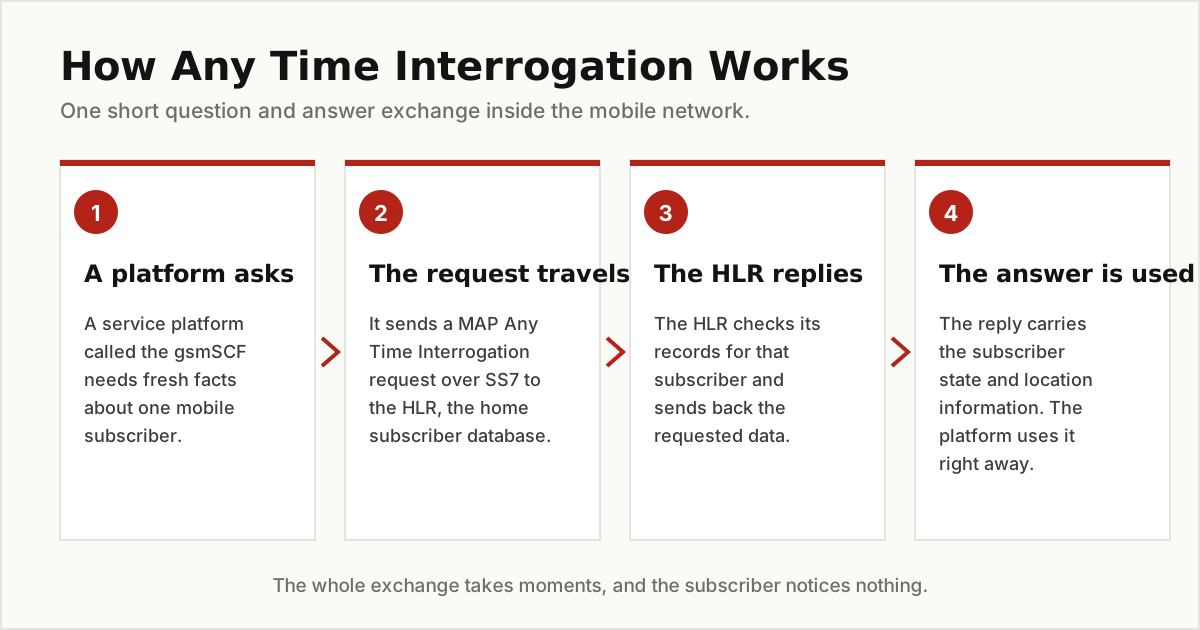
The whole exchange has four steps, and none of them touch your phone screen.
- A service needs an answer. Something in the network, usually the gsmSCF platform, needs fresh facts about one subscriber: where they are, and whether their phone is on and free.
- The request is sent. The platform builds a MAP any time interrogation message that names the subscriber and asks for specific information: state, location, or both. The message rides the SS7 signaling network to the subscriber home HLR.
- The HLR answers. The HLR looks up its records and replies with the subscriber state and the location information it holds, based on which visited network last reported the phone.
- The platform acts. The reply travels back along the same path, and the platform uses it at once: to apply a service rule, to price a call by the area the subscriber is in, or simply to confirm the subscriber is reachable.
The subscriber sees none of this. No app opens and no permission box appears, because the exchange happens between network machines, not on the handset itself.
Here is a quick picture of it in real life. A prepaid subscriber lands in another country and makes a call. The service platform wants to charge that call at the correct roaming rate for that area, so it fires an ATI request at the home HLR. The reply confirms the subscriber state and the area the visited network reports. The platform prices the call correctly, and the caller never knows a question was asked.
What the Answer Actually Contains
An ATI reply is short, and it helps to know what it is not.
Subscriber state is the simple part: whether the phone is attached to the network or switched off, and whether it is free or busy at that moment.
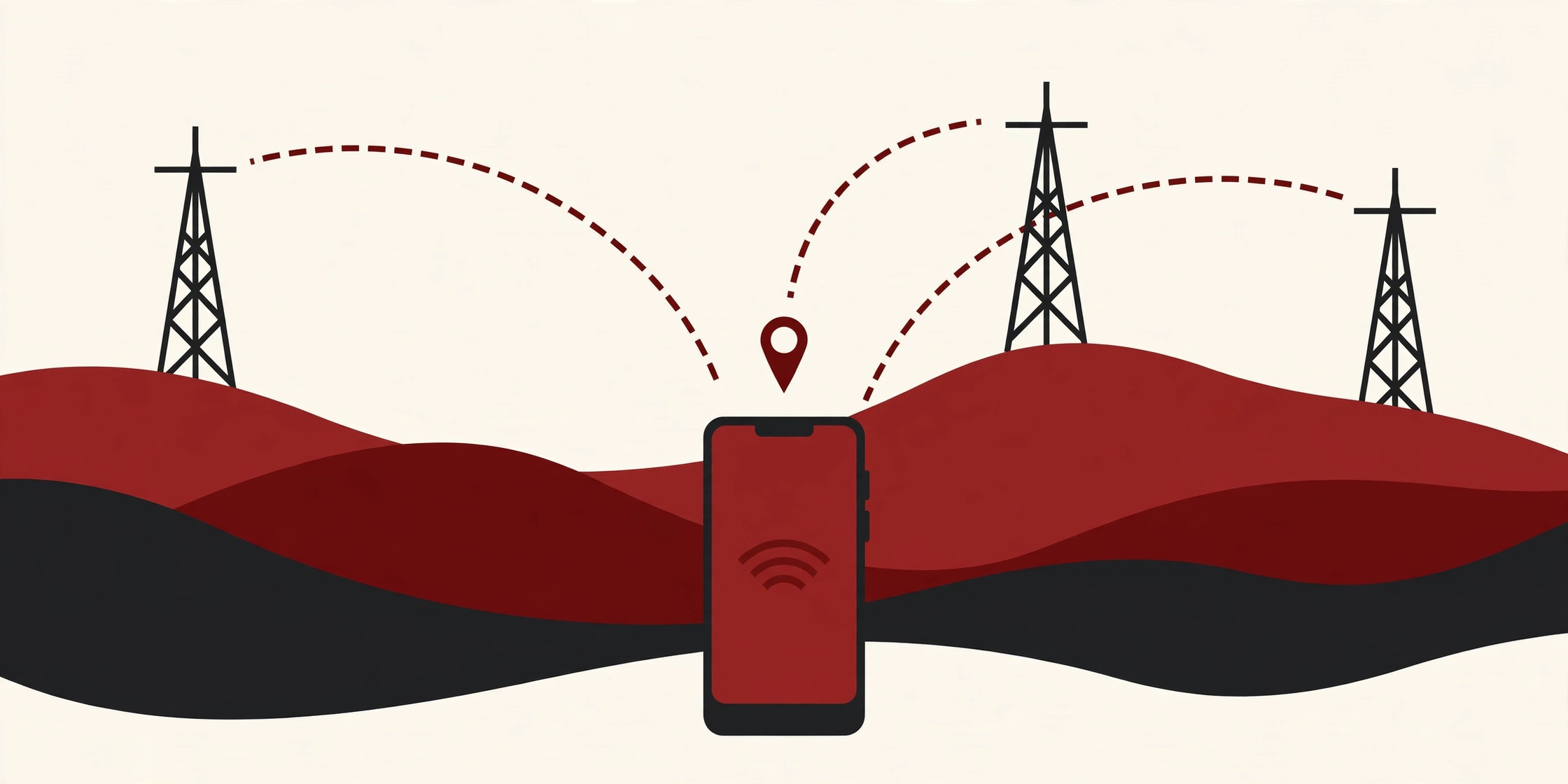
Location information is the part people overestimate. The HLR can only report what the network last recorded: the area the phone is in, identified by the serving switch and the local cell area. It is an area, not a dot. ATI comes from a world before phones reported GPS positions to apps, and it does not work like the pinpoint on a maps app. If the phone moved after its last check in with the network, the answer is only as fresh as that last contact.

What Any Time Interrogation Is Used For
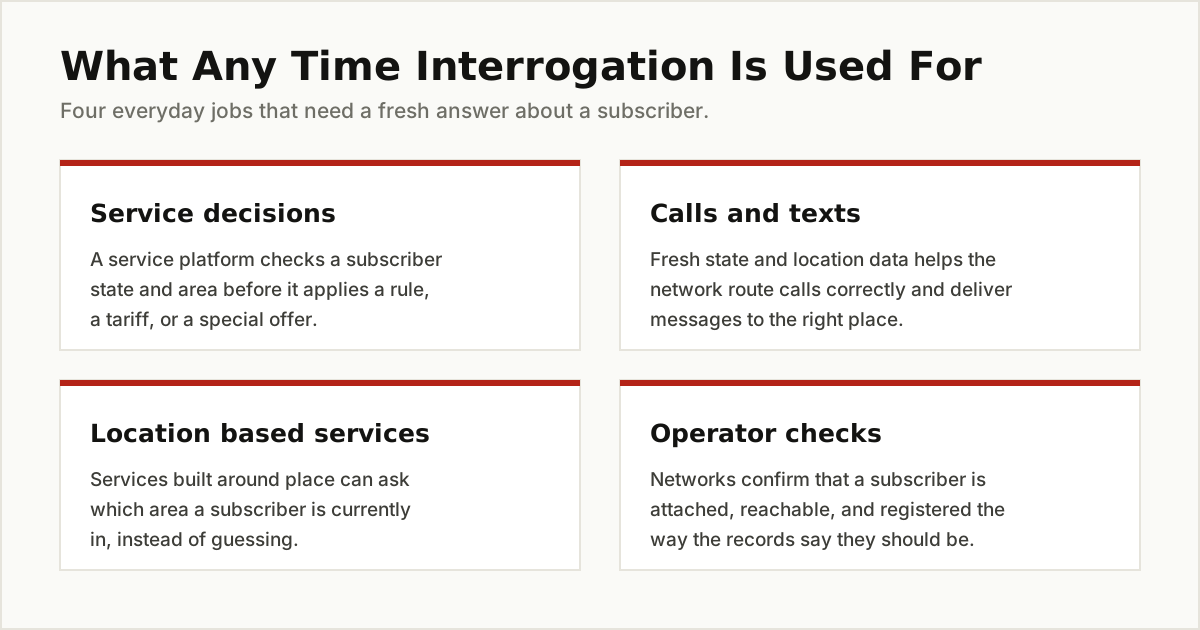
The classic home of ATI is the world of smart network services, the systems often grouped under the name CAMEL. A prepaid platform is the easiest example. Before it applies a home area tariff or a roaming rule, it may need to know which area the subscriber is in right now, not where they were this morning. ATI is how it asks.
The same fresh answer supports location based services that work with the area a subscriber is in, helps with routing decisions for calls and messages, and lets operators confirm that subscribers are attached and registered the way the records say they should be.
You will also meet ATI in the marketing of number checking services, which promise to tell businesses whether a phone number is live and where its owner is. Read those promises carefully. Operator equipment documentation describes ATI as something networks guard closely: vendors such as Oracle sell MAP screening features precisely so operators can control which outside entities may send ATI requests, and what information those requests are allowed to ask for. A message that can reveal where subscribers are is not handed out to just anyone.
The Same Idea in Ordinary Networking
Outside the phone world, people use the same phrase loosely for a simpler habit: asking devices how they are doing, whenever you need to know. A monitoring tool that polls 500 office printers for toner levels, or pings a rack of switches every minute to check they are alive, is practicing the everyday version of interrogation.
The Unit Conversion guide to any time interrogation in networking walks through that world of SNMP checks, pings and dashboards. The tools are completely different from MAP and SS7, but the instinct is identical: do not wait for users to complain, ask the equipment first.
It is the same instinct behind the sensors and connected gadgets in our roundup of internet of things examples, where devices spend their lives reporting their state to whoever is set up to ask.
Why Security Experts Worry About It

ATI returns location information, so it was always going to be sensitive. The deeper problem is the road it travels on.
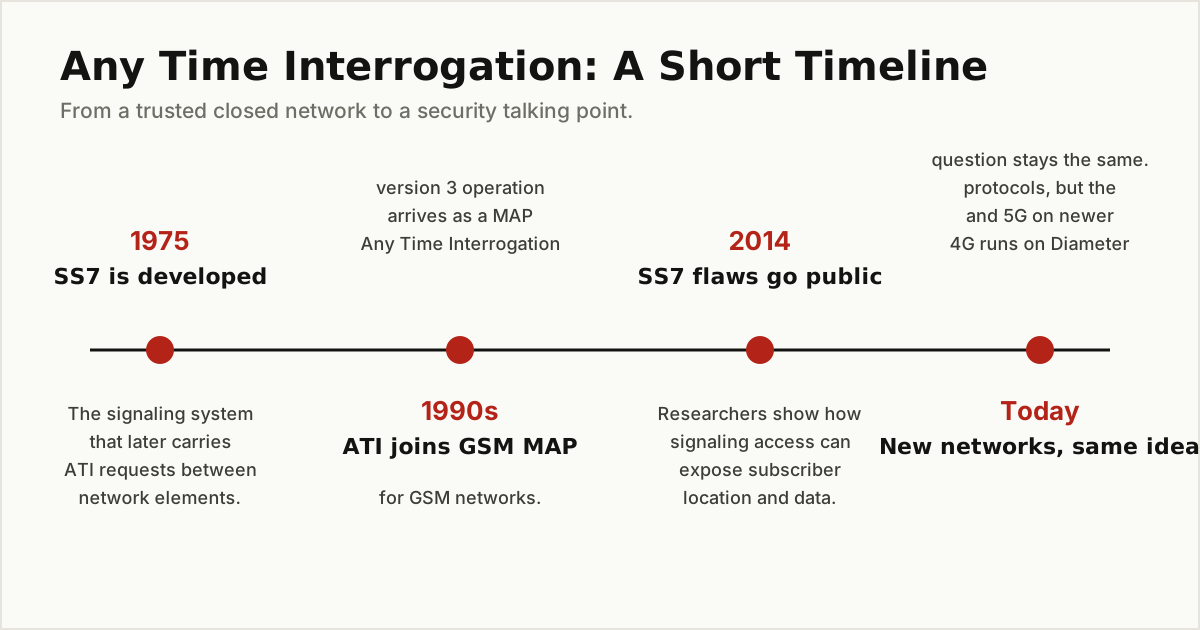
SS7 was developed in 1975, for a small club of national phone companies that trusted each other completely. It was never built with strong checks on who is asking. The EU cybersecurity agency ENISA, in its report on signaling security in SS7, Diameter and 5G networks, notes that researchers have been drawing attention to SS7 weaknesses since 2014, and that many attacks simply abuse legitimate network functions. An interrogation message sent by someone who should never have had signaling access could, in principle, reveal which area a target phone is in.
That is why the modern defenses are all about the doorway: signaling firewalls and MAP screening at the network border, short lists of trusted partners who are allowed to ask, and monitoring for strange patterns of requests.
One uncomfortable detail from the ENISA report is worth knowing as a subscriber. There is very little you can do personally, because these exchanges happen inside operator networks, far from your handset. A VPN cannot block them. Our guide to virtual private networks explains what a VPN does hide, and where its protection stops.
How Operators Keep ATI Under Control
Because the answer ATI gives is valuable, operators treat the request itself as something to police. The standard defenses are practical ones. Only authenticated network nodes are allowed to send ATI requests, and messages arriving from roaming partners or outside networks are screened before they ever reach the HLR. Oracle sells exactly this kind of MAP screening for its network equipment, letting an operator decide which outside entities may ask, and what each of them may ask for.
Operators also watch the pattern of requests, because a sudden stream of interrogations from one unexpected source is a classic sign of probing or abuse, and they keep logs of who asked what, so strange activity can be traced later. None of this makes ATI disappear. It simply puts a locked door in front of a powerful question.
ATI in the 4G and 5G Era

Classic ATI belongs to the 2G and 3G generations, where MAP over SS7 ruled the core network. Newer networks changed the plumbing. 4G networks signal with a protocol called Diameter, and the 5G core uses web style protocols instead. The named ATI message fades away in those worlds.
The question behind it does not fade at all. Networks still need to know, right now, where a subscriber is and what state they are in, so they can run location services, apply policy, and keep services working while people move around. Modern systems answer that same question through newer interfaces, with, at least on paper, stronger security habits than SS7 ever had.
The Honest Limits of ATI
A few plain truths round out the picture.
Any time means any time for the network, not for anyone who feels like asking. ATI is not an app, not a website feature, and not a setting hidden in your phone. There is no public switch to flip, for you or for strangers.
The answer is only as good as the network last record. It shows an area and a state, and both can be stale if the phone has been quiet for a while.
And the existence of ATI does not mean your operator is spying on you for fun. It is a workhorse message that services depend on, guarded precisely because its answer is valuable. Like many powerful network tools, it deserves both respect and supervision.
The Short Version
Any time interrogation is a mobile network asking its own home database a simple question: where is this subscriber, and what state is their phone in? GSM networks built it into the MAP standard so that service platforms could ask at any moment, not just during calls. The idea is genuinely useful, the location data it returns is genuinely sensitive, and the old SS7 network it rides on is exactly why operators now screen it so carefully.
For more explainers that translate tech jargon into plain English, browse the tips and tricks category.