Every marketing team has the same problem. There is always more content to make than there are hours to make it. Blog posts, ads, emails, social posts, product photos: the list never ends. That is why generative AI for marketing has spread so fast. These tools can produce a solid first draft of almost any marketing material in minutes, so your team can spend its time on ideas, editing and strategy instead of staring at a blank page.
This guide explains what generative AI does for marketers in plain words, the uses that actually work, the tools worth knowing, and the risks you need to manage. No hype, and no fake success stories. Just a clear picture of what these tools can do, what they cannot do, and how a small team can start using them this week.
What Generative AI Does for Marketers, in Plain Words
Generative AI is software that creates new content (text, images, audio or video) when you describe what you want. That description is called a prompt. Type “write a friendly email announcing our spring sale” and the tool writes one. Ask for a product photo on a clean background and an image tool builds it.
Under the hood, the tool is predicting. It has studied huge amounts of existing content and learned what good marketing copy and images usually look like. It does not know your customers, your prices or your brand story. It produces a likely, polished draft, and that draft is a starting point, not a finished product.
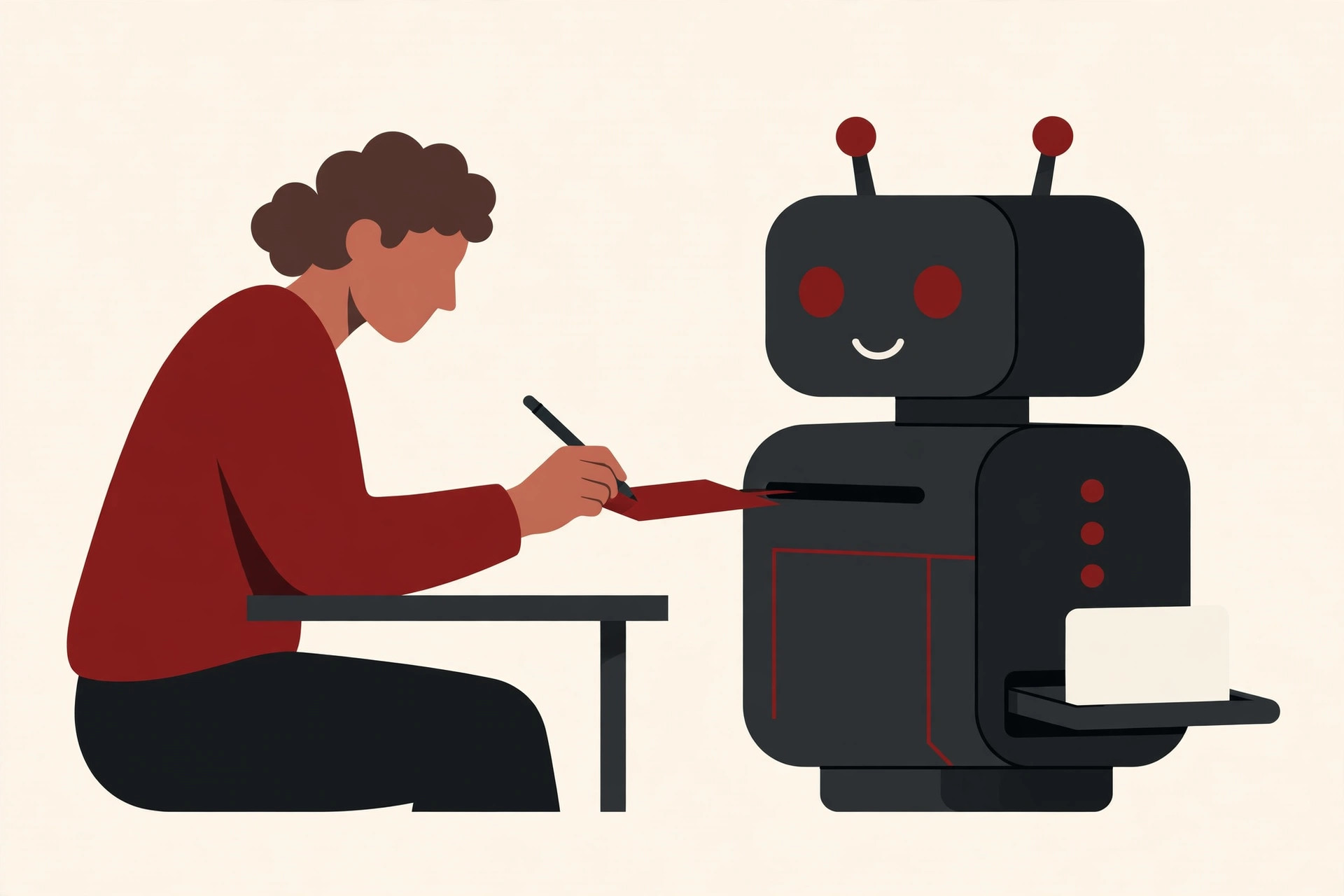
That is why generative AI in marketing works best as a fast assistant. It handles volume and first drafts. Humans handle truth, taste and final decisions. The better your prompt and your brief, the better the draft, which is why learning what prompt engineering is pays off quickly for marketing teams.
One more thing is worth understanding. The tool does not check your website, your store or your files unless you connect it to them. If you ask about your own product, it only knows what you paste into the prompt. Good marketers treat the brief as part of the craft: audience, offer, facts, tone and length, all written down before the first draft appears.
The Top Uses of Generative AI in Marketing
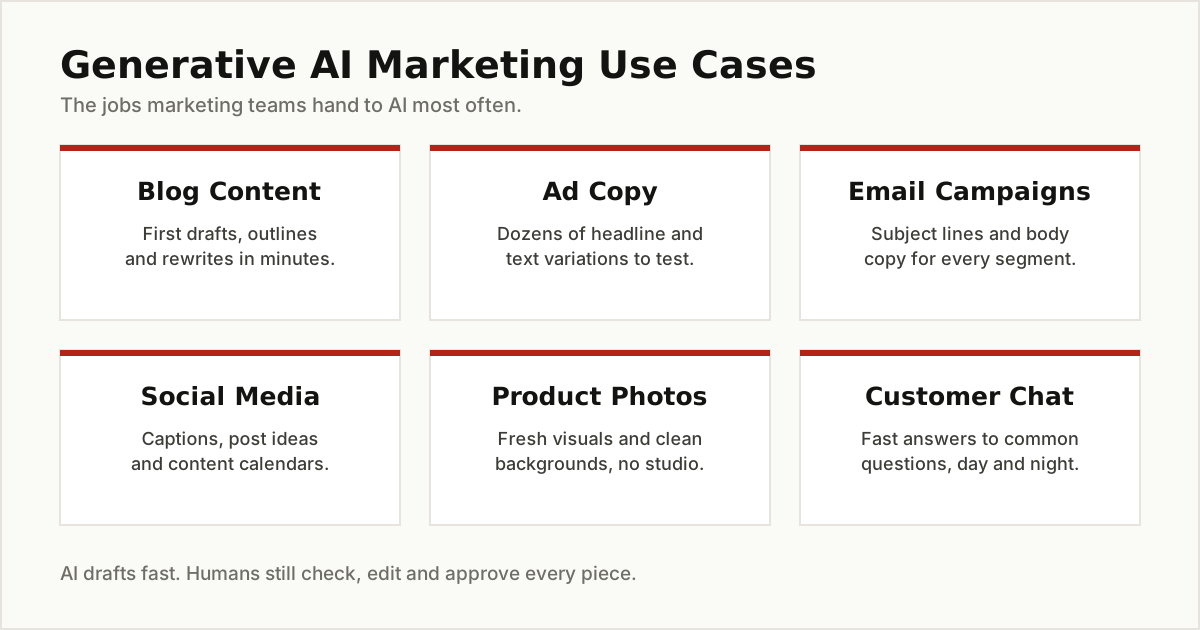
Most teams use generative AI for marketing in a handful of repeatable jobs. These are the ones that show up again and again.
Blog and Content Drafts
AI can turn a topic into an outline, a first draft, or a fresh rewrite of an old post. This is the fastest way to clear a content backlog. The catch: the draft needs a human editor to add real experience, correct facts and a point of view, or it reads like every other page on the internet.
Ad Copy Variations
Paid ads live or die on testing. Instead of writing two headlines, a marketer can generate twenty in a minute, then pick the five worth testing. Generative AI marketing tools are strong here because ads are short, follow clear patterns, and the results come back fast, so you learn quickly what your audience clicks.
Email Campaigns
Subject lines are a perfect AI job: short, easy to vary, and simple to measure. AI can also draft full email sequences, such as a welcome series or a cart reminder flow, and adapt one email for different customer groups. A human still checks every claim, price and date before anything is sent.
Social Media Posts
AI can turn one blog post into a week of captions, hooks and short scripts. It can also keep a content calendar full when the team is busy. The risk is sameness: if every post is raw AI output, your feed starts to sound like everyone else’s feed.
Product Images and Design
Image tools can place a product on a clean background, build a lifestyle scene, or resize one design for every platform. Small shops that could never afford a photo studio use this daily. For quick browser based image work, tools like the one in our Vheer AI review show how far free options have come.

Personalization at Scale
Personalization used to mean adding a first name to an email. Now AI can adjust the whole message: different benefits for new customers and loyal ones, different examples for different industries. Done carefully, this makes marketing feel more relevant. Done carelessly, it feels creepy, so clear data rules matter.
Customer Chat
AI chat on a store or website can answer common questions about shipping, returns and sizing at any hour. It frees the support team for harder problems. The line to hold: the chatbot must hand over to a human when it is unsure, and it must never invent a policy.
Generative AI Tools for Marketing Worth Knowing
You do not need a huge stack. Most teams cover almost everything with one tool from each row of this table.
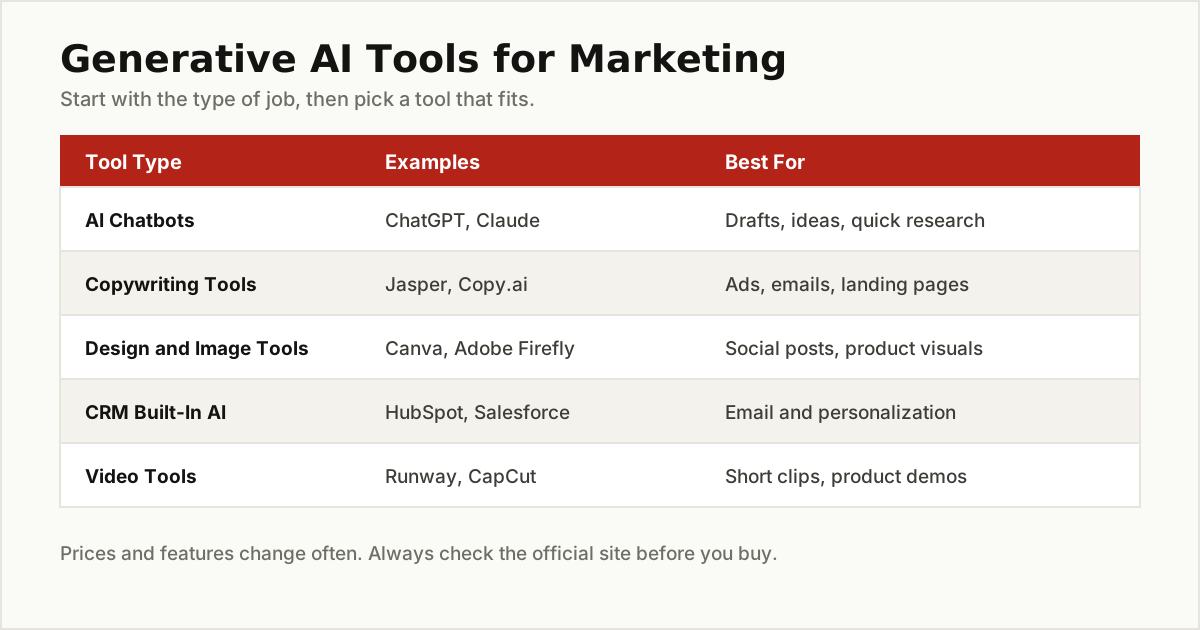
General chatbots such as ChatGPT handle drafting, brainstorming and quick research. Dedicated copy tools like Jasper and Copy.ai add brand templates and campaign workflows. For visuals, Canva combines simple design with AI image features that non-designers can use, and Adobe Firefly focuses on generated images inside a professional design flow.
If your company already runs a CRM, check the AI built into it before buying anything new. HubSpot and Salesforce’s marketing AI tools can draft emails, score leads and personalize campaigns using the customer data you already store. Prices and features change constantly, so always confirm the current plans on the official site before you commit.
Examples: What This Looks Like in Practice
So what does generative AI for marketing actually look like on a normal workday? To keep this honest, here are example workflows, the kind small teams run every day. They are illustrations, not case studies, and there are no invented results attached.
A neighborhood coffee shop. The owner takes one good phone photo of a new drink. An image tool creates clean versions on three backgrounds. A chatbot turns the launch notes into five social captions and a short email. The owner edits for ten minutes, adds the real price, and posts. Work that used to take an afternoon now fits into a lunch break.
An online clothing store. The team writes one strong product description, then asks AI for ten ad variations, each with a different angle: comfort, price, fabric, gift idea. They test three, keep the winner, and repeat next month with a new product.
A local gym. A trainer records rough voice notes about a new class. AI turns them into a tidy email with three subject line options. The trainer fixes one wrong time, sends it, and checks opens the next day.
Notice the pattern in all three examples. The AI never talked to a customer. It drafted, varied and formatted. The humans supplied the photo, the facts, the prices and the final yes. That split of work is the whole secret: machines for speed, people for judgment.

A Simple Workflow a Small Team Can Copy
Tools matter less than routine. This five step loop is how generative AI for marketing stays useful instead of messy.
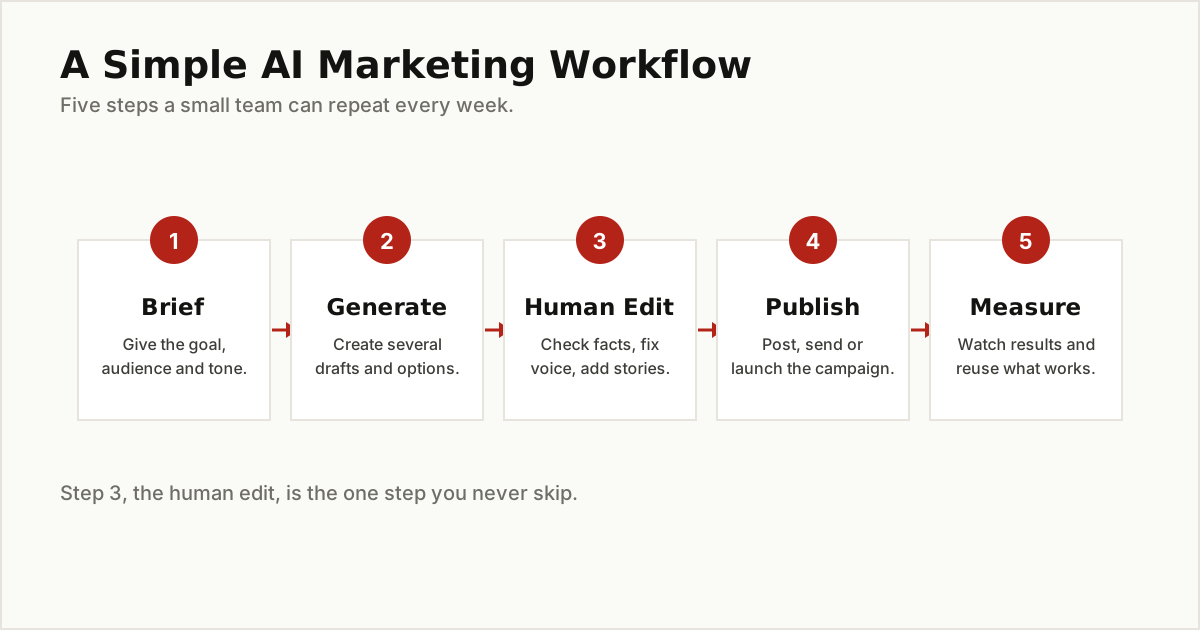
- Brief. Write down the goal, the audience, the tone and the facts the content must include. Two minutes here saves twenty minutes of editing.
- Generate. Ask for several options, not one. Choice is where quality comes from.
- Human edit. Check every fact, fix the voice, add a real story or example that only your team knows.
- Publish. Ship it through your normal channels and approval steps.
- Measure. Note what worked, save the winning prompts, and reuse them.
One more habit: keep a shared prompt library. When a prompt produces a great email, save it with a note about when to use it. Within a month, your team stops starting from zero. Clear, helpful content also helps your brand appear inside AI answers, which is the core idea behind generative engine optimization.
Also decide in advance who approves what. Small teams often use one simple rule: the person closest to the customer gives the final read on anything that will be published. It takes two minutes, and it catches the small errors that make a brand look careless.
Honest Risks and Rules
Generative AI for marketing has real risks, and pretending otherwise is how brands get embarrassed.
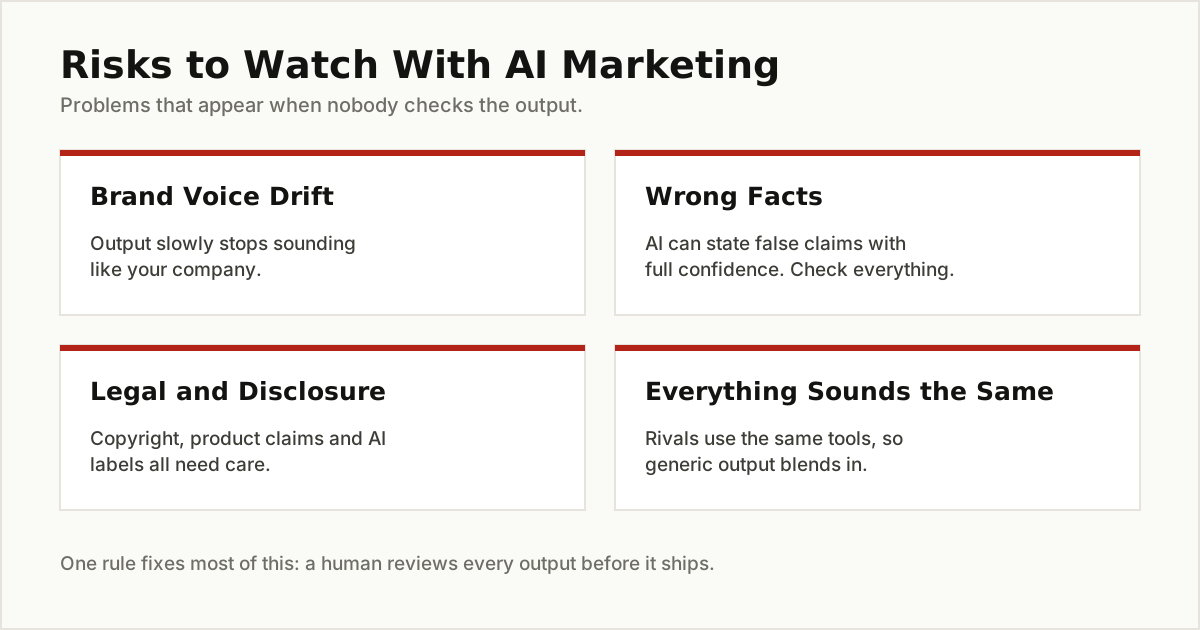
Brand voice drift. AI writes in an average style. Over months, your blog, emails and ads can all start sounding like nobody in particular. Fix: keep a one page voice guide and paste it into your briefs.
Wrong facts. AI can invent a product feature, a date or a quote and state it like truth. Fix: a human verifies every claim, number and name before publishing. No exceptions for small content.
Legal and disclosure problems. Generated images and text can raise copyright questions, and fake reviews or testimonials are never acceptable. Some platforms also ask creators to label AI generated content. Fix: use tools with clear commercial terms, never publish fake proof, and follow the disclosure rules of each platform.
Sameness. Your competitors have the same tools. If your only edge was speed, it is gone. Fix: add what AI cannot copy: your experience, your customers’ real words, your data and your point of view.
None of these risks is a reason to avoid the tools. They are reasons to run them with a process: a voice guide, a fact check, a named approver, and a monthly look at the results.
How to Measure If It Is Working
You do not need a complex dashboard. Track a few simple numbers before and after you adopt generative AI marketing tools, and compare honestly.
| Metric | What it tells you | Where to check |
|---|---|---|
| Time to first draft | Whether AI is really saving hours | Your project tracker |
| Email click rate | Whether AI variations beat your old copy | Your email platform |
| Ad click and conversion rate | Whether new variations sell better | Your ad manager |
| Social engagement | Whether posts still feel human | Platform insights |
| Cost per piece | Whether the tools pay for themselves | A simple spreadsheet |
If speed rises but clicks and sales fall, the content got worse, not better. The goal is faster production of content that still performs, and the numbers above will tell you the truth within a few weeks.
Review the numbers monthly, not daily. Marketing data is noisy, and one good or bad week proves little. Look for steady patterns: are drafts faster, are your best AI variations winning more often than your old hand written ones, and is engagement holding steady? Three yes answers mean the system is working.
Conclusion
Generative AI for marketing is best understood as a tireless drafting assistant. It writes, draws and varies content at a speed no team can match, but it cannot know your customers, your facts or your taste. Teams that win with it keep humans in charge of briefs, facts and final edits, and they measure results instead of trusting the hype.
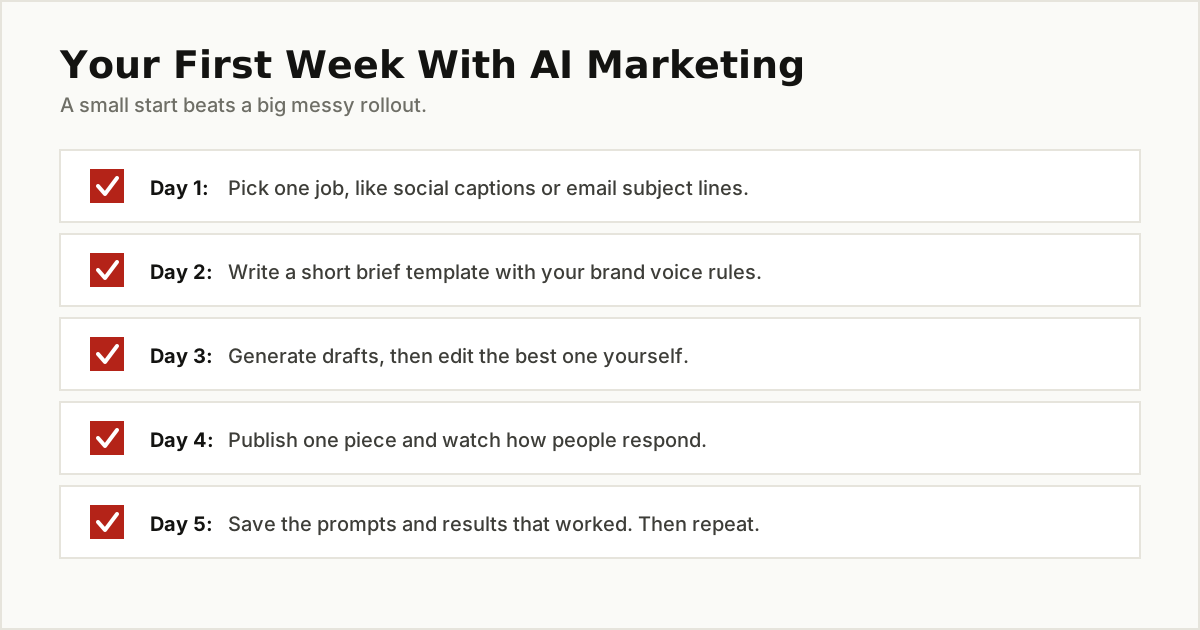
Start small: one job, one tool, one week. If it earns its place, expand. For more guides like this one, browse our Generative AI and Agentic AI category.