Dorm Room Games: 21 Ways to Bond With New Roommates
📋 Table of Contents
Move-in day is a strange kind of magic: you drag a laundry basket of your entire life up three flights of stairs, and by nightfall you're sitting cross-legged on the floor with a total stranger who's now, somehow, the person you'll share a bathroom sink with for the next nine months. That silence after the parents leave? Everyone feels it. The fastest way to break it isn't a deep heart-to-heart — it's a game. The right dorm room games can turn "hi, I guess we live together now" into an actual friendship before your first 8 a.m. lecture.
Below you'll find 21 roommate bonding games sorted by the vibe you're going for — from gentle first-night icebreakers to the ones that reveal who your floormates really are. We've also folded in a bit of social psychology on why these work, so you're not just filling silence, you're building something that lasts.
Quick Snapshot
- What it is: Low-pressure games and activities designed to help new roommates and floormates get to know each other fast.
- Best for: First-year students during O-Week, new roommate pairings, and anyone moving into shared housing.
- How it works: Games lower social pressure by giving everyone a script — you bond through play instead of forcing conversation.
- Why it matters: Early roommate rapport is one of the biggest predictors of how happy you'll feel in your dorm all year.
- Fun fact: Psychologist Arthur Aron showed that strangers can feel remarkably close after just 45 minutes of trading escalating personal questions — the exact thing most of these games do naturally.
⚡ Fast Facts: Dorm Room Games Quick Snapshot
Low-pressure game scripts remove the awkwardness of forced early-day conversation.
Self-disclosure reciprocity builds natural trust. Share details, match it, and bond.
Perfect for college roommates, suites, and new floor mates settling into dorm life.
First night or O-Week to break the silence before silent routines harden.
Why Games Actually Work (The Psychology Bit)
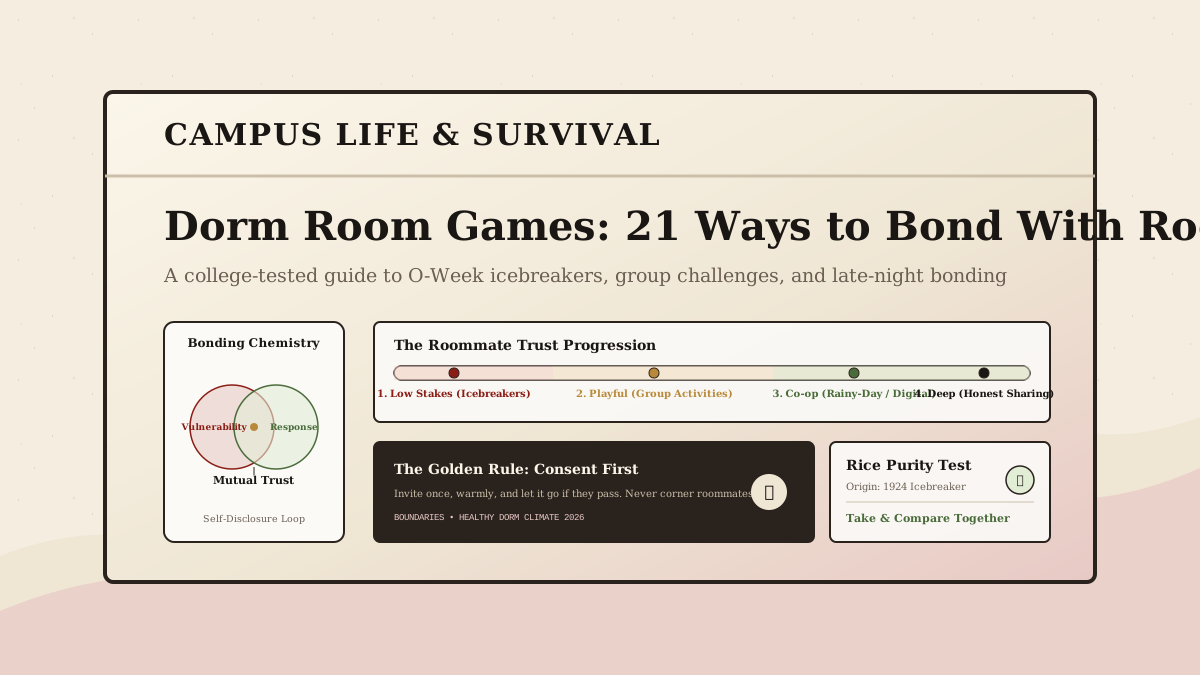
Here's the part most listicles skip. Bonding isn't about how much time you spend together — it's about self-disclosure reciprocity: I share something a little vulnerable, you match it, and trust compounds. Games engineer that trade safely, because the "rules" give everyone permission to open up without feeling like they're oversharing.
There's also the mere-exposure effect — we like people more simply from repeated, low-stakes contact. A five-minute game every night does more for a roommate relationship than one big awkward dinner. So don't overthink it. Consistency beats intensity.
One caveat worth naming up front: bonding games should invite participation, never corner people. A good host reads the room and lets anyone pass on a question, no explanation needed. That single habit is what separates a floor that gels from one that quietly splinters.
🔄 The Self-Disclosure Reciprocity Loop
How small, structured disclosures build mutual trust over time:
- Action: One roommate shares a low-risk personal detail (e.g., a favorite song or silly habit).
- Outcome: Lowers the initial social barrier without invoking vulnerability anxiety.
- Action: The other roommate matches with their own detail of similar depth.
- Outcome: Validates the connection, signaling a safe space to share more.
This loop builds familiarity, which activates the mere-exposure effect over time. self-disclosure builds trust when it's mutual.
First-Night Icebreakers (Low Stakes, High Reward)
Start here on day one, when nobody knows anybody and everyone's a little nervous.
- Two Truths and a Lie — Everyone shares three "facts"; the group guesses the lie. It's the undisputed champion of roommate icebreakers because it surfaces a random, memorable detail about each person in seconds.
- Would You Rather — Keep it silly ("Would you rather fight one horse-sized duck or 100 duck-sized horses?") and you'll learn how everyone thinks without a shred of pressure.
- The Story of My Stuff — Each person picks one object they moved in with and explains why it made the cut. Instant, effortless personal storytelling.
- Desert Island Playlist — Everyone names three songs they'd bring anywhere. Add them to a shared queue and you've built the soundtrack for the semester.
- Rose, Bud, Thorn — A nightly round of one good thing (rose), one thing you're looking forward to (bud), and one hard thing (thorn). Small, but it becomes the glue of a close floor.
📅 First-Night Icebreaker Plan
A step-by-step roadmap to ease new roommates from arrival to comfortable connection:
Light Icebreakers (Unpacking Stage)
Kick off with Would You Rather or Two Truths and a Lie. Keeps the energy high and the pressure low.
Story of My Stuff (Late Afternoon)
As you both organize the room, explain the history of one key item on your desk. Effortless storytelling.
Desert Island Playlist (Evening)
Compile a shared playlist of 3 songs from each roommate. Let it play in the background during dinner.
Rose, Bud, Thorn (Before Sleep)
Close out day one with a quick recap of the rose, bud, and thorn. Establishes a supportive nightly routine.
Games That Go a Little Deeper
Once the ice is broken, these help you move from "roommate" to "friend."
- Never Have I Ever — A classic. Keep it light and everyone stays comfortable; let people set their own boundaries on what they'll admit.
- The Rice Purity Test — A long-standing O-Week ritual where friends take the 100-question self-graded survey side by side and compare scores. It's less about the number and more about the stories that spill out afterward — the perfect low-effort bonding activity for a new floor. If your group's curious, you can take the Rice Purity Test together here and see who's been living life on hard mode. (Curious what your number actually means? Our score meaning guide breaks it down without the judgment.)
- Hot Seat / 21 Questions — One person answers rapid-fire questions from the group. Great for the roommate who's a little quiet but warms up when the spotlight's shared.
- Paranoia — One person whispers a question ("Who's most likely to sleep through finals?") to the next, who answers out loud — but the rest only learn the question on a coin flip. Chaotic, hilarious, and weirdly bonding.
- The 36 Questions — Aron's actual research-backed set, from "What would constitute a perfect day?" to genuinely deep ones. Not a party game, but an incredible late-night, one-on-one roommate ritual. Psychologist Arthur Aron showed that strangers can feel remarkably close after just 45 minutes of trading escalating personal questions — using 36 questions to build closeness.
🌱 Roommate Connection: Casual vs. Deep Bonding
Comparing game types to suit the mood and comfort level of your roommates:
- Core Focus: Laughter, quick thinking, and silly debates.
- Examples: Would You Rather, Two Truths and a Lie, Paranoia.
- Best For: Large groups, O-Week floor parties, first meetings.
- Social Risk: Extremely low. Perfect for breaking initial tension.
- Core Focus: Self-disclosure, shared values, and life histories.
- Examples: Rice Purity Test, 36 Questions, Hot Seat.
- Best For: Late-night talks, one-on-one roommates, close friends.
- Social Risk: Medium. Requires trust and active consent.
Group & Floor-Wide Games
Perfect for when the whole hall wants in during those first few weeks.
- Dorm Scavenger Hunt — Teams race to find or photograph a list of items around campus. Nothing bonds people like a shared, slightly ridiculous mission.
- Assassins (a.k.a. Spoons) — The floor-wide, week-long stealth game every dorm eventually plays. Ask your RA about it first — some halls have their own rules.
- Mafia / Werewolf — A social deduction classic for bigger groups. All you need is a deck of cards and one dramatic narrator.
- Cook-Off Night — Split into teams and battle with only what's in the communal kitchen. Half the fun is the disasters.
- Themed Movie Marathons — Everyone nominates one film; you vote. Repeating it weekly quietly builds tradition, which is what turns a hallway into a home.
🎮 Floor-Wide Game Suitability Guide
Understanding the setup requirements and group sizes for larger games:
Group Size: 10-30+ (teams)
Intensity: High
Setup: Written clues around campus.
Group Size: Entire floor
Intensity: Medium-passive
Setup: Assign targets privately.
Group Size: 8-20 players
Intensity: Low-mental
Setup: One deck of cards.
Group Size: 6-15 players
Intensity: Low-social
Setup: Shared kitchen/TV booking.
Rainy-Day & Digital Games
For the nights nobody wants to leave the room.
- Jackbox Party Packs — Play from your phones, no controllers needed. Quiplash and Fibbage are engineered for exactly this crowd.
- Mario Kart / Smash Bros — The great equalizer. Trash talk is a love language.
- Codenames — A word-association team game that's smart, fast, and endlessly replayable.
- Cards Against Humanity — Wildly popular, but read the room — it's not for everyone, and that's okay. Have a backup ready.
- Online Escape Rooms — Free browser versions let you solve puzzles together, which builds a different kind of trust than a party game.
- Collaborative Playlist Wars — Everyone adds to a shared playlist all semester; at winter break, you look back at the chaos you built together.
📺 Digital & Rainy-Day Game Types
Match the game platform to your roommates' energy and setup preferences:
Easy onboarding, high player counts, creative trivia, and hilarious text answers.
Fast reflex competitive gameplay, instant trash talk, and classic arcade action.
Word association, team deduction, cooperative puzzle-solving, and logic building.
Who This Is For (and a Few Honest Caveats)
These games are aimed at college students, roughly 18–25, settling into shared living. A few things worth keeping in mind:
- Consent is the whole game. Any activity that pressures someone to reveal or do something they're not comfortable with stops being bonding and starts being a problem. "Pass" should always be a free, judgment-free option.
- Watch the substance-and-dare stuff. Truth-or-dare and drinking games can drift fast. If your group plays, keep it optional, keep it legal, and keep an eye out for anyone who looks uncomfortable.
- Homesickness is real. For some, the first weeks are genuinely hard. Games help, but if a roommate seems to be struggling beyond normal nerves, your campus counseling center exists for exactly that — it's a strength to point someone toward it. Knowing early roommate dynamics helps secure social connection in college.
Bonding isn't a performance. The goal isn't to be the most fun person in the room; it's to make the room a place people want to come back to.
🛡️ Safe & Supportive Roommate Checklist
Ensure games remain fun and support collective mental health:
Always make "pass" a respected choice. No questions asked. No peer pressure.
Keep games dry or optional. Don't base bonding on consumption.
If a roommate isolates or shows deep distress, point them to campus counseling.
Frequently Asked Questions
What are the best dorm room games for shy roommates?
Start with structured, low-pressure games like Two Truths and a Lie or Would You Rather. They give shy people a script to follow, so there's no pressure to "be interesting" on the spot. Avoid spotlight-heavy games (like Hot Seat) until everyone's warmed up and comfortable.
How do I bond with a roommate I have nothing in common with?
Focus on doing rather than talking. A cooperative game, a shared playlist, or a weekly show you both watch builds connection without needing common interests. Bonding comes from repeated positive contact, not from being alike.
Is the Rice Purity Test a good roommate icebreaker?
It can be a fun, nostalgic O-Week ritual when everyone opts in willingly and treats it as entertainment, not judgment. Keep it light, let anyone skip questions, and remember the score is just a snapshot — never a verdict on anyone's character.
What games work for a whole dorm floor, not just roommates?
Floor-wide favorites include scavenger hunts, Mafia/Werewolf, Assassins, and Jackbox party games. These scale to large groups and pull people out of their rooms — exactly what you want in the first few weeks.
How soon should we play bonding games after move-in?
The first night is ideal, once the initial unpacking chaos settles. A quick, low-stakes icebreaker that evening breaks the awkward silence before it hardens. Consistency matters more than intensity — a short game most nights beats one big event.
What if a roommate doesn't want to play?
Never push. Invite once, warmly, and let it go if they pass — some people bond over quieter shared routines instead. Forcing participation backfires. Leave the door open and they'll often join on their own terms later.
The Takeaway
The best dorm room games aren't really about the games — they're about giving a bunch of nervous strangers an easy, low-stakes reason to lean in. Whether it's a first-night round of Two Truths and a Lie or a side-by-side score comparison that ends in three hours of stories, the point is the same: you're building the small, repeated moments that turn a random room assignment into a real friendship.
So pick one, keep it kind, and let anyone pass without a second thought. Then, if your floor's ready for a classic, take the Rice Purity Test together — it's the icebreaker that's outlasted a century of freshmen for a reason. Curious how your group stacks up? Explore the average scores by age and see where you land. You can also read the complete history of the Rice Purity Test to see how it evolved from a 1920s tradition.
This article is for entertainment and educational purposes and is not formal administrative guidance or professional advice. Always keep events respectful and compliant with local university guidelines.
📖 Read Our Latest Published Blogs
Explore more in-depth history, college tips, and psychology explainers from our team:
First Year College Tips
The first year of college tips nobody warns you about — from the week-6 loneliness dip to syllabus week and office hours. Practical, honest advice.
OrientationFreshman Week Icebreakers
Freshman week icebreakers that actually work — no cringe. College-tested games, the psychology behind why some fall flat, and o-week orientation ideas.
PsychologyPersonality Quiz Accuracy
Are online quizzes really accurate? A psychological breakdown of MBTI, Big Five, and Barnum effect.
TrendsViral Quizzes 2026
From the Rice Purity Test to MBTI and TikTok — discover what quizzes Gen Z can't stop taking.