Viral Quizzes 2026: The Internet Quizzes Gen Z Can't Stop Taking
📋 Table of Contents
You open the group chat and it's already chaos. Someone dropped their score, someone else screenshotted a wildly different one, and now three people are arguing about whether a 34 is "concerning" or "iconic." If that scene feels familiar, congratulations — you're living through the golden age of viral quizzes. In 2026, taking a quiz isn't a solo activity you do when you're bored. It's a social ritual, a personality flex, and honestly, one of the last things that still gets a group chat to actually respond.
But here's what almost nobody talks about: the quizzes Gen Z can't stop taking aren't random. There's a reason the same handful keeps resurfacing, and it says more about how this generation builds identity online than any think-piece will admit. Let's get into it.
Quick Snapshot
- What it is: The self-quiz boom — short, shareable online tests that measure your experiences, personality, or vibe.
- Who it's for: Mostly Gen Z (roughly 16–24), plus older millennials chasing nostalgia.
- How it works: Answer honestly, get a number or a type, compare with friends, repeat.
- Why it matters: Quizzes have quietly become social currency — a low-stakes way to say "here's who I am" without saying it out loud.
- Fun fact: The Rice Purity Test — arguably the ancestor of the entire genre — is nearly a century old, and its exact origin date is still genuinely disputed.
⚡ Fast Facts: The 2026 Viral Quiz Ecosystem
The original 100-question icebreaker checklist. Low score is the ultimate group chat flex.
Four-letter personality tags used for bios, compatibility, and finding your aesthetic.
Generational slang tests popularized on TikTok to claim generational bragging rights.
Instantly generated aesthetic profiles based on minor personal inputs or feeds.
Why Gen Z Is Obsessed With Quizzes (The Real Reason)
Every generation had its quizzes. Millennials had the golden age of BuzzFeed, where "Which Disney Sidekick Are You?" was a legitimate personality statement. But Gen Z uses quizzes differently — and this is the part competitor articles keep missing.
For Gen Z, a quiz result isn't the end of the interaction. It's the start of one. The score or the type is just a conversation opener — a way to prompt comparison, debate, and self-disclosure inside a friend group. Psychologists have a name for the underlying pull here: social comparison theory, the idea that we figure out who we are partly by measuring ourselves against the people around us. Quizzes weaponize that instinct and make it fun.
There's also a self-discovery angle. Gen Z came of age being told to "know yourself," and quizzes offer a shortcut — a tidy label for something that otherwise takes years of therapy to articulate. Are the labels scientifically airtight? Not remotely. But they're shareable, and in 2026, shareable beats accurate almost every time.
🔄 The Social Lifecycle of a Viral Quiz
The Spark
You see a score card screenshotted in a group chat, or watch a TikTok creator quiz their friend on camera.
The Assessment
You take the quiz in private, answering honestly to get your numerical score or identity type label.
The Flex
You screenshot the result, drop it in the chat, and argue whether your score makes you a saint or chaotic.
The Comparison
Your friends take it, leading to a loop of compatibility checks, debates, and group identity building.
The Viral Quizzes Actually Trending in 2026
Here's the current lineup — the quizzes genuinely circulating right now, not a recycled list from three years ago.
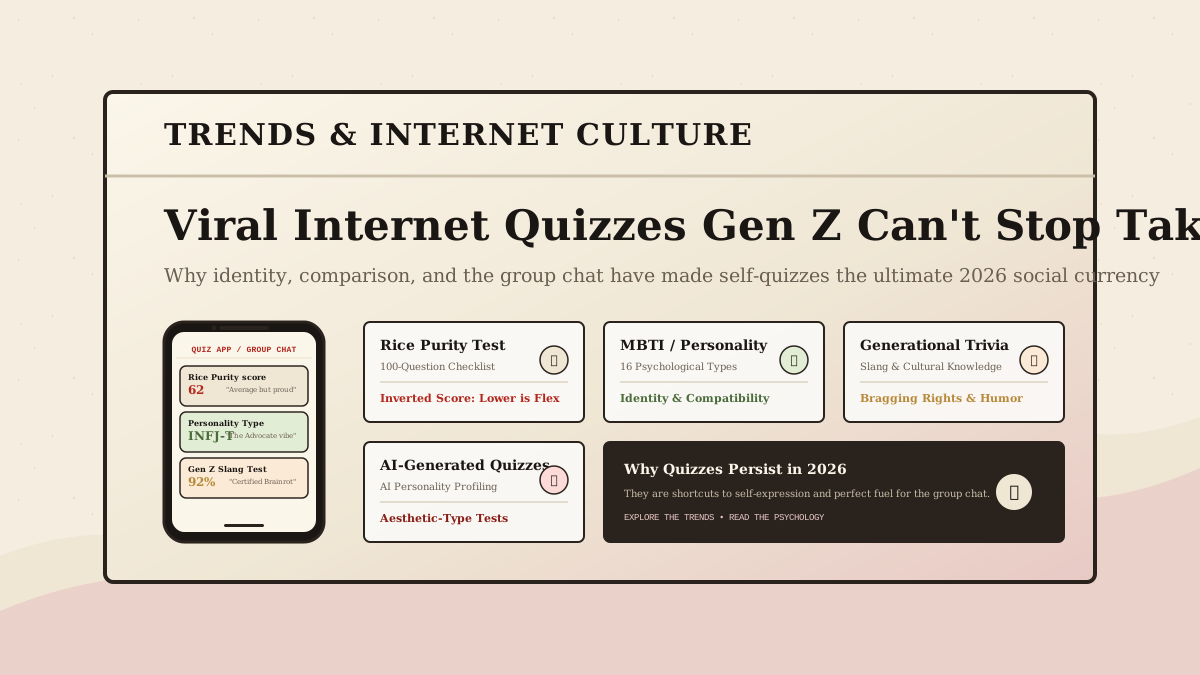
The Rice Purity Test. Still the heavyweight. Its whole appeal is that it's the rare quiz where a lower score is the flex, which flips the usual "get a high grade" instinct on its head. It refuses to die because it does one thing perfectly: it turns your past into a number your friends can react to.
MBTI (16 personality types). The 16-letter personality system (INFJ, ENTP, and the rest) is arguably bigger with Gen Z than it ever was with previous generations. On TikTok, "personality type" has become shorthand for compatibility, red flags, and entire dating strategies. People lead with their type in bios now.
"How much of a Gen Z are you?" and Gen Z vs. Millennial tests. These generational quizzes exploded thanks to TikTok's "quiz your friend on camera" format. They're less about self-discovery and more about generational bragging rights — and they perform absurdly well as short-form video content.
Slang and pop-culture trivia quizzes. "Do you actually know Gen Z slang?" style quizzes turned language itself into a game. They spread fast because getting one wrong is comedy gold on camera.
AI-generated personality quizzes. New in the 2026 mix: quizzes built by AI tools that spin up a custom "What's your TikTok personality?" or aesthetic-type test in seconds. The genre is expanding faster than ever because making a quiz no longer requires a BuzzFeed-sized team.
⚖️ Quiz Focus: MBTI vs. Rice Purity Test
- Model: Subtractive Checklist (100 - X)
- Measures: Behavioral experiences & history
- Flex: Lower score implies high adventure
- Vibe: Confessional, nostalgic, & chaotic
- Model: Multi-dimensional spectra
- Measures: Cognition, preferences, & attitudes
- Flex: Unique type labels (e.g., INFJ)
- Vibe: Introspective, relational, & structured
The Origin Story Most Articles Get Wrong
Here's the original insight to actually take away from this piece. Almost every "history of the quiz" article confidently tells you the Rice Purity Test was invented in one specific year — and they all disagree with each other. Some sources say the 1980s. Some say the 1960s. But the most carefully researched accounts, including a Rice University student's senior honors thesis on the subject, trace a version back to 1924, when the campus newspaper published results of an informal survey of female students under the headline "Rice Girls Not Quite Half Bad."
Why does this matter? Because it reveals something about viral internet culture: the origin stories we repeat online are usually copied, not verified. One site guessed a date, a hundred others copied it, and now there are three competing "facts" floating around — a perfect case study in how internet lore actually forms. Next time a quiz claims to be "official" or cites a precise founding year, take it with a grain of salt. Most of that history is folklore in a trench coat.
📊 The Math of Modern Quizzes
Start at 100, lose points for every experience checked off. Used by the Rice Purity Test.
Start at 0, gain points for every correct answer. Typical of slang & pop-culture quizzes.
Plots you across multiple coordinate axes (e.g., Introvert vs. Extravert) to assign a type.
What Your Results Actually Mean (Spoiler: Less Than You Think)
Whatever quiz you're taking, the healthiest framing is the same: your result is a snapshot, not a diagnosis. Think of it like Spotify Wrapped — a fun summary of a moment, not a permanent verdict on who you are.
A Rice Purity score doesn't measure your morality. An MBTI type doesn't lock your future. A "you're 82% Gen Z" result is a party trick, not a psychological assessment. These quizzes are entertainment first, mirror second, and science a distant third. Enjoy the reflection, screenshot the funny result, then close the tab and go live your actual life.
💡 Healthy Mindset Rules for Purity Testing
Not a moral card
A score is a count of experiences, not a measure of character. High or low numbers are neither better nor worse.
Not a bucket list
Checklist items are pieces of internet lore, not a checklist of milestones you must complete in life.
Stop if pressure hits
If looking at friends' scores creates peer pressure or judgment, remember it's time to close the browser tab.
Quick Comparison: How the Big Quizzes Stack Up
| Quiz | What it measures | Best score to flex | Vibe |
|---|---|---|---|
| Rice Purity Test | Life experiences | Low (inverted) | Confessional, chaotic |
| MBTI | Personality traits | No "best" — it's a type | Identity, dating |
| Gen Z vs. Millennial | Cultural knowledge | High | Bragging rights |
| Slang quizzes | Trend fluency | High | Comedy, competitive |
Frequently Asked Questions
What are the most viral quizzes in 2026?
The biggest right now are the Rice Purity Test, MBTI personality tests, "How much of a Gen Z are you?" quizzes, Gen Z slang quizzes, and a wave of new AI-generated personality tests. They dominate because they're built to be screenshotted and compared with friends.
Why is Gen Z so into online quizzes?
Quizzes hit a sweet spot: quick self-discovery plus instant social comparison. For Gen Z, the result isn't the payoff — the group-chat debate that follows is. They're conversation starters disguised as tests.
Is the Rice Purity Test still popular in 2026?
Very. It remains the most recognizable social quiz online, largely because it's the rare test where a lower score is the flex, and because it turns your personal history into something friends can react to.
Are online personality quizzes accurate?
Not scientifically. Tests like MBTI are popular and fun but aren't clinical assessments. Treat any quiz result as entertainment and light self-reflection — never as a real diagnosis of who you are.
What's a good Rice Purity Test score?
There's no universally "good" score — it depends on your age and life stage, and it doesn't measure worth or morality. Widely cited data has pinned the average around the low 60s, but your number is just your story, not a grade.
The Takeaway
Viral quizzes stuck around in 2026 for one simple reason: they scratch a very human itch to compare notes on who we are — and Gen Z just built better group chats to do it in. The trick is holding your results lightly. Take the quiz, laugh at the result, spark the debate, then let it go. You're a full person, not a percentage.
Curious where you'd actually land? Skip the copycat versions and take the original Rice Purity Test here — then send your score to the group chat and watch the chaos unfold. Just remember: it's a snapshot, not a scoreboard.
📖 Read Our Latest Published Blogs
Explore more in-depth history, comparison matrices, and psychology explainers from our team:
Rice vs. Innocence vs. Purity Test
Are they the same quiz? Discover the key differences in formats, origins, and scoring logic.
PsychologyIs the Test Accurate?
Psychologists explain what self-report scores actually measure and why comparisons are misleading.
Viral HistoryHow It Went Viral
The 100-year evolution of the test from campus print to global TikTok meme.
OriginsWhat Is Rice University?
The origin story detailing why residential dorm colleges created this icebreaker.