First Year of College Tips: 11 Things Nobody Tells You
📋 Table of Contents
You spent the whole summer picturing it: the perfect roommate, an instant friend group, late-night talks that turn into lifelong bonds. Then move-in day arrives, your dorm smells like industrial carpet, and by week three you're eating alone in the dining hall wondering if everyone else got a manual you missed.
Here's the secret: they didn't. Roughly 62% of high school graduates head straight to college each year, and almost every single one of them feels some version of that quiet panic. The brochures sell you the highlight reel. This guide gives you the part nobody screenshots — the real first year of college tips that actually matter once the welcome-week confetti settles.
Consider this your honest older-sibling briefing: what to expect freshman year, what genuinely helps, and which "rules" you can safely ignore.
Quick Snapshot
- What it is: A survival-and-thriving guide to the parts of freshman year that orientation skips.
- Who it's for: Incoming and current first-year students (roughly 18–22), plus anyone helping one.
- Key idea:** Most freshman struggles are timing and expectation problems, not personal failures.
- Biggest myth busted: You do not have to find your "forever friends" in the first two weeks.
- Why it matters: Knowing the pattern ahead of time turns panic into "oh, this is normal."
- Fun fact: Loneliness tends to spike around the middle of the first semester — not the start — right when everyone assumes they should have it figured out.
⚡ Fast Facts: Freshman Year Reality Check
Day-one groups are proximity-based scaffolding. They swap for real compatibility friends by semester two.
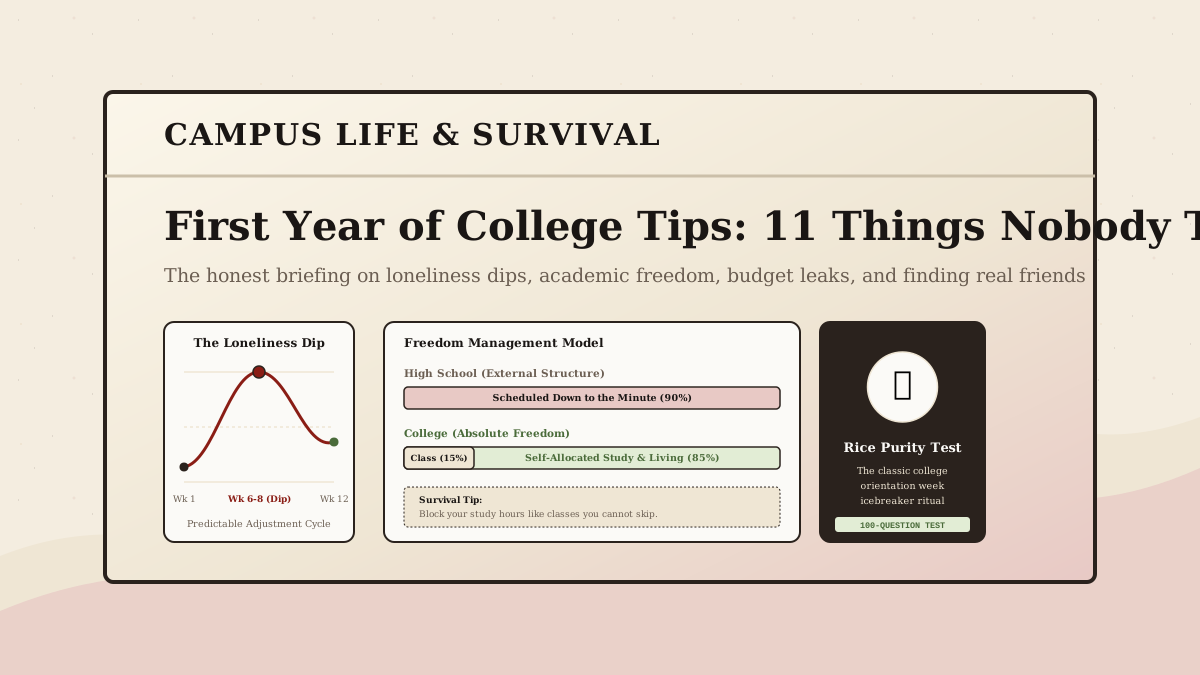
Loneliness doesn't peak at move-in; it spikes predictably around weeks 6–8 as novelty fades.
High school scheduled 90% of your day. College leaves 85% of your time completely self-allocated.
A trap where zero assignments blinker you. Put all due dates on one master calendar in week one.
1. Your First Friends Probably Won't Be Your Forever Friends
Week-one friendships are formed by proximity, not compatibility. You bond with whoever's on your floor or in the orientation line. That's not fake — it's scaffolding. Most people quietly swap that starter group for their real people by second semester or sophomore year. If your day-one crew fades, you're not doing college wrong. You're doing it exactly on schedule.
🌱 The Evolution of College Friendships
How social groups transition from initial proximity to deep compatibility during the first year:
- Bonding Basis: Same dorm floor, random orientation line, proximity
- Interaction: Small talk, eating together out of fear of dining alone
- Vulnerability: Low. Performance-focused and highlight-reel sharing
- Duration: Usually fades as people find their actual interests
- Bonding Basis: Shared values, common clubs, study groups, personality fit
- Interaction: Genuine inside jokes, support during midterms, comfort
- Vulnerability: High. Real sharing of doubts, goals, and struggles
- Duration: These are the "forever friends" you take into adulthood
2. The Loneliness Dip Is Real — and It's Predictable
Counselors who work with freshmen see a recurring pattern: the hardest stretch isn't move-in day. It's around weeks six to eight, when the novelty wears off, midterms hit, and the honeymoon fades. Surveys by the American College Health Association suggest well over half of college students report feeling lonely in a given year, and Gen Z (roughly 18–22) often ranks as the loneliest age group of all.
Knowing the dip is coming is the whole trick. When it lands, it's a season — not a verdict on your social life.
📉 First Semester Loneliness & Adaptation Cycle
Understanding the predictable emotional curve of a first-year student:
The Honeymoon & Confetti
Novelty is high. Welcome-week activities, unpacking, social rush. High energy, low structure, latent anxiety.
Routine & Reality Check
Classes begin in earnest. The social frenzy slows down. You realize dining hall food is repetitive and chores are real.
🚨 The Loneliness Dip (Peak Midterms)
The honeymoon completely fades. Midterm stress peaks. Homesickness is triggered by family weekend or cold weather. It feels like everyone else has it figured out (but they don't).
Acclimation & Real Connection
Students join clubs, drop what doesn't fit, and adapt. Routines solidify, loneliness fades, and realistic friendships take root.
3. Nobody Teaches You How to Handle Freedom
High school scheduled you down to the minute. College hands you three hours of class a day and expects you to build the other twenty-one yourself. That freedom is intoxicating for about a week, then it quietly becomes the thing that tanks GPAs. In one freshman survey, students were most blindsided not by hard exams but by the sheer amount of independent studying nobody was forcing them to do.
The fix is boring and it works: block your study time like it's a class you can't skip.
📅 The Freedom Shock: High School vs. College Hours
The visual difference in who controls your day, illustrating the challenge of freedom:
High School: High Structure (35 hrs/week in class)
External rules dictate almost every minute of your day.
College: High Freedom (12-15 hrs/week in class)
You must construct your own structure. Block out study time like a class.
4. Syllabus Week Is a Trap (in a Good Way)
The first week feels like a freebie — professors read the syllabus, assign nothing, everyone relaxes. Then week four arrives with three deadlines stacked on the same Tuesday. That collision was printed in the syllabus on day one. Spend an hour in the first week dumping every due date into one calendar. It's the highest-return study habit you'll build all year, and almost nobody does it.
5. Office Hours Are the Most Wasted Resource on Campus
Professors sit alone in their offices during posted hours while students who are drowning refuse to knock. Going isn't a sign you're behind — it's how strong students stay strong. Bonus: professors write recommendation letters and hand out research and internship leads, and they remember the people who showed up.
6. The "Everyone Else Has It Figured Out" Feeling Is a Group Illusion
That confident kid laughing with a huge group? Statistically, a chunk of them feel just as unmoored as you. Around one in five students say they don't have real friends on campus, and most people are performing confidence they don't feel. You're comparing your behind-the-scenes to everyone else's highlight reel. Decades of research on the psychology of social comparison show that this group illusion builds when a whole crowd tries performing confidence at once.
7. Homesickness Peaks Early, Then Fades
The ache for home usually hits hardest in the first few weeks, then loosens as new routines take hold. Personalizing your space, keeping a couple of standing calls home, and — crucially — not fleeing back every weekend all help. Going home constantly feels comforting but quietly stops you from ever landing where you actually live now.
8. Clubs Are the Cheat Code for Friendship
Trying to make friends in a lecture hall of 300 is brutal. A ten-person club meeting is easy mode. Shared activity removes the pressure of small talk — you already have a reason to be in the room together. Join two or three things in your first month, drop what doesn't fit, and keep the rest. This single move solves the loneliness problem faster than anything else on this list.
9. The Hidden Costs Nobody Puts in the Budget
Tuition and housing get all the attention. Then reality bills you for textbooks, dorm supplies, laundry, late-night food, club dues, and the "everyone's going, are you coming?" tax on your social life. Build a small buffer, learn which textbooks you can rent or find used, and track where the small stuff leaks. Money stress is one of the loudest background hums of freshman year — and one of the most manageable.
💸 The Hidden Cost Leak Matrix
Tuition and housing get the headlines, but these hidden expenses quietly drain a freshman's budget:
Can run $300-$600/sem. Always rent or look for used copies first; wait until syllabus week to buy.
Detergent, drying rack, quarters, trash bags, command strips. The small stuff adds up fast.
Dining hall fatigue leads to food delivery orders. Coffee runs during study blocks are silent budget killers.
Uber rides, group dinners, and concert tickets you agree to just to avoid missing out on bonding.
10. Icebreakers Feel Cringe but Actually Work
Groan all you want at forced bonding, but the goofy stuff — dorm games, dumb debates, and quizzes passed around the group chat — is genuinely how strangers turn into a friend group. A shared laugh lowers everyone's guard at once. This is exactly why the Rice Purity Test has survived as a freshman-week ritual for a century: it's a low-stakes, screenshot-ready way to break the ice, compare notes, and discover you're all more (or less) alike than you assumed. Just remember it's a bit of fun, not a scorecard for your worth — what your number actually means is a lot more forgiving than the group chat makes it sound.
11. It's Okay to Not Have a Plan Yet
Undeclared is not a synonym for lost. A huge share of students change their major, and plenty arrive with no idea at all. Freshman year is for sampling, not committing to a life sentence at 18. The pressure to "have it figured out" is manufactured — treat first year as reconnaissance, and let the plan reveal itself.
Who This Advice Is For (and a Real Caveat)
These tips are aimed at traditional first-years, but the mindset — struggle is timing, not failure — travels well to transfers, commuters, and returning students too.
One honest caveat: normal homesickness and the week-six dip are different from persistent, heavy sadness that doesn't lift. If low feelings stick around for weeks, disrupt sleep or eating, or make it hard to function, that's worth taking seriously. Every campus has free counseling services, and using them is a strength move, not a last resort. There's no prize for suffering quietly.
🛡️ Freshman Mental Health Checklist
How to distinguish normal transition adjustments from signs that it's time to seek support:
Missing home cooking, feeling tired after social events, occasional anxiety about tests, feeling lonely in week 6 but adapting.
Fleeing home every weekend, skipping classes due to sleep, eating alone constantly, refusing to join any clubs or events.
Persistent heavy sadness lasting over 2 weeks, disrupted sleep/eating, withdrawal from roommates, unable to function. Visit campus counseling.
Frequently Asked Questions
What are the best first year of college tips?
Block out study time like it's a class, put every deadline in one calendar during syllabus week, go to office hours early, and join two or three clubs in your first month. Most freshman problems come down to managing new freedom and building connection on purpose rather than waiting for it to happen.
Is it normal to feel lonely freshman year?
Extremely. Loneliness among first-years usually peaks around the middle of the first semester, and the majority of students feel it at some point. It's a phase tied to transition, not a sign anything's wrong with you. Joining group activities and giving friendships a few months to form is the reliable fix.
What should I expect freshman year academically?
Fewer class hours than high school but far more independent work, plus deadlines that cluster around midterms. The workload itself surprises more freshmen than the difficulty does. Time management, not raw intelligence, is what separates a smooth semester from a stressful one.
How do I make friends in college?
Join clubs and small groups where a shared activity does the social heavy lifting, form study groups, and take small risks — invite a classmate to lunch even if it feels awkward. Focus on making one or two individual friends rather than landing a whole group at once.
How long does homesickness last?
For most students it's strongest in the first few weeks and eases as routines settle in, usually within the first month or two. Staying connected to home while genuinely investing in your new environment speeds it up. Resist the urge to go home every single weekend.
Do most college students change their major?
A large share do, and many start undeclared. Freshman year is designed for exploration, so switching direction is normal and expected — not a setback.
The Takeaway
Almost everything that feels like you failing in your first year is actually just the timeline doing its thing. The starter friends fade, week six gets heavy, the freedom is a lot, and everyone around you is quietly winging it too. Knowing the pattern is the advantage — it turns "something's wrong with me" into "ah, right on schedule."
So be patient with yourself, say yes to the clubs, knock on the office door, and don't take the scorecard too seriously — whether it's your GPA or a quiz. Speaking of which: if you want the classic low-stakes way to break the ice with your new floor, take the Rice Purity Test and pass it around the group chat. It's not a measure of your worth — just a fun snapshot, and a surprisingly good excuse to actually talk to the people you'll be spending the next four years with.
This article is for entertainment and educational purposes and is not formal administrative guidance or professional advice. Always keep events respectful and compliant with local university guidelines.
📖 Read Our Latest Published Blogs
Explore more in-depth history, comparison matrices, and psychology explainers from our team:
Freshman Week Icebreakers
Freshman week icebreakers that actually work — no cringe. College-tested games, the psychology behind why some fall flat, and o-week orientation ideas.
PsychologyPersonality Quiz Accuracy
Are online quizzes really accurate? A psychological breakdown of MBTI, Big Five, and Barnum effect.
PsychologyQuiz Results Meaning
MBTI, love languages, attachment styles — discover what your quiz results really say about you.
TrendsViral Quizzes 2026
From the Rice Purity Test to MBTI and TikTok — discover what quizzes Gen Z can't stop taking.