Ask a room of online marketers which software they open first in the morning, and Semrush will be one of the names you hear most. It is a paid platform for studying how websites get found: which keywords bring them visitors, which sites link to them, how healthy their pages are, and how they compare with rivals.
That sounds simple, but the platform is huge, and its size is exactly why beginners get lost in it. This guide slows down and explains Semrush in plain English: what it is, how its toolkits and main tools fit together, where its famous data comes from, and the honest limits you should know before paying for it.
What Is Semrush?
Semrush is an online visibility platform. Visibility is a simple idea: how easy your brand is to find when people search, click ads, browse social media, or ask an AI assistant a question.
Semrush describes itself as a platform to grow and measure brand visibility, from search results to AI answers. That last part is new. Search used to mean a list of blue links. Today, tools like ChatGPT and Google’s AI answers reply in full sentences, and brands want to know whether they get mentioned inside those answers too. Semrush now sells that tracking alongside its classic SEO data, in a bundle it calls Semrush One.
The key thing to understand is that Semrush does not work on your website directly. It is a research platform. You type in a website or a keyword, and it shows you data it has collected about the wider web, plus checks it runs on your own site when you ask it to. Nothing changes on your pages until you take the findings and act on them yourself.
A Short History, From the Company’s Own Pages
Semrush keeps a public timeline on its company pages, and the story is short. It was founded in 2008 as a single tool built for private use. For years it grew mostly by word of mouth, adding tools one by one. In 2021 the company listed its shares publicly in New York. In 2025 it launched Semrush One, the bundle that joins classic SEO with AI visibility tracking. In 2026, Adobe completed its purchase of Semrush, a deal the company announces on its own homepage.
Why does this matter to a reader? Because it explains the product you meet today: a small keyword tool that kept swallowing neighboring jobs for almost twenty years, until it became a full marketing platform.
The Toolkits: How Semrush Is Organized
Instead of one giant pile of features, Semrush groups its tools into toolkits, one per job:
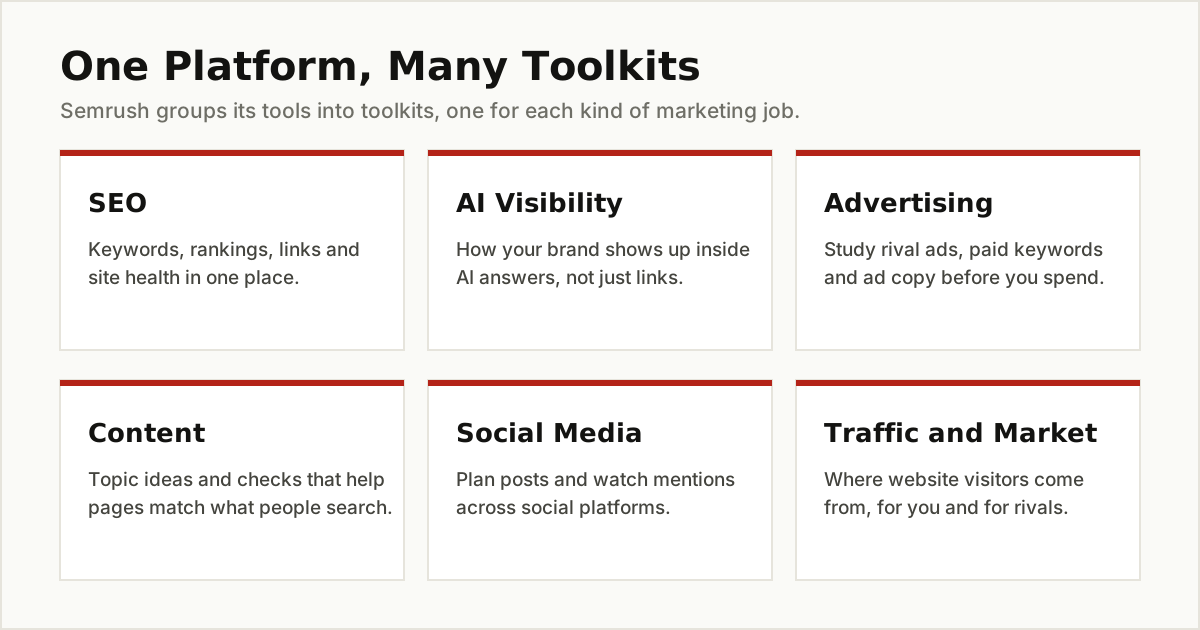
- SEO: the original toolkit, covering keyword research, rank tracking, backlinks and site audits.
- AI Visibility: tracking how often a brand appears inside AI generated answers, and what those answers say about it.
- Advertising: research for paid ads, including which keywords rivals bid on and what their ad copy says. Paid search like this is often called PPC, short for pay per click.
- Content: topic research and writing checks that help pages match what searchers actually want.
- Social Media: planning posts and watching brand mentions across social platforms.
- Local: help for businesses that need to show up in map results and local directories.
- Traffic and Market: estimates of where any website’s visitors come from, and how a whole market is moving.
- Reporting: scheduled reports that pull the numbers together for a boss or a client.
Most small teams live in the SEO toolkit and visit the others only sometimes. The platform is priced and packaged with that in mind, which we will come back to.
The Main Semrush Tools, One by One
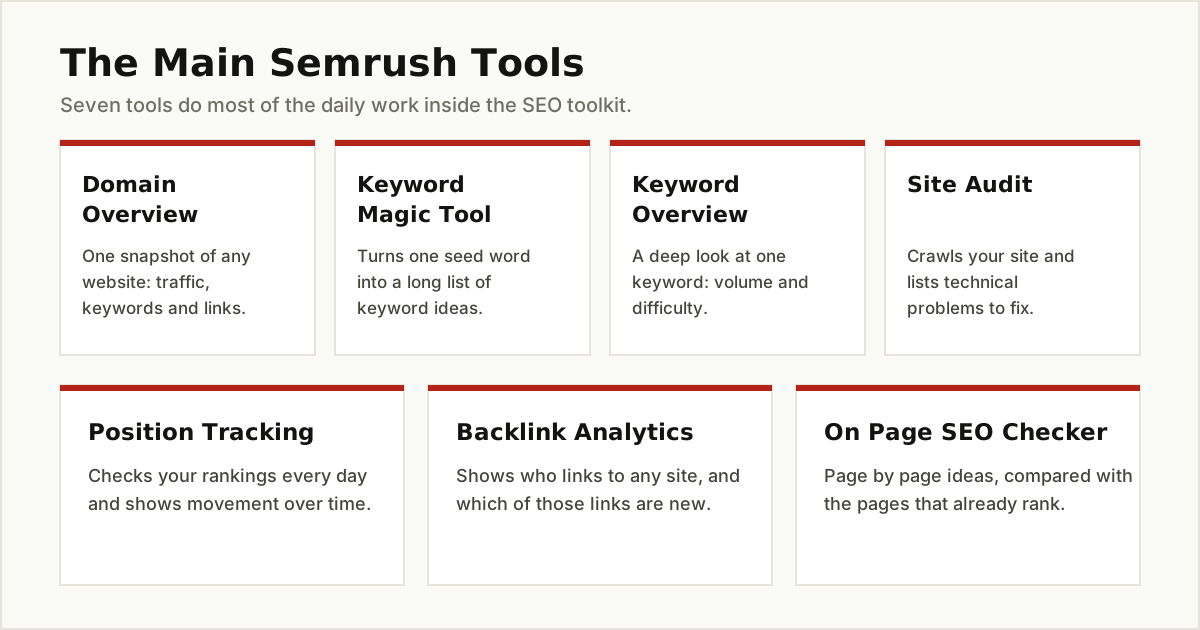
Inside the SEO toolkit, seven tools do most of the daily work. If you understand these, you understand what people mean when they say they “use Semrush”.
Domain Overview
Type any website address into Domain Overview and you get a one page snapshot: an estimate of its monthly search traffic, its top keywords, the sites linking to it, and how its traffic splits between free results and paid ads. Marketers use it for a fast first look at any rival, before deciding where to dig deeper.
Keyword Magic Tool and Keyword Overview
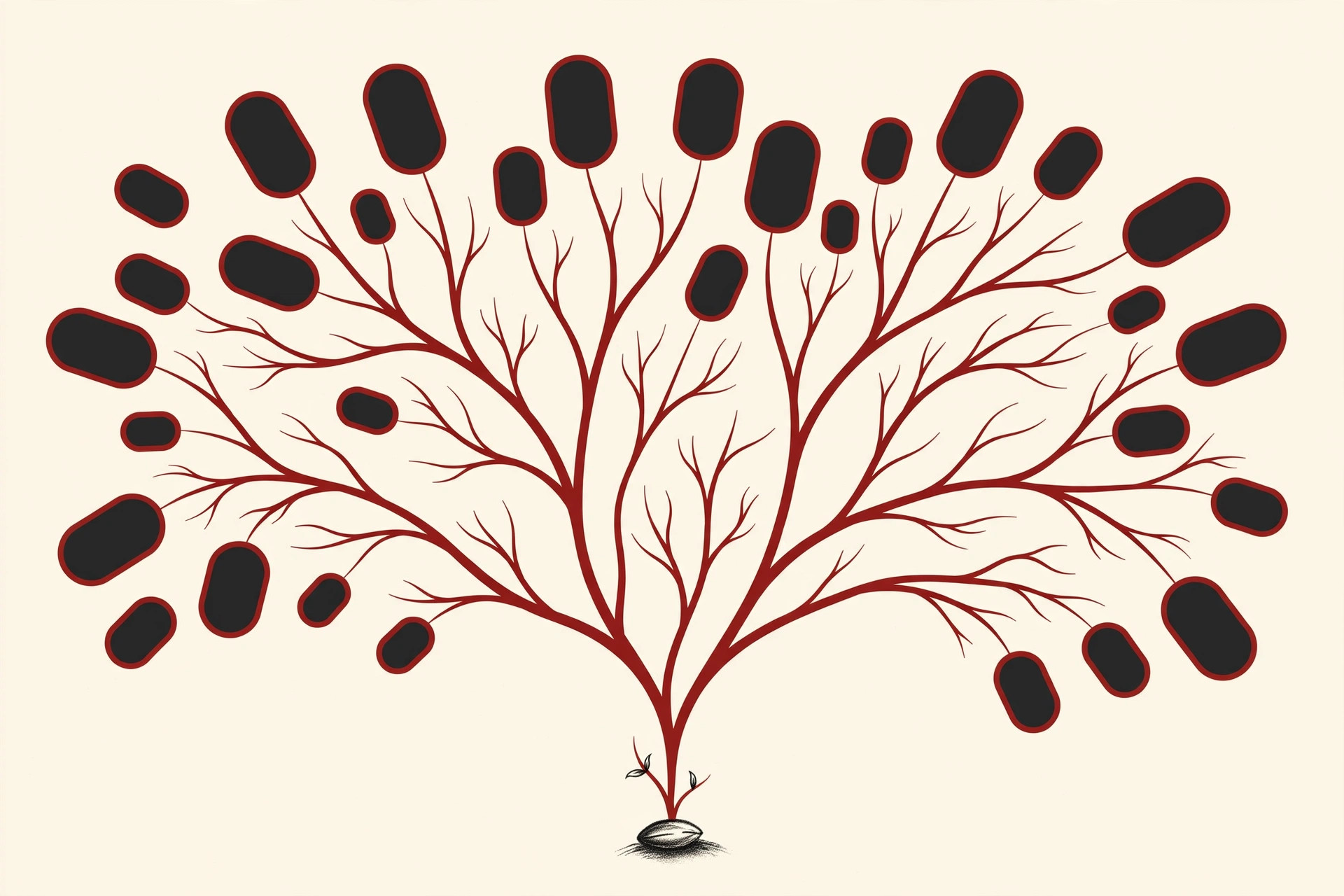
Keyword research means finding the exact words people type into Google, and judging which ones are worth chasing. The Keyword Magic Tool starts from one seed word and grows it into a long, organized list of related searches, each with its search volume (how often people search it) and a difficulty score (how hard it looks to rank for).
Keyword Overview does the opposite job: one keyword, examined closely. Volume, difficulty, the cost per click advertisers pay for it, and the current results page, all in one view. Together the two tools answer the two basic questions of SEO planning: what could we write about, and is this one term worth the effort?
There is also a free way to study a results page before any of this. Our guide to search operators shows the symbols and commands that sharpen a normal Google search.
Site Audit
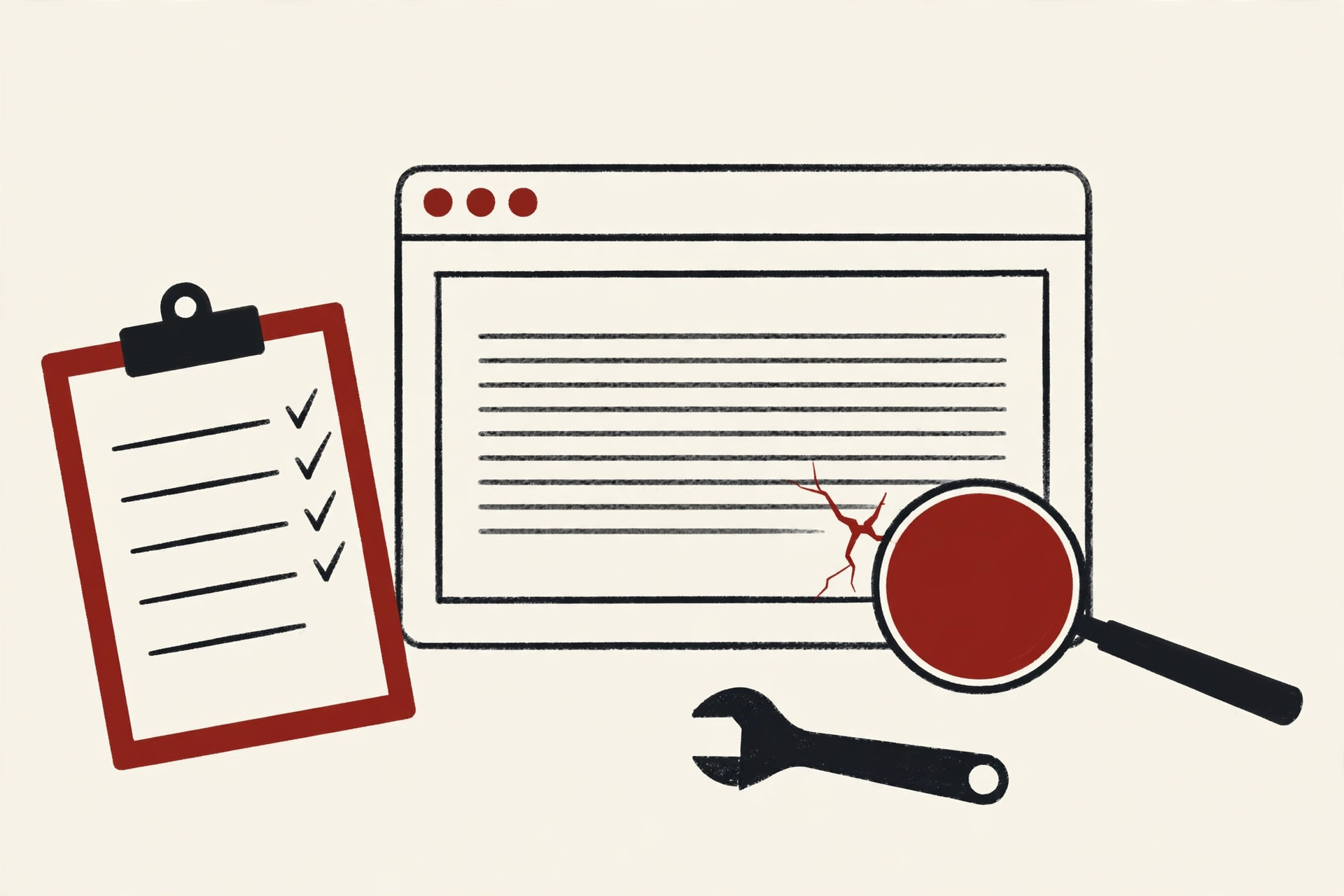
Site Audit is Semrush’s health check for your own website. It crawls your pages the way a search engine does and returns a list of problems: broken links, missing titles, slow pages, pages Google cannot reach. Each problem comes with a plain explanation of why it matters and how to fix it, sorted so the serious errors come first.
Semrush also offers a free SEO Checker on the same page, which anyone can run a few times a day without an account. It gives a quick taste of the full audit, which goes deeper and can be scheduled to repeat on its own.
Position Tracking
Rankings move every day, and nobody can check them by hand for long. Position Tracking watches a chosen list of keywords and reports where your site stands for each one, on desktop and mobile, in the city or country you pick. It also flags sudden drops, so a problem gets noticed in days rather than months.
Backlink Analytics
A backlink is a link from someone else’s website to yours, and search engines treat good links as votes of trust. Backlink Analytics shows the full link profile of any site: how many sites link to it, which links are new, which were lost, and which pages attract the most links. Studying a competitor’s profile is the fastest way to learn which sites in your field actually give links, and what kind of content earns them.
On Page SEO Checker
The On Page SEO Checker looks at one page at a time. It compares your page with the pages that already rank for your target keyword and suggests concrete changes: topics you may have missed, places your wording is thin, technical settings worth checking. It is advice, not magic, and it works best as a second pair of eyes on a page you already wrote.
Where Does Semrush Data Come From?
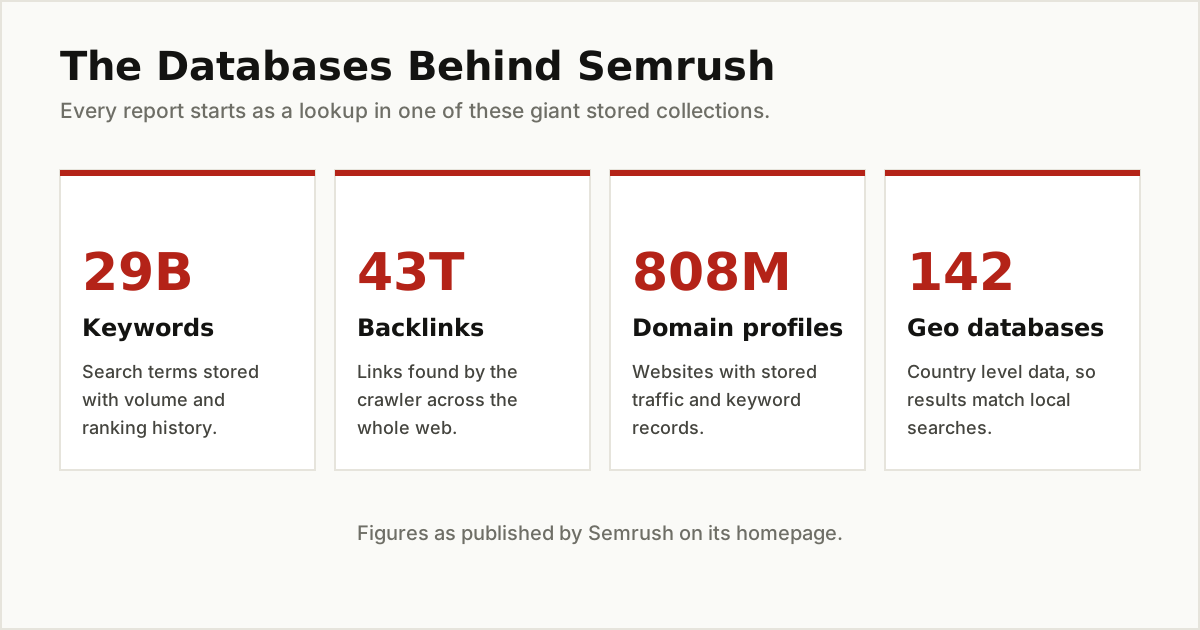
Every number in Semrush comes from its own databases, and the scale is hard to picture. The Semrush SEO toolkit page and homepage publish the company’s own figures: more than 29 billion keywords, 43 trillion backlinks, 808 million domain profiles, and 142 separate country databases. Treat those as the company’s claims about its own shelves, because that is what they are.
Two machines fill those shelves. A crawler, which is software that follows links across the web the way Google’s does, records pages and the links between them. On top of that, Semrush models search behavior: it watches results pages, notes which sites hold which positions, and estimates the clicks each position earns. That modeling step is the important one to remember, and the next sections explain why.
Teams that need this kind of data inside their own software, rather than in a dashboard, use a different product category altogether, covered in our guide to the best search API companies.
What a Working Marketer Actually Does With Semrush
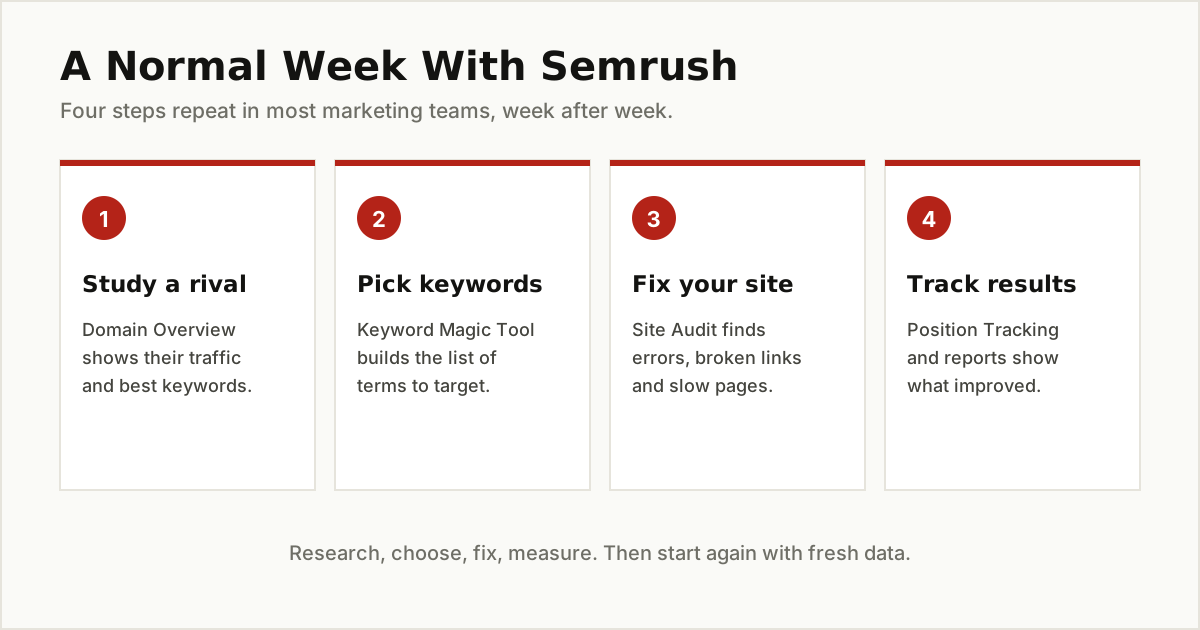
Put together, a normal week looks like this. On Monday, the marketer checks Domain Overview on a rival that just published something popular, and notes the keywords sending it traffic. On Tuesday, that list goes into the Keyword Magic Tool, and two or three realistic targets come out for a new article. Midweek, Site Audit runs and flags a set of broken links from an old redesign, which go to the developer with the audit’s fix notes attached. By Friday, Position Tracking shows whether last month’s pages are climbing, and a scheduled report turns it into a one page summary for the client or the boss.
Notice what is missing from that week: the tool never wrote, fixed, or promoted anything. Semrush is the measuring and spying half of SEO. The doing half is still yours.
The AI side works the same way. Because people now ask AI assistants for recommendations, Semrush tracks brand mentions inside AI answers, much as it tracks positions on Google. It is not the only tool watching that space. Smaller specialists do the same job, as our explainer on what ZipTie AI search analytics is shows.
Free Account and Paid Plans
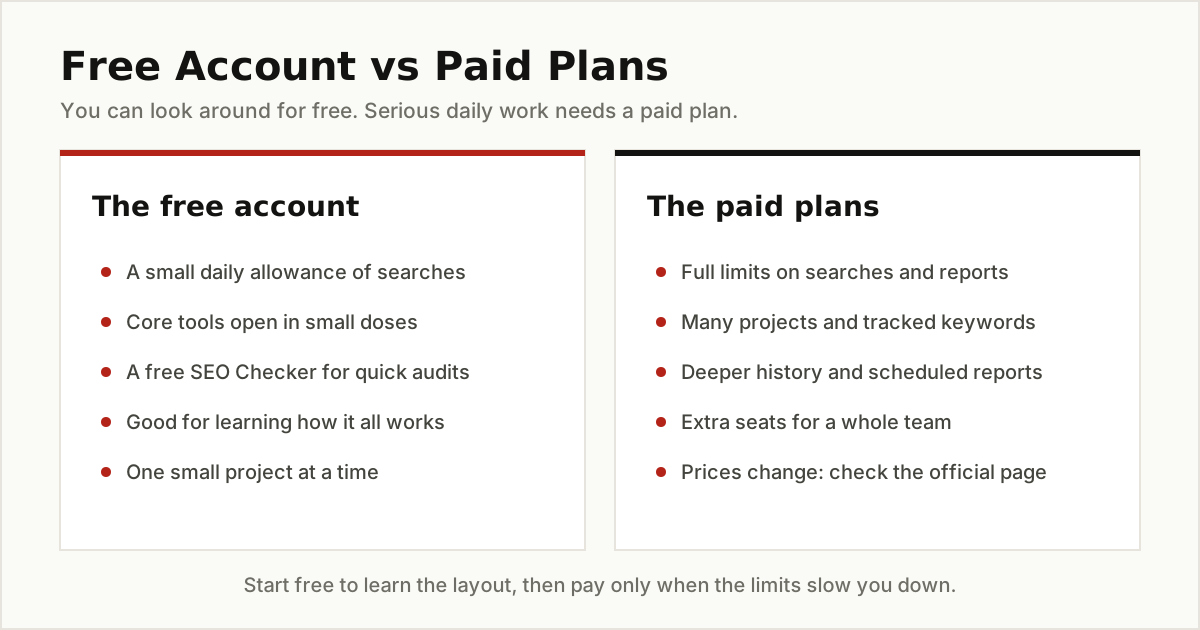
You do not have to pay to look around. Semrush offers a limited free account, and its own Site Audit page invites visitors to register for one. Free use comes with a small daily allowance of searches and reports, enough to learn the layout and run a few real checks, but far too small for daily professional work. The company says its free registered users passed one million back in 2023, so plenty of people use it exactly that way, as a sampler.
The full platform is paid, sold in plans with different limits on projects, tracked keywords and reports. Plans and prices change often enough that printing them here would mislead you within months, so check the official pricing page on semrush.com when you are ready to buy.
The Honest Limits
Three limits are worth stating plainly.
First, Semrush traffic numbers are estimates. They come from modeling, not from the website’s own records. For a rival’s site, an estimate is the only option anyone has, and Semrush estimates are good enough to compare sites and spot trends. But never quote one as an exact visitor count, because it is not one.
Second, the platform is big enough to be confusing. New users often pay for months while using two tools. The free account exists partly so you can find out whether the data changes any decision you actually make, before money is involved.
Third, Semrush is one of several professional SEO suites, and serious teams usually test more than one before settling. Different suites collect data differently, present it differently, and suit different working styles. There is no single correct choice for everyone.
The Bottom Line
Semrush is a research platform for online visibility: big databases of keywords and links, wrapped in toolkits for SEO, ads, content, social media and, now, AI answers. Its data is estimated rather than exact, its free account is a sampler rather than a workhorse, and its value depends entirely on whether you act on what it shows you. Understood that way, it earns its reputation.
Keep going with our other SEO and Search guides, where we break down search operators, search APIs and AI analytics tools the same plain English way.