What Does a Rice Purity Score of 70 Mean?
You just wrapped up the Rice Purity Test, and the screen reads 70. Your roommate scored 88 and is calling you "experienced." Your other friend got a 45 and says you're "still basically innocent." Meanwhile, you're sitting there wondering which one of them is right. Here's the truth: neither — and both.
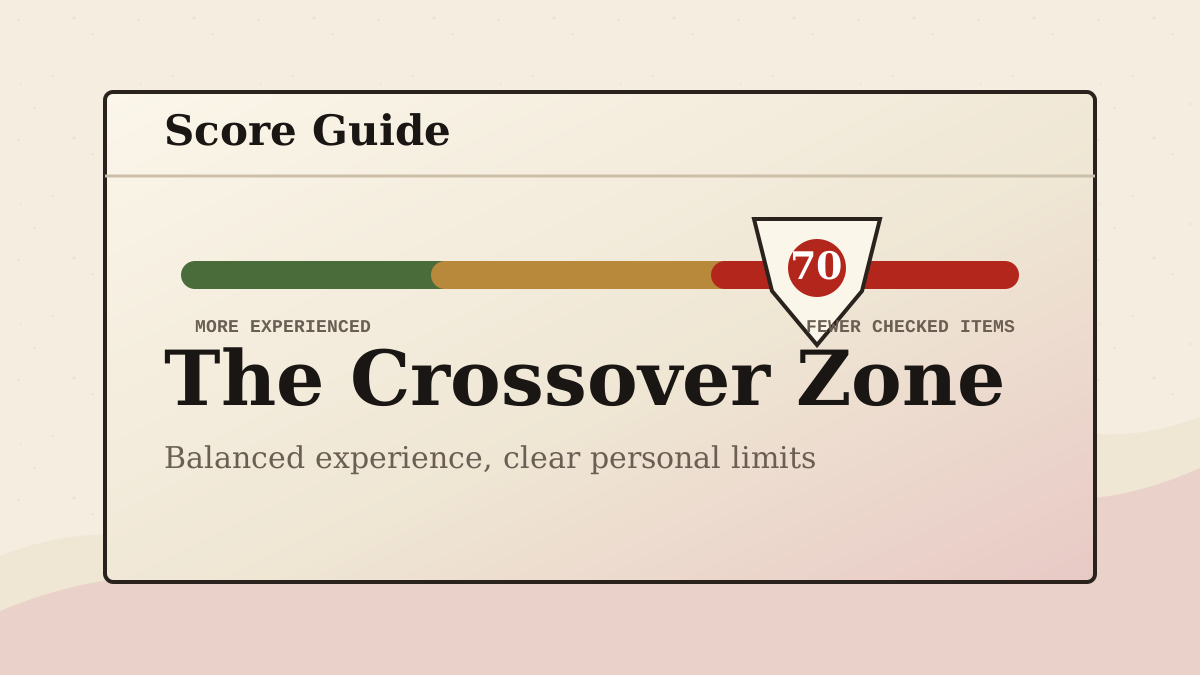
A rice purity score of 70 puts you at one of the most psychologically fascinating spots on the entire scale — the crossover zone. You've checked 30 out of 100 items, which means you have enough experience to know what the test is really asking, but enough unchecked boxes to know you still have your own boundaries. In 2026 quiz culture, this is the score that sparks the most interesting conversations.
⚡ Quick Snapshot — Score of 70
Interactive: Where Does 70 Sit on the Spectrum?
A score of 70 lands right at the boundary between the Innocent tier (77–97) and the Worldly tier (45–76). Drag the slider below to explore how different scores shift between zones:
70 sits in the crossover zone — right where innocent meets worldly. You have real experience and clear personal limits.
The Purity Spectrum — Visualized
You're in the upper portion of the Worldly tier — close enough to Innocent that your score could easily be described either way. For the full score meaning breakdown, every range is explained in detail.
What Do 30 Checked Items Actually Look Like?
The Rice Purity Test's 100 questions span everything from holding hands to serious legal trouble. With a score of 70, your checked items most likely cluster in the first 40–50 questions — the ones covering social and romantic firsts:
- Romantic experiences — dating, kissing, relationships
- Social boundary-testing — parties, sneaking out, white lies
- Mild substance exposure — trying alcohol or being around it
- Emotional firsts — heartbreak, jealousy, intense crushes
What you probably haven't checked: the heavier items from questions 50–100 involving legal risk, extreme substances, or intense sexual experiences. That gap is exactly what makes 70 a crossover score — you're past the "starter" items but haven't ventured into the deep end.
How Does a Score of 70 Compare by Age?
Context transforms how a score reads. A 70 at 17 tells a different story than a 70 at 25. Here's how it stacks up against typical scores by age group:
The Psychology of the Crossover Score
Here's something most Rice Purity articles won't tell you: scores around 70 create the most cognitive dissonance. Psychologist Leon Festinger's social comparison theory (1954) explains why — when you're clearly at an extreme, comparison is easy to dismiss. But when you're in the middle, you compare in both directions simultaneously.
Scoring 70 means you can relate to friends who scored 90 and friends who scored 45. You understand both worlds. On TikTok and Instagram, this makes 70-scorers the most likely to feel unsure about their result — not because there's anything wrong with it, but because the crossover zone defies easy labeling.
Think of your purity score like a Spotify Wrapped — it's a snapshot, not your entire playlist. A 70 is the equivalent of having eclectic taste: a little bit of everything, committed to nothing extreme.
What a Score of 70 Does Not Mean
- It doesn't mean you're "mid." The internet loves to label everything average as boring. A 70 reflects a specific, personal combination of experiences — no two 70s are the same.
- It doesn't define your future. Your score will shift as life happens. College alone typically moves scores 15–25 points.
- It's not a personality test. The quiz measures listed experiences, not humor, empathy, intelligence, or character.
- It's not a moral grade. The original 1924 Rice University test was a campus joke — never a moral assessment.
What to Do With Your Score of 70
- Own the crossover. You sit at one of the most interesting points on the scale. Use it as a genuine conversation starter with friends.
- Retake it later. Set a reminder for 6 months or a year. Watching your score shift over time is the most engaging part of the Rice Purity Test.
- Don't chase a lower score. The test itself warns against trying to complete all items. Experiences should happen naturally.
- Share it your way. A 70 sparks better discussions than extreme scores because everyone can relate to it.
Historical context comes from Rice University Archives in Houston, Texas. Psychology insights reference Festinger's social comparison theory via the American Psychological Association. Generational data draws on Pew Research Center demographic studies.
Frequently Asked Questions
What does a Rice Purity Score of 70 mean?
A score of 70 means you checked 30 out of 100 items. It places you at the crossover between the Innocent and Worldly tiers — a balanced mix of real experience and clear personal boundaries. It's one of the most common scores for college-age test-takers.
Is a score of 70 good or bad?
Neither. There's no good or bad score. A 70 is close to the global average and simply reflects where you are in life. It's common among college sophomores and juniors who have a healthy mix of experiences.
Is 70 a normal score for college students?
Absolutely. College students aged 18–22 typically score between 50 and 80. A score of 70 is right in the middle of that range — one of the most common results for this demographic.
How does 70 compare to the average?
The estimated global average Rice Purity score is around 63. A score of 70 is slightly above average, meaning you've checked fewer items than the typical test-taker overall.
Will my score of 70 change over time?
Very likely. Most people see their scores decrease naturally as they gain life experiences. A typical college student's score drops 15–25 points between freshman and senior year.
Can I retake the Rice Purity Test?
Yes! You can retake the test anytime. It's completely anonymous, browser-based, and stores no personal data. Many people retake it yearly to track how their score shifts.
The Crossover Is the Best Place to Be
A rice purity score of 70 means you've lived enough to understand the test and kept enough boundaries to be intentional about your choices. That balance is not "average" — it's self-aware. Whether your score stays here or shifts over time, what matters is that every experience on your list happened on your own terms.
Curious where you'll land next time? Take the Rice Purity Test again in a few months, compare with the scores by age breakdown, and see what changes. Your story is still being written.