Does Your Rice Purity Score Matter in Relationships?

📋 Table of Contents
Imagine this scenario: you've been dating someone for a few weeks, and things are going great. One evening, while hanging out, they bring up a trending self-check. You both decide to click the link, tick the boxes, and calculate your scores.
Suddenly, the screen flashes: you got a 92, and they got a 58. Or maybe it's the other way around. A quiet stillness falls over the room. You start wondering: Does this gap mean we're incompatible? Does it mean we process the world too differently to make things work?
Evaluating the purity test score relationship impact is a modern relationship milestone for many young adults. When a couple compares their scores, the numbers can spark either healthy conversations or unnecessary anxiety. Here is what score differences actually mean for your relationship, and how to handle them.
How Do Score Differences Affect Relationships?
Your purity score differences do not affect your relationship compatibility unless you allow the numbers to create judgment or insecurity. A quiz score is a simple count of past experiences, but it cannot measure your capacity for love, loyalty, communication, or emotional support. While large score gaps can sometimes highlight different comfort zones or backgrounds, they do not dictate your success as a couple. Ultimately, relationship health is determined by how you respect each other's boundaries in the present, not by comparing checkboxes from the past.
⚡ Relationship Realities: Behind the Numbers
Matching numbers don't guarantee alignment; identical scores can stem from totally unique actions.
Present trust, mutual respect, and support outweigh any historical checklist tally.
Partnerships succeed when they support individual growth boundaries rather than judging the past.
Open dialogue about expectations is the true measure of relationship compatibility.
The Trap of Scoring Compatibility
It is easy to fall into the trap of using relationship compatibility quizzes as a shortcut to evaluate a partner. We live in an era of metrics, and having a number that supposedly grades a person's "wholesomeness" or "experience" is highly tempting.
However, using a purity score to judge compatibility is fundamentally flawed:
- The Fallacy of the Average: Two people with a score of 75 might have completely different lives depending on which boxes they checked. One might have focused on travel and mild campus high jinks, while another might have checked boxes in other categories.
- Actions vs. Character: A checklist counts physical actions, but it completely misses a person's character. It doesn't measure how empathetic they are, how they handle conflict, or how supportive they are when you have a bad day.
- The "Experience" Illusion: A lower score does not automatically make someone "mature," and a higher score does not make them "boring." Maturity is about self-awareness and emotional intelligence, neither of which are measured by a web checklist.
Using a number to determine compatability reduces a complex human being to a simple statistic. For details on how scores are categorized, you can review our guide to what your score means.
When Score Gaps Create Tension (and How to Handle It)
When a couples purity test comparison reveals a significant gap, it can sometimes trigger internal insecurities.
Here are the two most common ways this tension manifests and how to navigate it:
1. The High-Score Partner Feels "Inexperienced" or "Sheltered"
If you have the higher score (closer to 100), you might worry that your partner will find you boring or naive. You might feel pressure to catch up or hide your lack of experience. Real compatibility is about moving at a pace that feels safe for both of you, not trying to match a checklist.
2. The Low-Score Partner Feels "Judged" or "Corrupt"
If you have the lower score, you might worry that your partner is judging your past choices. You might feel a need to defend your past or worry that they see you as too reckless. Your past experiences helped shape the person you are today. A mature partner will focus on how you treat them in the present, not on counting your past milestones.
Open, judgment-free communication is the only way to defuse this tension. If you want to see how your individual scores align with standard demographics before talking, check the average score for college students to put the numbers in perspective.
Quizzes as a Tool for Mutual Understanding
While score gaps can create tension if mishandled, a quiz can also serve as a fantastic tool for deepening your connection if approached with curiosity rather than judgment.
Instead of focusing on relationship score differences, use the questions as prompts to understand each other's comfort zones:
📊 Visual Guide: Communicating Across Score Gaps
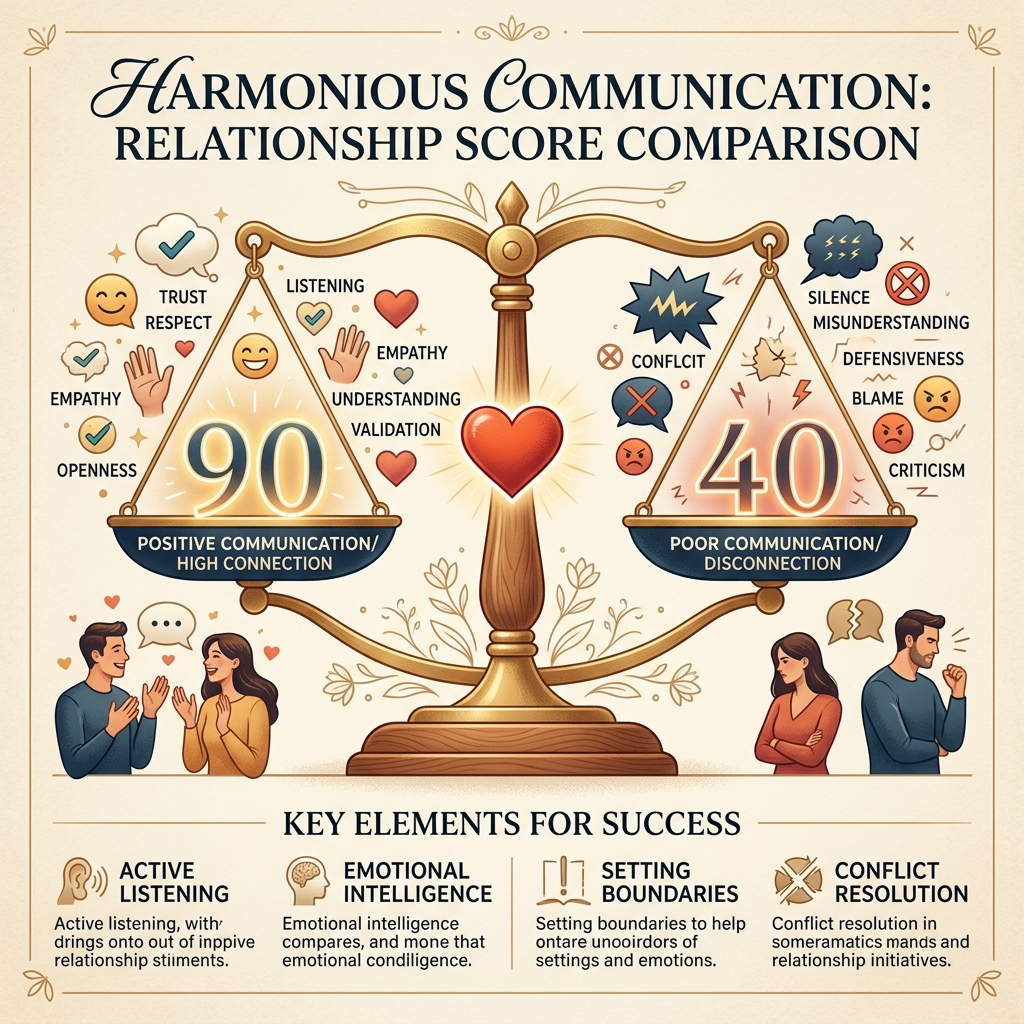
🔄 Using Quizzes for Growth
Use individual questions as neutral prompts to explain your current comfort zones in a low-pressure format.
Sharing funny or awkward stories behind checked boxes builds deep trust if done voluntarily.
Respecting a partner's decision to skip questions or keep scores private immediately is essential.
A quiz should be a bridge to communication, not a wall that divides you.
Frequently Asked Questions
What does a high score gap between partners mean?
A large score gap simply means you and your partner have had different paths and life experiences. It does not mean you are incompatible. What matters is how you respect each other's boundaries and communicate in the present.
Should couples take the purity test together?
Only if both partners genuinely want to and feel safe doing so. It can be a fun bonding activity and a tool to discuss boundaries, but it should never be forced or used to interrogate or shame a partner about their past.
How do I talk to my partner if their score makes me uncomfortable?
Focus on your feelings rather than blaming them. Use "I" statements (e.g., *"I feel a bit anxious about our different experience levels, and I'd love to talk about how we can build trust"*). A healthy relationship handles these differences with empathy and reassurance.
Can a partner's past score predict relationship success?
No. Research on relationship satisfaction consistently shows that success is predicted by communication skills, trust, emotional safety, and shared values in the present—none of which are captured by a historical checklist score.
Bottom Line
Your Rice Purity score is a snapshot of your past, not a blueprint for your relationship's future.
Whether your scores match perfectly or are points apart, the only number that matters is the effort you both put into building trust, respect, and love every day.
Ready to take the test privately to get your own baseline? Go to the homepage to check your Rice Purity score and see how your story shapes up.