How Personal Boundaries Shift Between High School and College
📋 Table of Contents
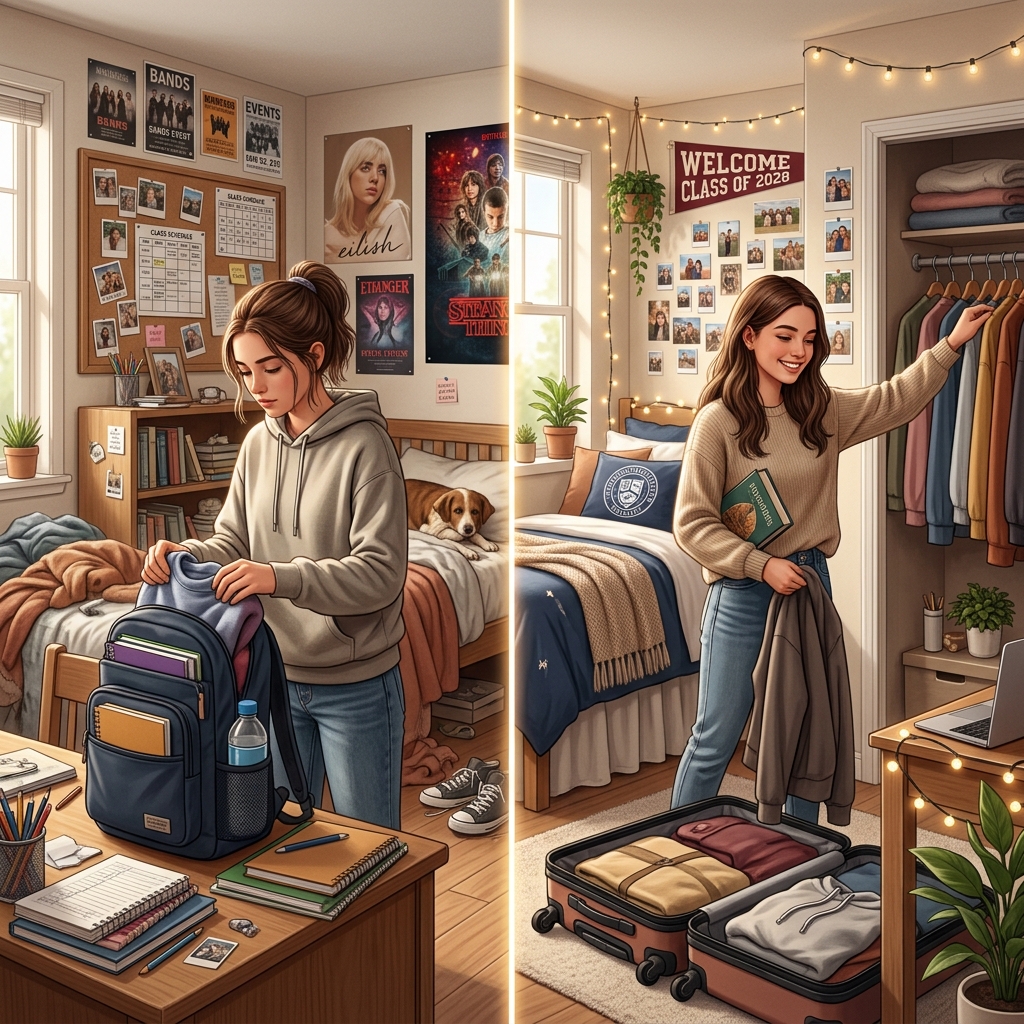
The transition from senior year of high school to your first semester of college is one of the most drastic shifts you will ever experience. One week you are raising your hand to ask permission to use the restroom; the next, you are living in a room with a complete stranger, deciding what time to eat dinner, and choosing whether to attend a lecture at all.
This high school to college lifestyle transition represents far more than just a change in academic difficulty. It is a complete restructuring of your social world. As the external boundaries provided by parents and high school routines disappear, you are faced with a new challenge: defining and defending your own personal boundaries from scratch.
What Changes During the Move to Campus?
The shift from high school to college changes your boundaries by transferring the responsibility of setting rules from external figures (like parents and school administrators) directly to you. In high school, your schedule, curfews, and social circles are heavily shaped by your home environment. In college, you navigate full independence, requiring you to actively communicate roommate expectations, establish study habits, and choose personal boundaries without parental supervision. Ultimately, this transition shifts boundaries from being passive guidelines you follow to active decisions you make.
⚡ The Boundary Shift: Then vs. Now
Managed externally by parents, school rules, curfews, and established childhood friend networks.
Managed entirely internally by you. Spontaneous schedules, sharing small dorm rooms, and selecting values.
Sharing close living quarters demands active communication and co-creating room guidelines.
Exposure to diverse viewpoints allows you to reconstruct your boundaries deliberately.
The Shock of Full Independence: Navigating New Freedom
The first few weeks of college often feel like a sensory overload. The sudden lack of structure creates a state of near-total freedom:
- The 24/7 Social Environment: Unlike high school where you return home at the end of the day, college dorms are active around the clock. Socializing, studying, and resting all happen in the same building—sometimes in the same room.
- The Absence of Curfews: Deciding to stay out until 3 a.m. on a Tuesday is suddenly a choice you make alone. While this independence after high school is liberating, it requires a higher level of self-regulation.
- The Velocity of Peer Groupings: You are suddenly surrounded by thousands of people your age. Finding your crowd quickly can feel urgent, sometimes tempting you to compromise on your comfort zones just to fit in.
Without parental supervision, your boundaries are no longer defined by what you are allowed to do. Instead, they are defined by what you choose to do, forcing you to develop internal check-ins to monitor your physical and mental limits.
Roommate Communication & Boundary Setting Basics
The most immediate test of your boundary-setting skills happens within the first ten square feet of your dorm room. Sharing a small room with a stranger is a classic college experience, but it can quickly become stressful without clear communication.
Effective roommate boundary setting requires proactive, direct conversations:
- Establish the "Sleep & Study" Zones: Discuss quiet hours. When does the main light go off? Can friends hang out in the room while one person is studying for an exam?
- Draft a Shared Property Agreement: Clarify what is shared and what is private. Are snacks in the mini-fridge community property? Can roommates borrow clothes or use your desk chair without asking?
- Set the Guest Policy: Discuss hosting rules before they become an issue. How late can guests stay over? What is the protocol for overnight visitors?
Setting these boundaries isn't about being unfriendly—it is about preventing the small, daily frictions that erode roommate relationships. Having these conversations during your first week saves you from months of awkward silence.
Redefining Your Comfort Zone & Personal Purity Score
As you navigate campus social dynamics, your personal comfort zones will naturally shift. Many students experience a transition in their values as they meet peers from different countries, cultures, and walks of life.
🔄 The Transition of Comfort Zones
Deciding which rules you grew up with are genuinely yours, and which were simply habits.
Taking the test during orientation week and graduation to physically track growth.
Recognizing that keeping high school boundaries or changing them quickly are both 100% valid.
Your boundaries are not set in stone. They are a living, breathing set of guidelines that help you protect your peace while exploring who you want to be. To see what the average boundaries look like for different undergraduate years, check the purity test scores by age in our demographic report. For details on how specific score tiers align with boundary levels, read our guide to understand your score tier.
Frequently Asked Questions
How do I handle a roommate who doesn't respect my boundaries?
Address the issue directly and calmly. Use "I" statements (e.g., *"I have trouble sleeping when visitors are over past midnight"*). If direct communication doesn't resolve the conflict, reach out to your Resident Advisor (RA) to help mediate the discussion and draft a formal roommate agreement.
Is it normal for my values to change during the first year of college?
Yes. Being exposed to diverse viewpoints, lifestyles, and cultures naturally prompts self-reflection. Re-evaluating your boundaries is a healthy part of the transition into adulthood, helping you build an identity based on personal choice rather than childhood routine.
How do I say no to social events without feeling isolated?
Focus on quality over quantity. Choose the events that genuinely interest you, and politely decline the rest. Remember that taking time for yourself to recharge is crucial for your mental health and academic success, and true friends will respect your decision.
How does independence after high school affect mental health?
The sudden shift in responsibility can lead to stress, fatigue, or feelings of loneliness. Developing a basic routine—incorporating regular sleep, healthy meals, and structured study blocks—helps anchor your mental health during the transition.
Final Thoughts
The high school to college lifestyle transition is a journey of self-definition. It is the moment you step out of the passenger seat and take the steering wheel of your own life.
Setting boundaries isn't about building walls to shut people out; it is about building a foundation that allows you to explore campus life safely, confidently, and on your own terms.
Want to check where your boundaries stand as you start this transition? Go to the homepage and take the Rice Purity Test privately, using the checklist as a tool for personal reflection.