What Does a Rice Purity Score of 90 Mean?
You just finished the Rice Purity Test, stared at the screen, and saw 90. Your roommate got a 62. Your group chat is already roasting you. But before you spiral into "am I boring?" territory — let's talk about what that number actually tells you, because it's probably not what you think.
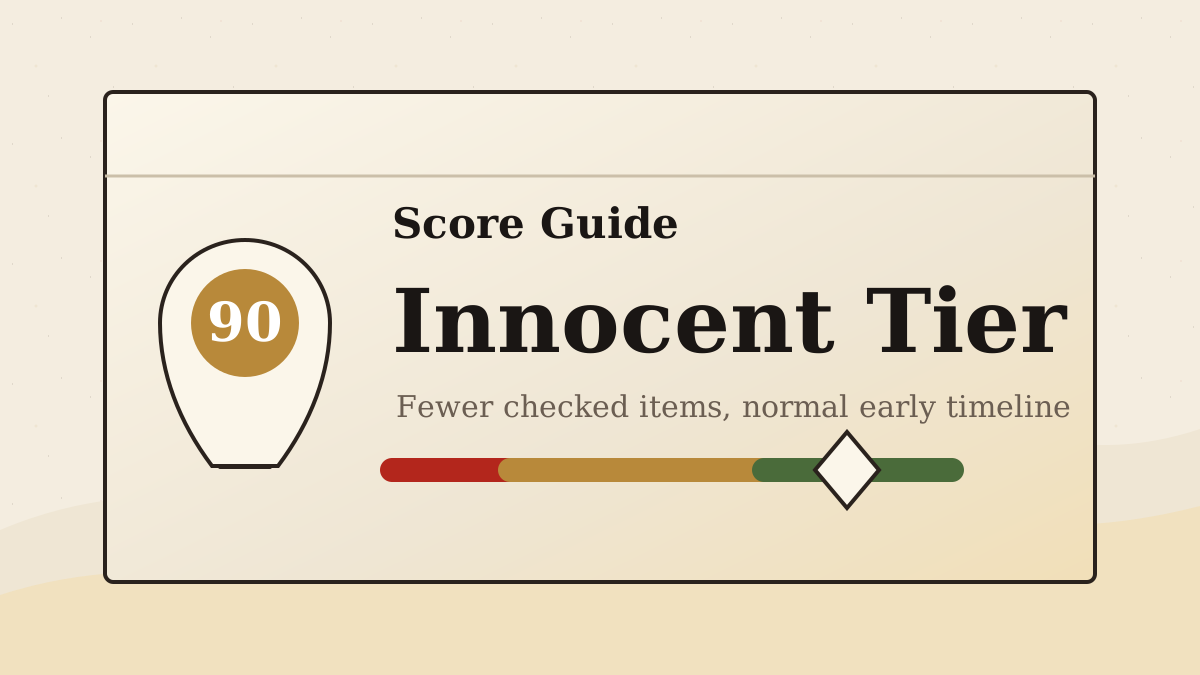
A rice purity score of 90 means you checked just 10 items out of 100. That places you squarely in the Innocent tier — and, whether you realize it or not, in very large company. This is one of the most common scores for people under 20, and it says a lot more about where you are in life than who you are as a person.
⚡ Quick Snapshot — Score of 90
So What Are Those 10 Items You Probably Checked?
The Rice Purity Test lists 100 experiences ranging from completely mundane to genuinely extreme. If you scored a 90, odds are most of your checked items came from the first 20–30 questions — the ones about everyday social situations. Think along the lines of:
- Held hands romantically
- Been on a date
- Danced without leaving room for Jesus
- Been in a relationship
- Kissed someone
These are the items almost everyone checks first. They're essentially the "starter pack" of life experiences, and checking them is completely normal at any age. The items you haven't checked aren't missing experiences — they're just experiences you haven't encountered yet (or may never want to, and that's equally fine).
Where Does 90 Sit on the Purity Spectrum?
Think of the Rice Purity scale like a thermometer. Here's where a score of 90 lands relative to the full range:
You're in the upper portion of the Innocent tier — closer to Saintly than to Worldly. For reference, the full score meaning breakdown shows where every range falls.
How Does a Score of 90 Compare by Age?
Context is everything. A 90 at age 16 is completely average. A 90 at age 28 is unusually high. Here's how the number stacks up against typical scores by age group:
The Psychology Behind Score Anxiety
If your first reaction to scoring a 90 was to feel self-conscious, you're experiencing social comparison theory in action — a concept psychologist Leon Festinger identified in 1954. We're wired to evaluate ourselves by comparing with people around us, especially peers we consider similar.
Here's the thing most articles won't tell you: the discomfort of scoring "high" is a modern phenomenon fueled by social media. On TikTok and Instagram, people tend to share low scores because they feel more entertaining or edgy. This creates a skewed perception that everyone's scoring in the 40s and 50s, when community data actually suggests most first-time test-takers under 20 score between 75 and 95.
Think of your purity score like a Spotify Wrapped — it's a snapshot of right now, not your entire playlist. It captures one moment in your life, and it will change.
What a Score of 90 Does Not Mean
Let's clear up some misconceptions:
- It doesn't mean you're boring. The test measures specific listed experiences, not your personality, humor, creativity, or how interesting you are.
- It doesn't mean you're "behind." Life isn't a checklist with a deadline. Everyone's timeline is different.
- It doesn't mean you'll always score this high. The average college student's score drops 20–30 points between freshman and senior year.
- It doesn't define your worth. The original test from Rice University in 1924 was literally a newspaper joke. It was never designed to be a moral judgment.
What to Do With Your Score of 90
- Use it as a conversation starter. The test was created as an orientation-week icebreaker. Share it with friends and compare — it's genuinely fun when you approach it without judgment.
- Retake it later. Set a reminder to take the Rice Purity Test again in a year. Watching your score shift over time is the most interesting part.
- Don't chase a lower score. The test itself warns against trying to "complete the list." Experiences should happen naturally, not as checkboxes to tick off.
- Share it your way. If you want to share, do it on your terms. There's no "right" score to post.
Frequently Asked Questions
What does a Rice Purity Score of 90 mean?
A score of 90 means you checked only 10 out of 100 items on the Rice Purity Test. It places you in the "Innocent" tier (97–77), indicating relatively limited exposure to the experiences listed on the quiz. This is one of the most common scores for people under 20.
Is a score of 90 good or bad?
Neither! There's no good or bad score. A 90 simply reflects where you are in life right now. It's common among high schoolers and younger college students who haven't yet encountered many of the test's scenarios.
Is 90 normal for a college freshman?
Yes. Many incoming freshmen score between 85 and 95. Scores typically drop 20–30 points during the college years as students gain independence and new social experiences.
How does 90 compare to the average score?
The estimated global average is 60–70. A score of 90 is well above average, meaning you've checked far fewer items than most test-takers overall — though it's very common in the under-20 age group.
Will my score of 90 change over time?
Almost certainly. Most people see their scores decrease naturally as they accumulate life experiences, especially during college and their twenties. Think of it as a snapshot, not a permanent label.
Can I retake the Rice Purity Test?
Absolutely. You can retake the test anytime. The test is completely anonymous and stores no data. Many people retake it yearly to track how their score shifts.
Your Score Is Just the Beginning
A rice purity score of 90 is a snapshot of today — one chapter in a much longer story. Whether your number stays high or drops over the years, what matters is that you're living life at your own pace, on your own terms. No quiz can capture who you actually are.
Curious how your score evolves? Bookmark this page, take the Rice Purity Test again in a few months, and see what changes. And if your friends are comparing scores, send them this article — a little context goes a long way.