What Does a Rice Purity Score of 60 Mean?
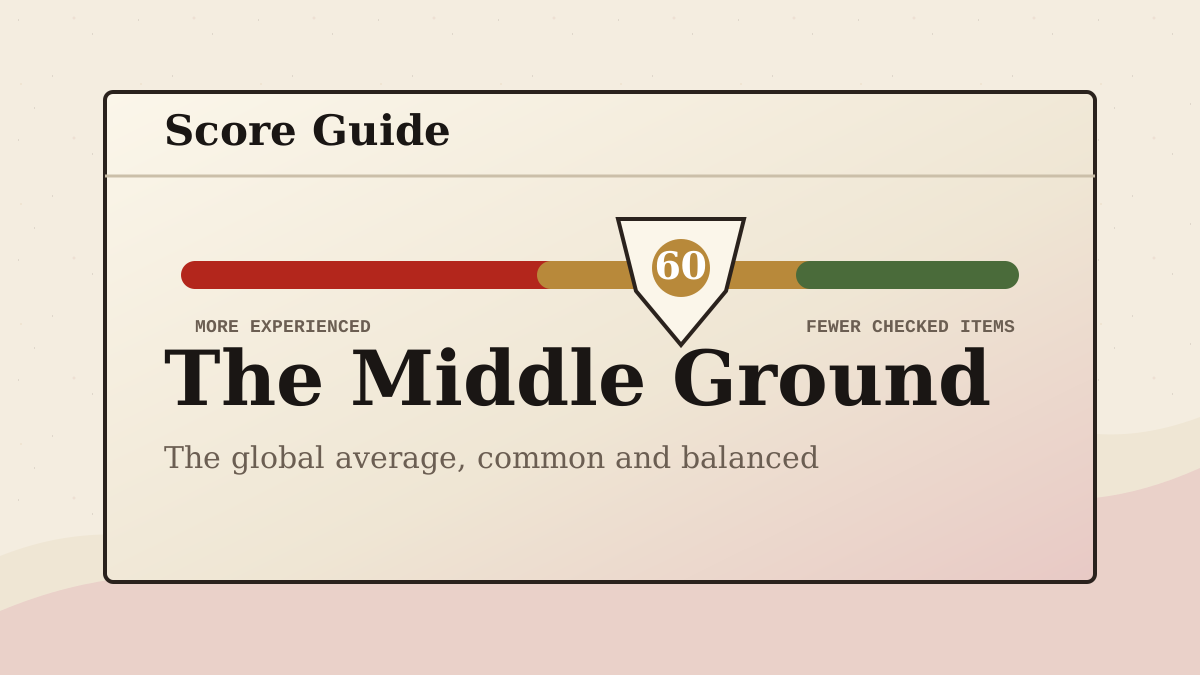
You just took the Rice Purity Test, hit submit, and got a 60. You're not innocent enough to shock the group chat, but you're not wild enough to make them worry. But what does a score of 60 actually say about you? Spoiler: It means you are the statistical gold standard of the modern college experience.
A rice purity score of 60 means you have checked exactly 40 out of 100 items. That places you directly in the Worldly tier — the ultimate middle ground. In 2026, scoring a 60 is perhaps the most comfortable place to be on the purity spectrum, representing a balanced mix of life experiences without crossing into extremes.
⚡ Quick Snapshot — Score of 60
What 40 Experiences Make Up a Score of 60?
The 100 questions on the Rice test range from holding hands to committing felonies. If you scored a 60, your checked items tell a story of normal teenage and young-adult progression. You've likely completed the entire first third of the test—the romance and mild rebellion "starter pack"—and ventured into the middle section.
- The Basics (Questions 1-20): Holding hands, going on dates, kissing. Almost everyone with a 60 has checked nearly all of these.
- The Social Scene (Questions 20-50): Attending parties, drinking, typical college or high school weekend activities.
- The Boundaries: You've probably stopped before the more severe items involving the law or highly risky behavior.
Checking 40 items means you've lived a little. You've been outside, made some mistakes, had some fun, but you haven't burned the house down.
Where Does 60 Sit on the Purity Spectrum?
Think of the Rice Purity scale like a thermometer. Here's exactly where a score of 60 lands:
You are comfortably in the Worldly tier. For reference, the full score meaning breakdown shows where every range falls.
How Does a Score of 60 Compare by Age?
Context matters. A 60 at age 15 might raise eyebrows, but at age 21, it's expected. Here's how the number stacks up against typical scores by age group:
The Psychology of the Middle Ground
We are constantly engaging in social comparison. When you share your test score in a group chat, you're looking to see where you fit in the social hierarchy. Interestingly, scoring near the average (like a 60) often provides the most psychological comfort.
Because the test originated at Rice University in 1924 as an orientation-week icebreaker, it was always meant to foster social bonding. A score of 60 achieves exactly that: you have enough experiences to relate to the wild stories, and enough boundaries to relate to the cautious ones.
What a Score of 60 Does Not Mean
Despite what TikTok trends might imply, let's clear up some myths:
- It doesn't mean you're "boring." You've checked 40 experiences! That's a lot of life lived.
- It doesn't mean you must lower it. Many people see their score stabilize around 60. The remaining 60 questions often involve things you may never want to do (like getting arrested).
- It doesn't define your maturity. The test is a self-graded survey of specific events, not a measure of emotional intelligence or character.
What to Do With Your Score of 60
- Share it with pride. Since 60 is so close to the average, it's a great conversation starter. Share it safely with friends and compare which 40 items you checked.
- Reflect on your boundaries. Look at the 60 items you didn't check. Which ones are hard limits for you? It's a great exercise in self-discovery.
- Don't force experiences. Never treat the test as a bucket list. Your life experiences should happen naturally.
- Retake it next year. Take the test again in a year to see if your score dips into the 50s or stays comfortably at 60.
Frequently Asked Questions
What does a Rice Purity Score of 60 mean?
A score of 60 means you have checked exactly 40 out of 100 items on the Rice Purity Test. It places you in the "Worldly" tier, representing a balanced level of life experience and making it one of the most common scores globally.
Is a Rice Purity Score of 60 good or bad?
There is no good or bad score. A 60 simply reflects the global average and indicates you've had a healthy mix of everyday social interactions and experiences without going to extremes.
Is 60 a normal score for a college student?
Yes, a 60 is incredibly normal for a college student. The average college student's score sits between 50 and 72, making 60 the dead center of the typical campus experience.
How does a score of 60 compare to the average?
A score of 60 is nearly identical to the estimated global average of 63. If you scored a 60, your life experiences closely align with the majority of other test-takers.
Will my score of 60 change over time?
It might, but typically at a slower pace than before. While scores drop rapidly during late teens, people who reach the 60s often find their scores stabilize, as the remaining items require more extreme or risky experiences.
Can I retake the Rice Purity Test?
Absolutely. You can retake the test anytime. It's completely private and stores no personal data. Many people retake it annually to track their changing experiences.
Your Score is Just a Snapshot
A Rice Purity Score of 60 is the perfect equilibrium of youth and experience. It shows you've stepped out of your comfort zone, built relationships, and made memories, while still maintaining personal boundaries.
Curious about where you'll be next year? Bookmark this page, take the Rice Purity Test again in the future, and see how your journey unfolds. If you're comparing scores in the group chat, send them this article—sometimes the average score is exactly where you want to be.